
The World’s Most Portable Feast
Some of the world’s best street foods require no plate, fork, or table—just a stick and a healthy appetite. From charcoal-grilled chicken in Japan to chile-coated corn in Mexico, skewered snacks capture local flavors in a wonderfully portable form. They also reveal how cooks across cultures transform simple ingredients with fire, spice, marinades, and sauces.
Street food has continually changed through trade, migration, and culinary experimentation, as explored in Tour Trivia’s look at the evolution of street food across cultures. These ten specialties offer a delicious introduction to that global story.
Satay in Indonesia
Indonesia’s satay, or sate, consists of small pieces of marinated meat threaded onto slender bamboo skewers and cooked over a charcoal fire. Chicken is especially common, although vendors may also offer lamb, beef, seafood, or regional specialties.
The smoky skewers are frequently paired with peanut sauce, sweet soy sauce, sliced shallots, and fresh chiles. According to Indonesia’s official tourism website, variations differ in everything from their marinades to the way the meat is skewered.
Yakitori in Japan
Yakitori turns bite-sized pieces of chicken into a deeply savory snack. Vendors and specialized restaurants grill the skewers over an open flame, seasoning them with either shio, meaning salt, or tare, a glossy, sweet-and-savory sauce.
Popular varieties include chicken thigh, skin, gizzard, liver, and negima, which alternates chicken with pieces of scallion. The Japan National Tourism Organization’s yakitori guide notes that the dish can be enjoyed as a quick snack or combined into an entire meal.
Anticuchos in Peru
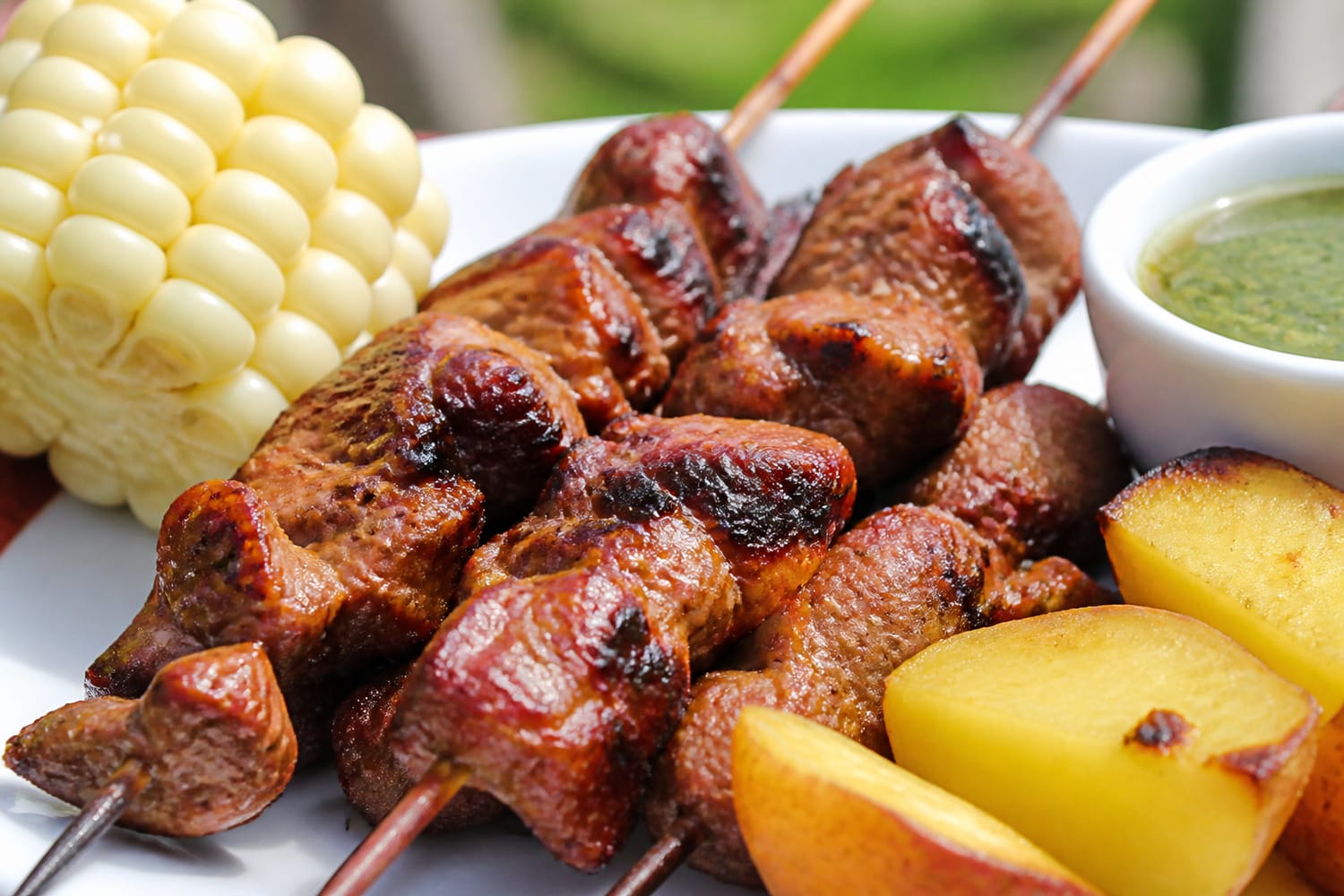
The aroma of anticuchos sizzling over charcoal is a familiar part of an evening in Peru. Traditional versions use beef heart, cut into chunks and marinated with vinegar, garlic, cumin, oregano, and smoky ají panca chile.
The resulting skewers are tender, richly flavored, and slightly spicy. Vendors may serve them with grilled potato, corn, or a generous spoonful of chile sauce. Peru’s official anticucho recipe recommends basting the skewers with seasoned oil while they cook, intensifying their color and flavor.
Souvlaki in Greece
Souvlaki is proof that uncomplicated ingredients can deliver tremendous flavor. Small pieces of pork or chicken are skewered, seasoned, and grilled until browned around the edges while remaining juicy inside.
You can eat souvlaki directly from the stick, often with lemon and bread, or order the meat wrapped in warm pita with tomatoes, onions, fries, and tzatziki. Its balance of smoke, citrus, herbs, and creamy sauce makes it one of Greece’s most approachable street foods. For more condiment inspiration, explore these iconic sauces from around the world.
Suya in Nigeria
Nigeria’s suya delivers heat, smoke, and nuttiness in every bite. Thin strips of beef, chicken, or other meat are coated in a dry spice mixture before being arranged on skewers and grilled over an open flame.
The seasoning typically includes ground peanuts, ginger, chile pepper, and other spices, although recipes vary among vendors and regions. Suya is commonly served with sliced onions, tomatoes, cabbage, or extra spice powder. If you are sensitive to heat, taste a small piece before adding more seasoning—the chile can be surprisingly powerful.
Chuan in China
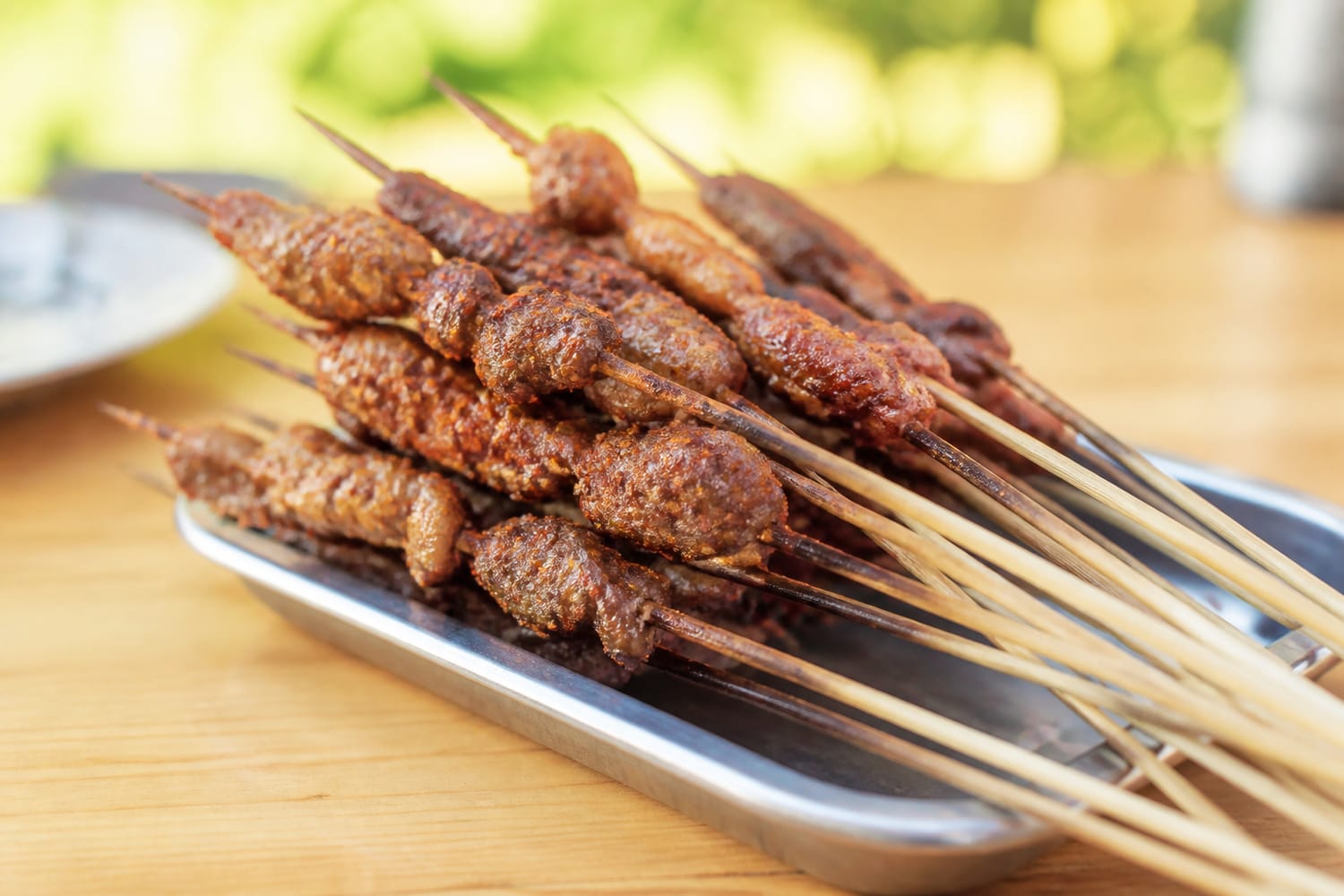
Known as chuan or chuan’r, these skewers are particularly associated with northern and northwestern Chinese cooking. Lamb is a classic choice, but street stalls may grill chicken, beef, mushrooms, tofu, seafood, and vegetables.
Cumin, chile flakes, salt, and sesame create a bold coating that becomes intensely aromatic over hot coals. The cumin-forward flavor distinguishes chuan from many East Asian skewers. Order several varieties to compare textures, but remember that they are generally best eaten immediately, while the edges are crisp and the centers are still hot.
Tteok-Kkochi in South Korea
Tteok-kkochi replaces meat with chewy Korean rice cakes. The rice cakes are arranged on skewers, fried or grilled until lightly crisp, and brushed with a sticky sauce that commonly combines sweetness, spice, and savory depth.
That contrast between the crisp exterior and springy center makes the snack especially satisfying. South Korea’s street-food stalls also sell chicken, fish cake, sausage, and elaborate corn dogs on sticks. If this sounds tempting, Tour Trivia’s global street-food journey offers even more dishes worth seeking out.
Espetinho in Brazil
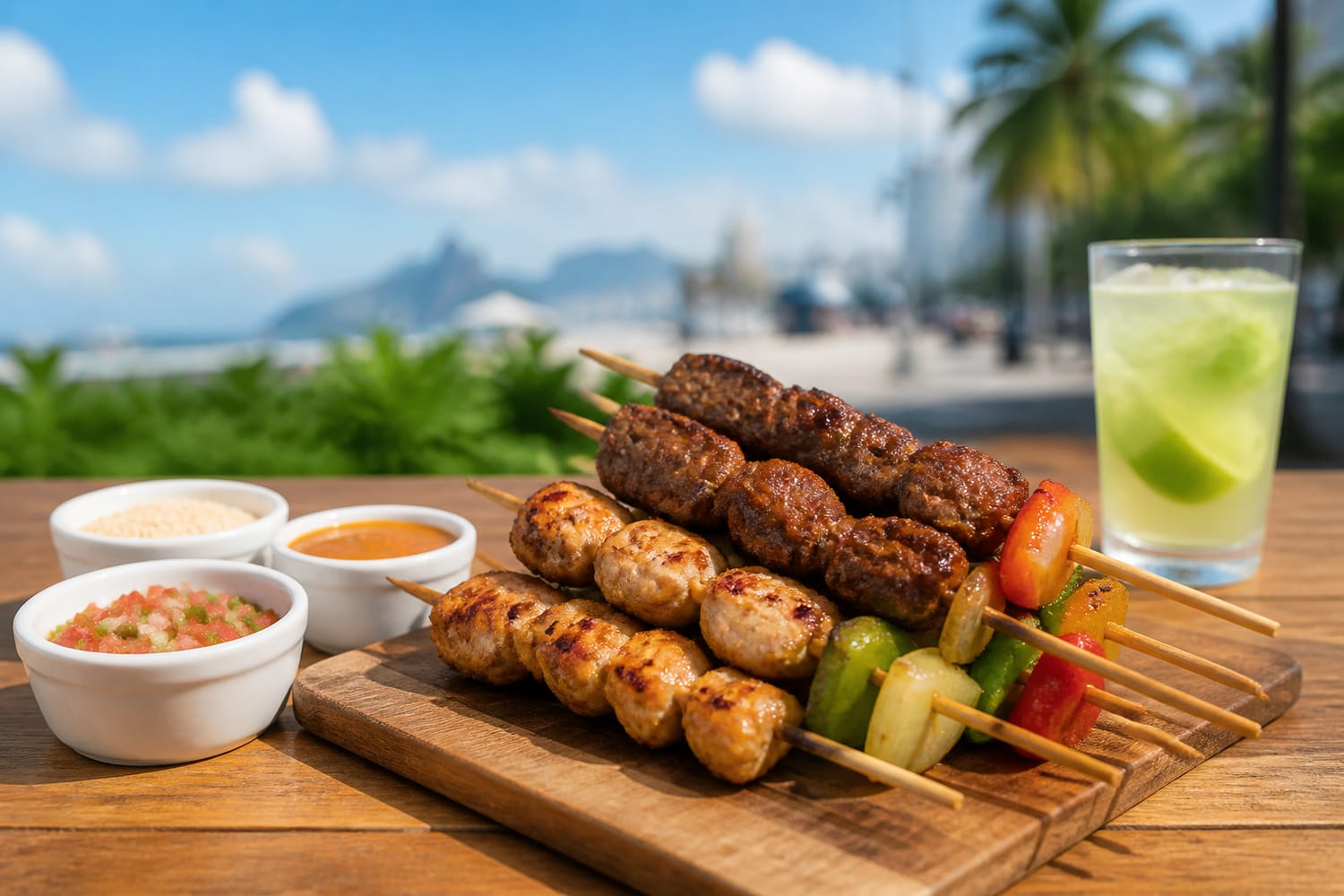
The Portuguese word espetinho essentially means “little skewer,” and these grilled snacks are a common sight at Brazilian street stands, outdoor gatherings, and casual bars. Beef and chicken are popular, while some vendors offer sausage, cheese, or mixed skewers with vegetables.
Seasonings are generally designed to complement the smoky meat rather than overwhelm it. Depending on the stall, an espetinho may arrive with hot sauce, toasted cassava flour, vinaigrette-style salsa, or garlic sauce. The skewers pair particularly well with a cold drink on a warm evening.
Elote on a Stick in Mexico
Elote begins with corn on the cob, but its toppings transform it into something extraordinary. Vendors roast or boil the corn, place it on a wooden stick, and coat it with ingredients such as mayonnaise or crema, crumbly cheese, chile powder, lime juice, and salt.
Every bite combines sweetness, tanginess, creaminess, and heat. Toppings vary by location and vendor, so ask what is spicy before ordering. Eating elote neatly is nearly impossible, but that is part of the experience—keep napkins nearby and embrace the mess.
Mishkaki in Tanzania
Mishkaki is a popular East African skewer typically made with marinated beef or chicken. Cooked over charcoal until smoky and browned, it is sold by roadside grills, market vendors, and neighborhood stands, particularly in the evening.
Marinades may feature ginger, garlic, citrus, chile, and warm spices, reflecting the layered culinary influences found along the East African coast. Mishkaki can be eaten alone or accompanied by bread, fries, salad, or a hot tomato-based sauce. Look for a busy stall where skewers are cooked frequently and served fresh from the grill.
How to Enjoy Street Food Safely
The best street-food experiences begin with a little observation. Choose popular stalls with a steady flow of customers, visible food preparation, and ingredients protected from dust and insects. For meat and seafood skewers, make sure everything is cooked thoroughly and served piping hot.
Carry small bills, hand sanitizer, and tissues, and learn the local words for “spicy” and “not spicy.” Most importantly, arrive curious. A humble skewer can introduce you to regional spices, cooking traditions, and flavor combinations that become some of your strongest travel memories.