
The Last Moment Has a Story
A wedding send-off is rarely just an exit. Depending on the tradition, it may thank a family, welcome a new household, invite good fortune, or remind the couple how they’ll face challenges together. These seven customs take place at different points in the celebration—from leaving a childhood home to stepping away from the ceremony—but each gives a departure a meaning worth remembering.
India: A Farewell with Rice
At some Indian weddings, the vidaai is the moment the bride says goodbye to her family and leaves with her spouse. It can be one of the day’s most emotional scenes: relatives offer blessings, embrace her, and watch her depart. Customs vary by community and family, so no single farewell represents every Indian wedding.
In a common version of the ritual, the bride tosses rice backward toward her family’s home. Rather than showering the newlyweds, the rice is a gift in the other direction—a wish for abundance in the household that raised her. It’s a small gesture that holds two feelings at once: gratitude for home and hope for what comes next.
Italy: Rice for the Newlyweds
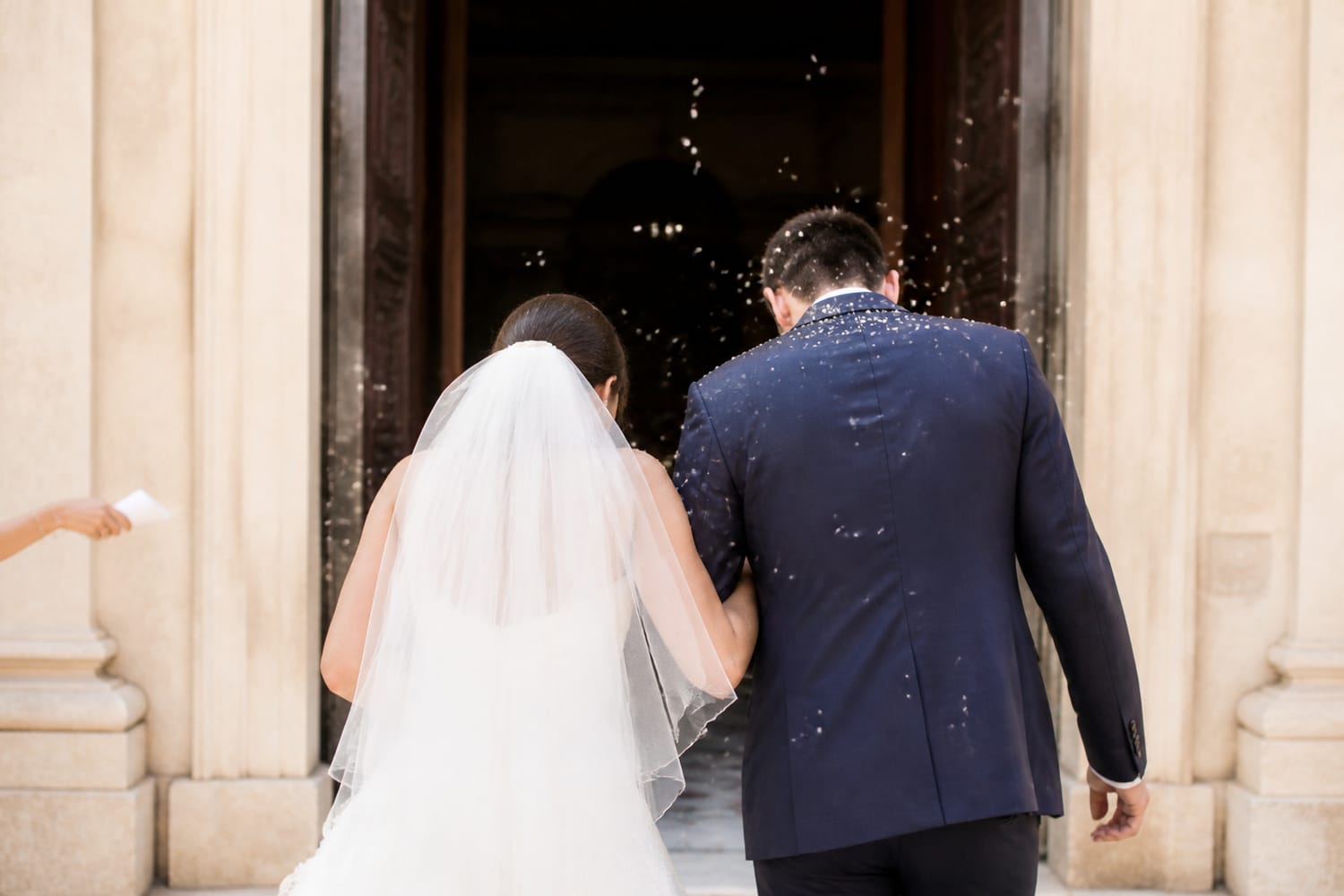
Rice travels in the opposite direction at many Italian weddings. As a couple emerges from a church or other ceremony venue, guests may toss rice over them, sending them onward with wishes for prosperity and fertility. The moment is public and exuberant: the newlyweds leave together while friends and relatives turn the doorway into a celebration.
That contrast with vidaai is a reminder that the same object does not carry exactly the same message everywhere. In India’s farewell, rice may be offered back to the bride’s family; in the Italian exit, it is thrown toward the couple. Either way, loved ones use an ordinary grain to express an extraordinary wish. Venues can set their own rules about what may be tossed, so guests should follow the couple’s plans rather than arrive with a bag of rice.
Scotland: Coins for the Children
A traditional Scottish wedding scramble made the departure from church particularly exciting for local children. As the bridal party left, the groom or best man would scatter coins for them to collect. In some places, the bride’s father did something similar as she left home for the ceremony. Historic Environment Scotland records several names for the custom, including scammle and scatter.
The scramble spread a little of the wedding’s good fortune beyond the guest list. It also changed the feel of a solemn threshold: children gathered, coins flew, and the surrounding community became part of the send-off. It’s a glimpse of a time when a wedding’s departure could be an event for the whole neighborhood, not just the people inside the church.
Germany: One Log, Two People

Some German couples encounter a challenge just after the ceremony: a log waiting to be sawed. Working from opposite ends of a two-person saw, they must find a shared rhythm to get through it. The meaning is easy to see even if you’ve never heard the custom’s German name, Baumstamm sägen.
A log won’t yield because one partner pulls harder while the other does the same. The task asks them to cooperate, adjust, and keep going—an entertaining first test of married life. It gives guests something to cheer for while making a serious point: obstacles are easier to face together. Curious about another German marriage custom? Tour Trivia explores why wedding rings are worn on different hands around the world.
Türkiye: A Red Belt and a Family Goodbye
In a traditional Turkish bridal departure, a relative such as the bride’s brother or uncle ties a red belt around her waist before she leaves her family home. The goodbye that follows may be accompanied by prayers, hymns, or the sound of reed instruments and drums. Practices differ across regions, and some older customs are no longer observed everywhere.
Türkiye’s Ministry of Culture and Tourism describes the red belt as a “belt of perseverance.” That description gives the farewell its particular tenderness. Her family is not simply watching a procession begin; they are marking her departure with a visible wish for strength in the life ahead. The music and gathering make the transition communal, even when the goodbye itself feels deeply personal.
China: A Bridal Sedan Chair
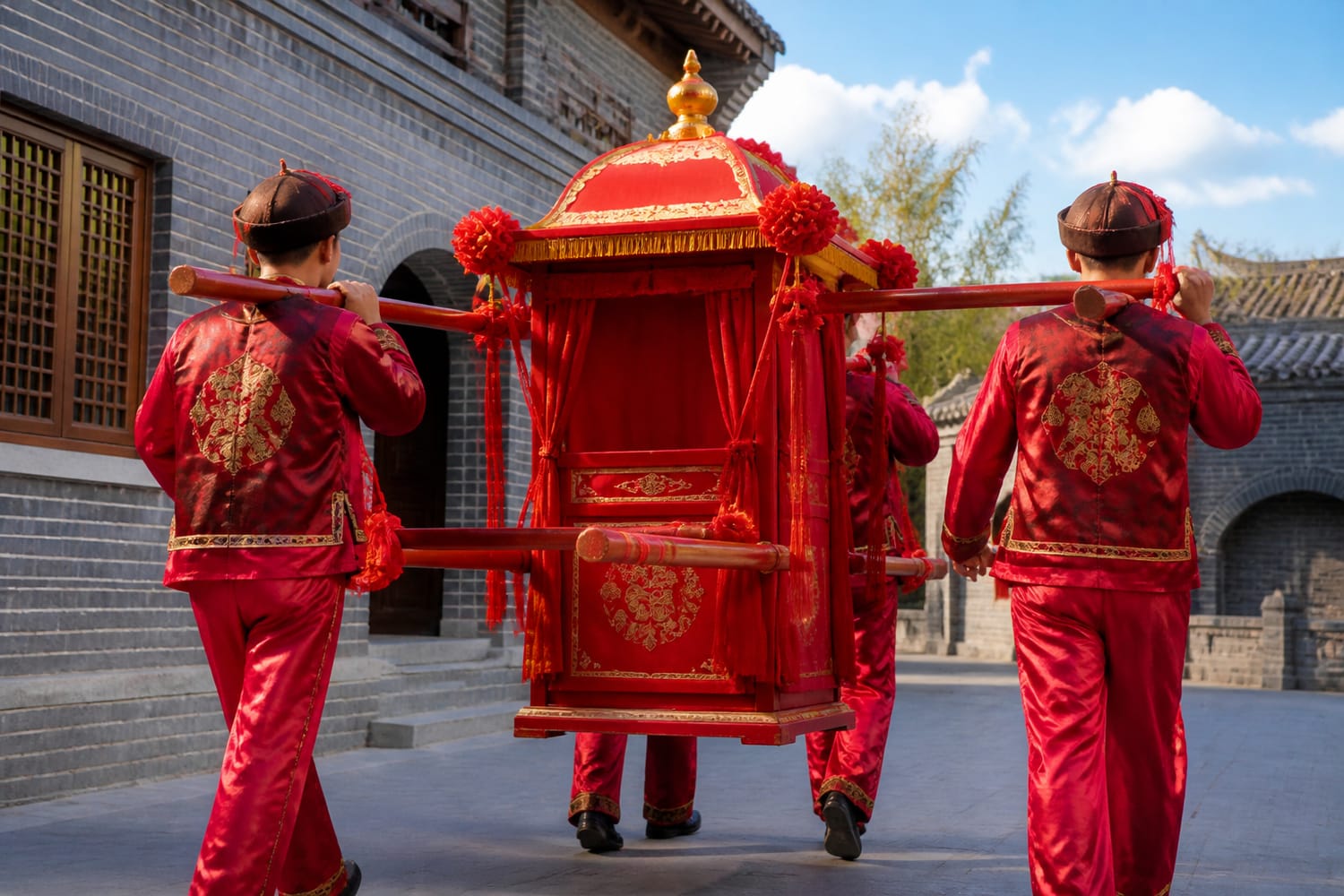
In historical Chinese wedding processions, a bride could leave her family home in a decorated sedan chair carried to the groom’s household. Accounts of older Beijing customs describe the chair as part of a formal wedding journey, with rituals along the route and on arrival. This was a tradition shaped by its place and era, not a description of how all Chinese couples marry today.
The chair made a change in family life visible as a journey through the streets. Its procession gave relatives and neighbors a chance to witness the passage from one household to another. While cars have replaced sedan chairs for many couples, the image still helps explain why a wedding departure can be more than transportation: the journey itself may be part of the ceremony.
Jewish Weddings: A Sound That Starts the Celebration
At many Jewish weddings, the ceremony ends when a glass is broken beneath the chuppah, or wedding canopy. Guests respond with applause and cries of “Mazel tov!”—congratulations. It is an unmistakable cue that the formal ceremony has finished and the celebration can begin.
The glass has more than one interpretation. One enduring explanation holds that it recalls the destruction of the Temple in Jerusalem, making room for collective sorrow even at a moment of personal joy. Other meanings have also become part of the tradition. As My Jewish Learning explains in its guide to breaking the glass, its significance isn’t limited to a single story. The sound marks a threshold: the couple leaves the ceremony carrying both its happiness and its history.
What a Send-Off Leaves Behind
Coins, rice, music, a saw, a chair, a belt, a broken glass: these customs look strikingly different. Yet each asks loved ones to pay attention to the moment a couple moves forward. Some farewells are joyful and noisy; others leave room for tears. The best way to understand one is not to assume every family follows it, but to ask what the gesture means to the people taking part. For travelers, that curiosity is part of good cultural etiquette around the globe.