
A Doorway Into a New Life
Moving into a new home is rarely treated as an ordinary change of address. Around the world, families mark the occasion with foods, blessings, gifts, prayers, and carefully timed rituals. Although the details differ, most housewarming traditions express the same hopes: may this home be protected, may its cupboards stay full, and may everyone inside prosper.
These customs transform an unfamiliar building into a meaningful place. A loaf of bread becomes a promise of abundance, a bowl of rice represents security, and a doorway becomes the symbolic boundary between an old life and a new one.
Bread and Salt Across Europe
Bread and salt form one of the most recognizable housewarming pairings in Europe. Variations of the custom appear in Slavic and Baltic cultures, Germany, Denmark, and neighboring regions.
Bread represents nourishment and the wish that the household will never experience hunger. Salt, once valuable and essential for preserving food, is commonly associated with flavor, endurance, protection, and lasting friendship. Together, they offer a compact blessing for a comfortable life.
In Denmark, bread and salt have traditionally accompanied a move into a new home. Similar gifts may be presented in decorated baskets, wrapped in cloth, or accompanied by a coin for prosperity. Modern hosts may receive artisan bread and gourmet salt, but the message remains reassuringly old-fashioned: may you always have what you need.
India’s Sacred First Entrance
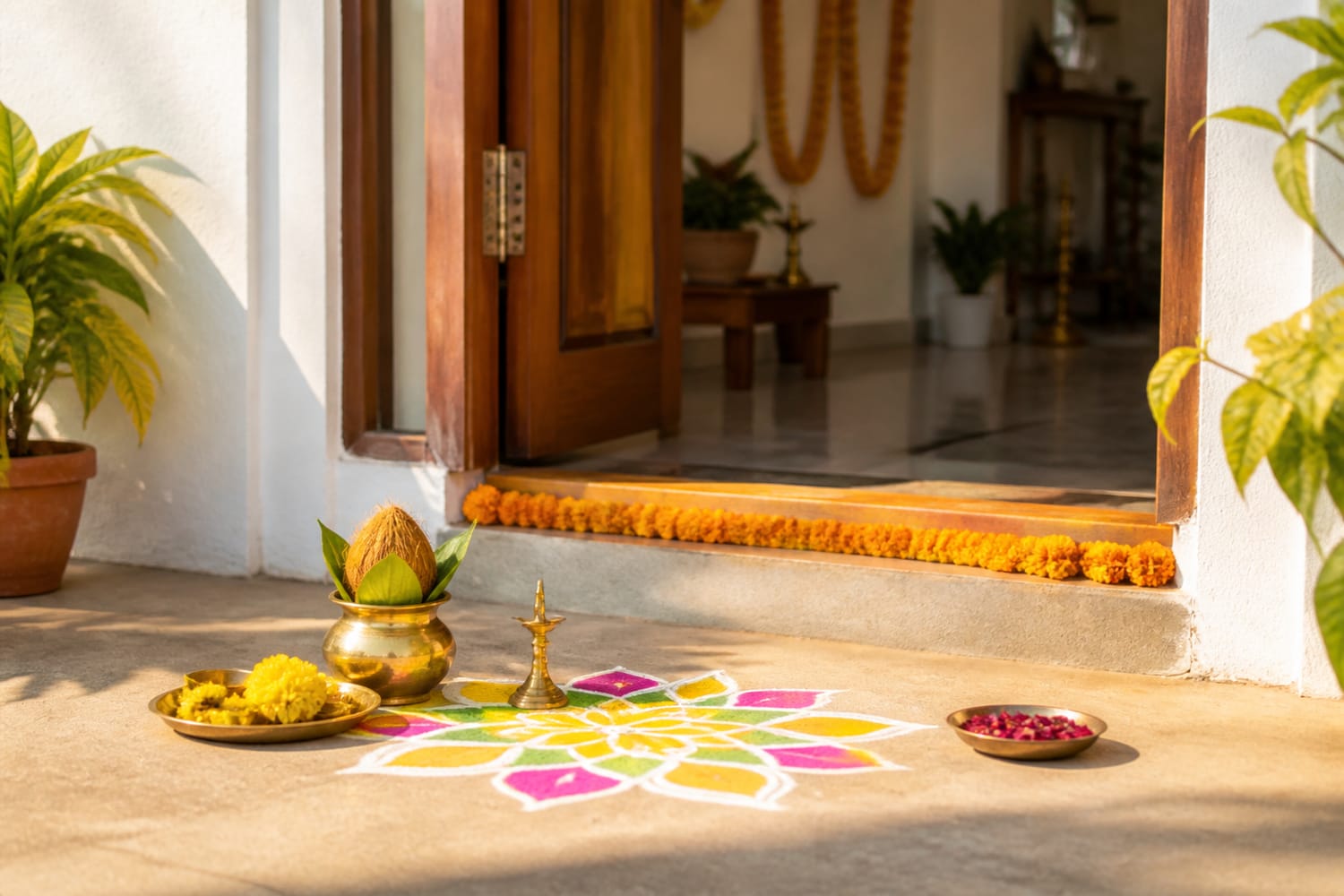
In many Hindu households, moving begins with Griha Pravesh, a ceremony performed before or around the time a family occupies a new residence. Practices vary considerably by region, community, and family, but an auspicious date and time may be selected before the first formal entrance.
Prayers, offerings, incense, lamps, and a sacred fire ceremony may be included. Some families break a coconut near the entrance, while others boil milk until it rises or spills over, symbolizing abundance. Decorative rangoli patterns can welcome guests and positive energy at the threshold.
The occasion is usually communal rather than private. Relatives and friends gather for blessings and food, reflecting the broader importance of generous hospitality rituals. A home begins its story by feeding people.
Japan’s Noodles for New Neighbors
Japan’s traditional hikkoshi soba, or “moving soba,” focused on introducing newcomers to their neighbors. Beginning during the Edo period, households moving into an area would distribute buckwheat noodles nearby as a friendly gesture.
The custom became associated with wordplay involving soba, which means both buckwheat noodles and “nearby” or “beside.” Offering noodles therefore suggested a wish to remain pleasantly close for a long time.
According to Japan’s National Diet Library reference service, the noodles served as a sign of acquaintance in the new neighborhood. The practice is less common today, with towels, soap, or other practical gifts sometimes taking its place. Its neighborly purpose, however, remains relevant: settling into a home also means joining a community.
Monks and Merit-Making in Thailand
A traditional Thai housewarming ceremony may involve inviting Buddhist monks to bless the residence. Known as tham boon khuen baan mai, the event centers on merit-making and can be held for a rented home, purchased property, office, or business.
During a Thai housewarming ceremony, monks chant, receive offerings, and share a meal provided by the hosts. Sacred thread may be arranged through the ceremonial space, connecting the Buddha image, monks, and home.
Auspicious foods such as bananas, coconuts, oranges, and golden-colored Thai sweets may also appear. The ceremony welcomes spiritual protection while emphasizing generosity—the home receives blessings as its residents give food and offerings.
A Blessing on the Jewish Doorpost
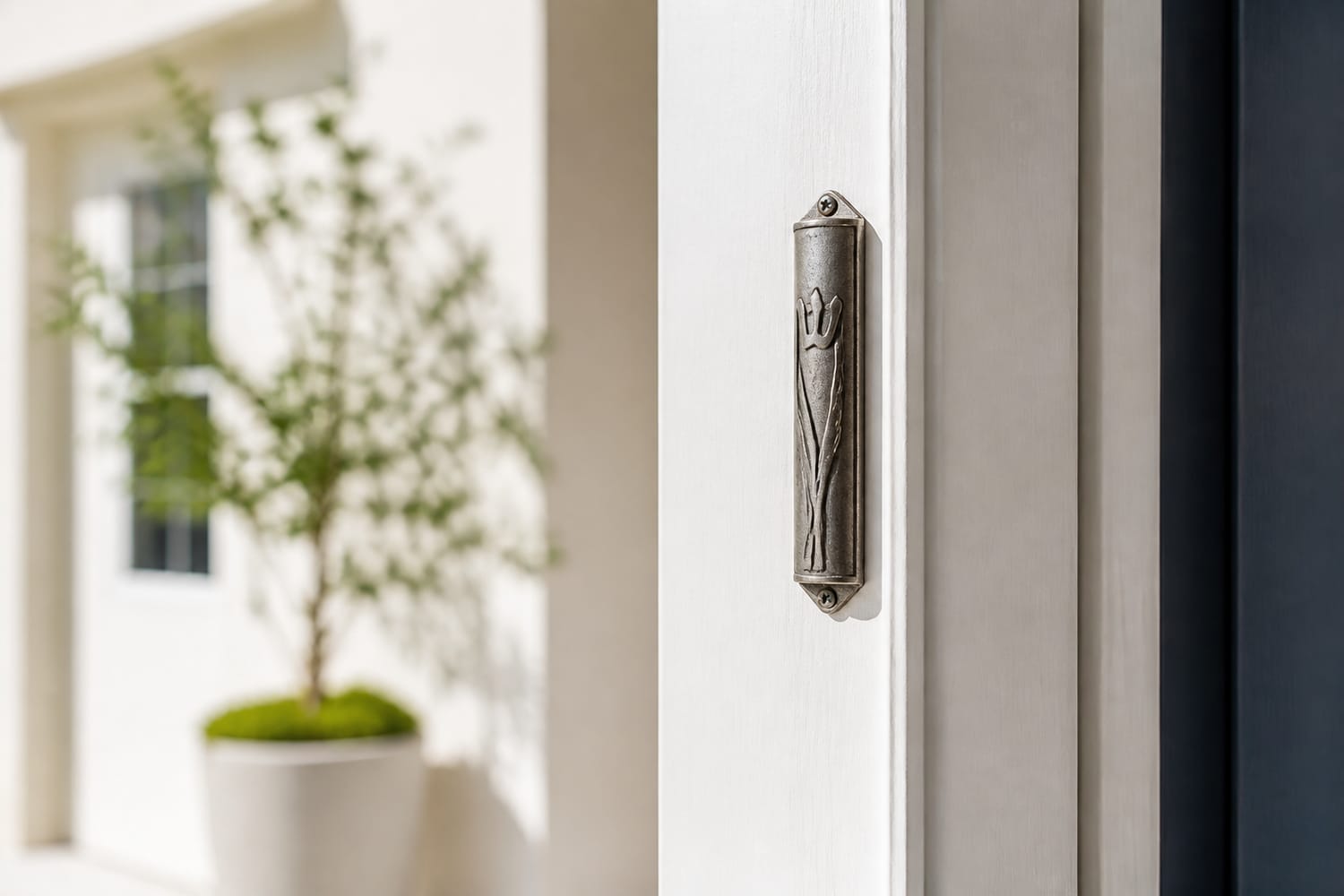
For many Jewish families, establishing a home includes affixing a mezuzah to the doorpost. The small case contains a handwritten parchment scroll bearing verses from the Torah, including the Shema prayer.
Placing the mezuzah can become the central act of a Jewish housewarming, sometimes called chanukat habayit, meaning “dedication of the home.” Friends and relatives may gather to participate, study, share food, and celebrate.
Rather than functioning as a decorative charm, the mezuzah connects daily domestic life with faith and religious responsibility. Every passage through the doorway becomes a quiet reminder of the home’s values.
Fire, Rice, and Auspicious Timing in China
Chinese moving traditions differ widely among regions and communities, but prosperity, continuity, and favorable timing are recurring themes. Some families consult a traditional calendar before selecting a moving date, while rice, red decorations, fruit, and fire may symbolize abundance and good fortune.
In certain regional customs, a flame or ember is carried from the old residence to the new stove. This represents continuity between generations and the hope that the family’s prosperity will not be interrupted. Preparing the first meal inside then turns the building into a functioning household.
Red banners, lanterns, and good-luck phrases may decorate the entrance. Guests often bring useful household goods or celebratory gifts, reinforcing the idea that a successful home is supported by a wider social circle.
The Truth About Those Broken Plates
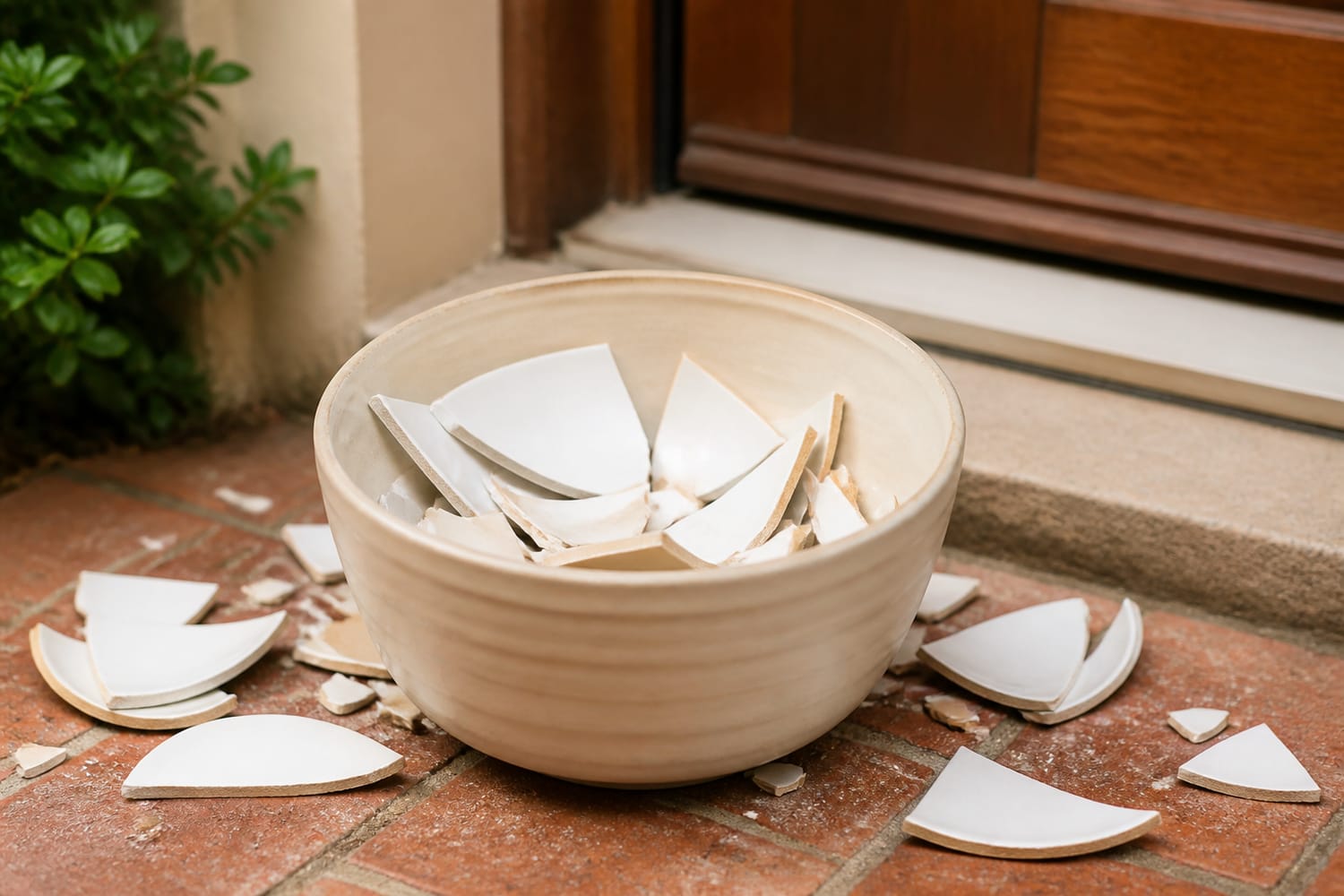
Broken plates frequently appear in collections of “housewarming traditions,” but the connection requires some careful unpacking. Germany’s famous Polterabend, in which guests smash porcelain and the couple cleans it up together, is traditionally associated with weddings rather than moving house. The shared cleanup symbolizes cooperation in married life.
Denmark is also known for broken-crockery customs, particularly around New Year celebrations. These rituals belong to a larger family of noisy practices intended to mark transitions, attract luck, or drive away harmful influences.
That does not mean smashing dishes is a standard housewarming custom everywhere it is claimed to be. Traditions are often borrowed, adapted, or mislabeled online. Anyone inspired to include plate breaking at a party should explain that it is a playful adaptation—and use a controlled container rather than scattering dangerous shards across the doorstep.
The Shared Language of Housewarming Gifts
Across cultures, recurring objects turn practical gifts into symbolic wishes:
- Bread, rice, or grain: May the household always have food.
- Salt: May life have flavor, friendship, and endurance.
- Coins: May prosperity enter and remain.
- Candles or fire: May the home have light, warmth, and continuity.
- Plants: May the residents grow and flourish.
- Sweets or honey: May life in the home be joyful.
- Brooms: May troubles be swept away.
These objects belong to the fascinating world of good-luck practices across the globe. Their meanings are not universal, however, so it is always wise to ask before presenting a highly symbolic gift.
Welcoming a Home With Respect
If you are invited to a housewarming abroad, follow the host’s lead. Dress appropriately, observe whether shoes should be removed indoors, and avoid treating religious practices as entertainment.
A modest gift, sincere congratulations, and willingness to participate respectfully will usually matter more than perfectly understanding every ritual. Housewarming customs may feature bread, prayers, noodles, or even carefully contained broken plates, but their deepest purpose is universal: turning a new space into a place of belonging.