
More Than a Second Helping
Guests are offered food again and again because hospitality is rarely just about hunger. In many cultures, repeated offers communicate generosity, affection, respect, and abundance. The host demonstrates care by insisting, while the guest may politely refuse before accepting. What sounds pushy to an outsider can be a familiar social ritual.
At tables around the world, “Have some more” may really mean “You are valued here.” A full plate becomes visible proof that the household is prepared to care for its visitors. The exchange also reassures guests that they are not taking too much or creating an inconvenience.
However, there is no universal script. Customs vary among countries, regions, generations, families, and occasions. A formal holiday meal may involve more ceremony than an ordinary lunch, while a younger urban host may behave differently from an older relative in a traditional household.
Generosity Must Be Seen
Hospitality is an abstract quality until it is expressed through actions. Food makes generosity tangible: it can be prepared, shared, praised, and replenished.
A single offer may be interpreted as a routine courtesy. Repeating it shows that the invitation is sincere. By bringing another dish, filling an empty glass, or placing the best portion before a visitor, the host makes the guest’s importance unmistakable.
Abundance may carry symbolic weight even when a family has limited resources. In societies shaped by seasonal shortages, difficult travel, or memories of scarcity, feeding visitors generously can represent security and good fortune. The host is not simply serving dinner but demonstrating that, for this occasion, there is enough to share.
This helps explain why finishing a plate can produce opposite results in different places. It might show appreciation, or it might suggest that the host failed to provide enough. Travelers quickly discover that dining traditions around the globe cannot be reduced to one rule.
The Polite Dance of Refusal and Acceptance

In some cultures, accepting immediately can appear overly eager. Guests may initially decline to show modesty and consideration for the household. Hosts understand that the first “no” may be ceremonial, so they offer again.
The resulting conversation can sound like a friendly negotiation:
- The host offers another serving.
- The guest declines politely.
- The host insists that there is plenty.
- The guest accepts a small amount.
- Both sides express gratitude.
This pattern allows the host to display generosity without making the guest appear greedy. A study comparing end-of-dinner food offers in different cultural settings found that repeated offering can communicate warmth and concern rather than unwanted pressure.
The ritual only works when participants understand its unwritten rules. Someone unfamiliar with them might take the first refusal literally, leaving the guest disappointed. Conversely, a visitor might interpret repeated encouragement as an attempt to ignore personal boundaries.
Iran and the Ritual of Taarof
Iran offers a particularly clear example through taarof, an elaborate system of courtesy involving offers, refusals, humility, and deference. A host may repeatedly encourage a guest to eat, while the guest initially protests before accepting.
According to Encyclopaedia Iranica’s explanation of taarof, these exchanges help acknowledge social roles and show appreciation for others. Offers can be sincere while still following a ceremonial pattern.
At a meal, guests may receive second or third servings, fruit, tea, sweets, and further encouragement even after saying they are full. The persistence is intended to make them feel honored, not trapped. Nevertheless, a guest who truly cannot eat more may need to decline clearly and warmly.
Taarof demonstrates an important lesson: words do not always carry their most literal meaning. Sometimes the meaning lies in the exchange itself.
Full Tables Across Asia and the Middle East
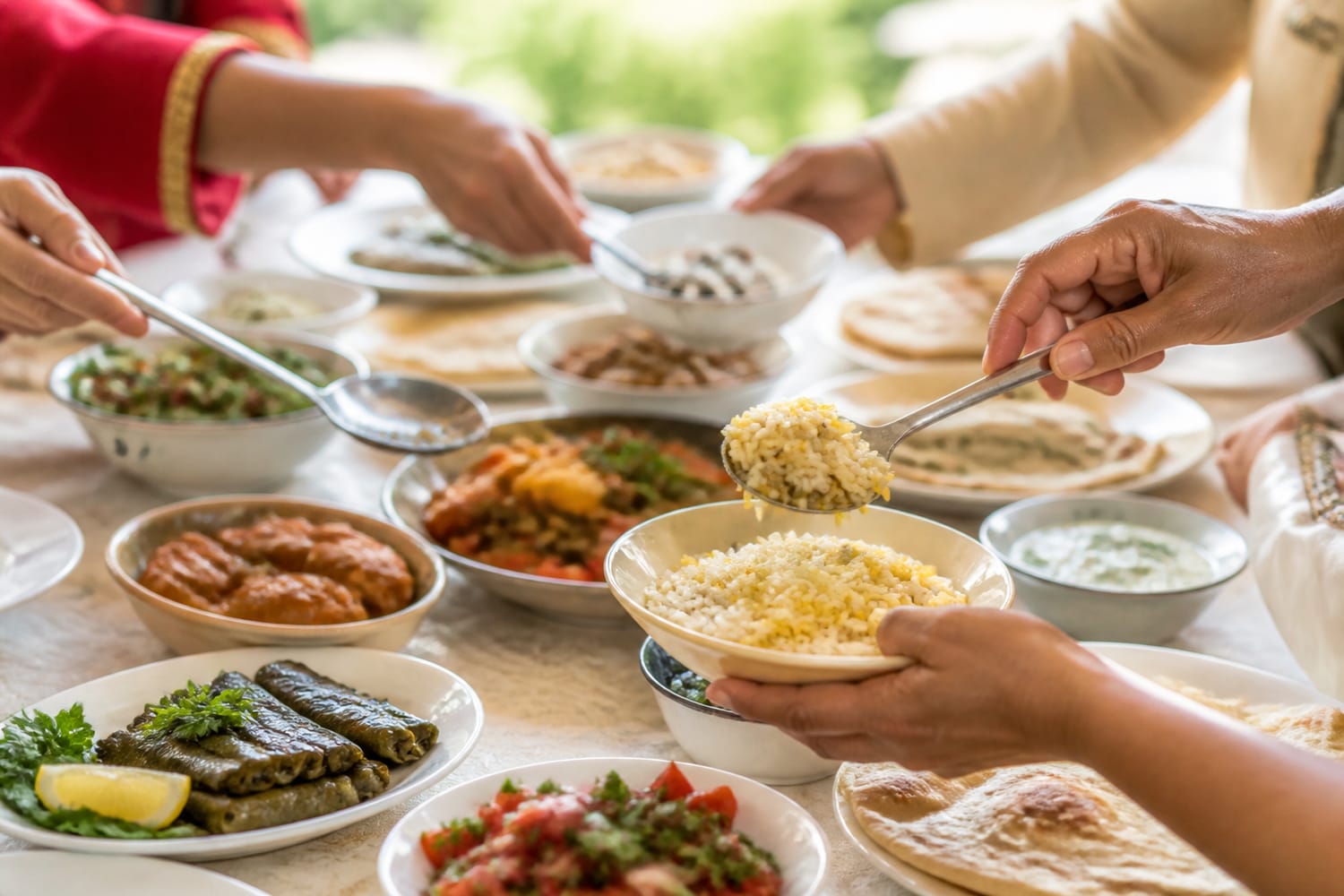
Across many Chinese families, hosts may place food directly into a guest’s bowl, recommend special dishes, or continue offering food near the end of a meal. Eating well indicates that the gathering has succeeded, while an untouched dish might cause concern that the visitor dislikes the cooking.
In parts of South Asia, repeated servings can similarly express affection. Hosts may circulate with rice, bread, curries, sweets, or tea, encouraging guests to try everything. Family elders frequently take responsibility for ensuring no plate remains empty for long.
Throughout much of the Middle East, welcoming visitors with coffee, tea, dates, sweets, or a substantial meal is associated with generosity and honor. The exact customs differ widely, but refusing every offering can sometimes create distance. Accepting at least a small portion may acknowledge the host’s effort.
These traditions belong to a larger world of cultural etiquette dos and don’ts, where an ordinary gesture can have a meaning travelers might otherwise miss.
Food as Affection and Belonging

Repeated offers are not limited to formal hospitality. In many Eastern European, Mediterranean, African, and Latin American households, feeding someone is an everyday language of affection.
A relative may cut another slice of cake before the first is finished. A host might pack leftovers for the journey home. A grandmother may interpret “I’m not hungry” as a temporary misunderstanding rather than a final answer.
Such gestures often bring guests into the family circle. Eating together says, “You are one of us for the duration of this meal.” Food can cross linguistic barriers and reduce the awkwardness of a first meeting. Even when conversation is difficult, offering bread, fruit, or tea creates an immediate structure for connection.
Hospitality rituals also reinforce reciprocity. Today’s guest may become tomorrow’s host, continuing a cycle of visits, meals, and mutual care.
When Hospitality Meets Personal Boundaries
Generous customs should not require guests to ignore allergies, religious restrictions, medical needs, or personal comfort. Modern hosts increasingly recognize that care sometimes means accepting a refusal rather than overcoming it.
Travelers can decline while preserving the spirit of the exchange. Useful responses include:
- “It was delicious, but I’m completely full.”
- “Thank you—I would love some tea instead.”
- “I can’t eat that ingredient, but everything looks wonderful.”
- “Could I take a little with me for later?”
Complimenting the meal helps separate the refusal from the host’s cooking. Taking smaller initial portions can also leave room for a ceremonial second helping.
The safest strategy is to observe before acting. Watch how other guests respond, follow the host’s lead, and ask a polite question when uncertain. As with slurping etiquette around the world, context matters more than rigid assumptions.
The Message Behind “Eat More”
A repeated food offer may look like a simple concern about appetite, but it often carries a much richer message. It can express pride in the household, respect for the visitor, gratitude for companionship, or hope that the relationship will continue.
For travelers, understanding this ritual transforms an awkward moment into a cultural clue. The overflowing plate is not always about consuming another helping. Sometimes it is the host’s way of saying that there is room for you at the table—and that your presence is worth celebrating.