
A Wedding Dress Is Never Just a Color
Why do some brides wear white while others choose red, gold, or a whole wardrobe of colors? Wedding clothes reflect local ideas about celebration, family, status, and good fortune. Those meanings aren’t fixed: they shift across communities and generations, and a bride may honor several traditions in one day.
Look beyond the familiar white gown, and wedding fashion becomes a way to explore the world. The same shade can mark a joyful beginning in one setting and carry a different meaning in another. As Tour Trivia’s guide to clothing colors across cultures shows, context matters as much as color.
White: A Western Tradition With a Surprisingly Short History
A white wedding dress can feel timeless in Europe and North America. It isn’t. Brides wore white before Queen Victoria married Prince Albert in 1840, but her widely admired gown helped turn that choice into a lasting bridal fashion. The Victoria and Albert Museum’s account of her influence makes an important distinction: Victoria popularized white; she did not invent it.
Before a dress made specifically for one day became an expectation, many women married in their best available clothes, whatever the color. White later gathered associations with purity and innocence, but its history is also a story about fashion and means. A light-colored gown was a striking choice for someone who could afford delicate fabric and its upkeep.
Today, white remains a recognizable bridal option far beyond the West. Yet seeing a bride in white tells you little about why she chose it. It might reflect a family custom, a religious ceremony, a favorite silhouette, or simply the dress she loved.
Red: Good Fortune in China and Celebration in India
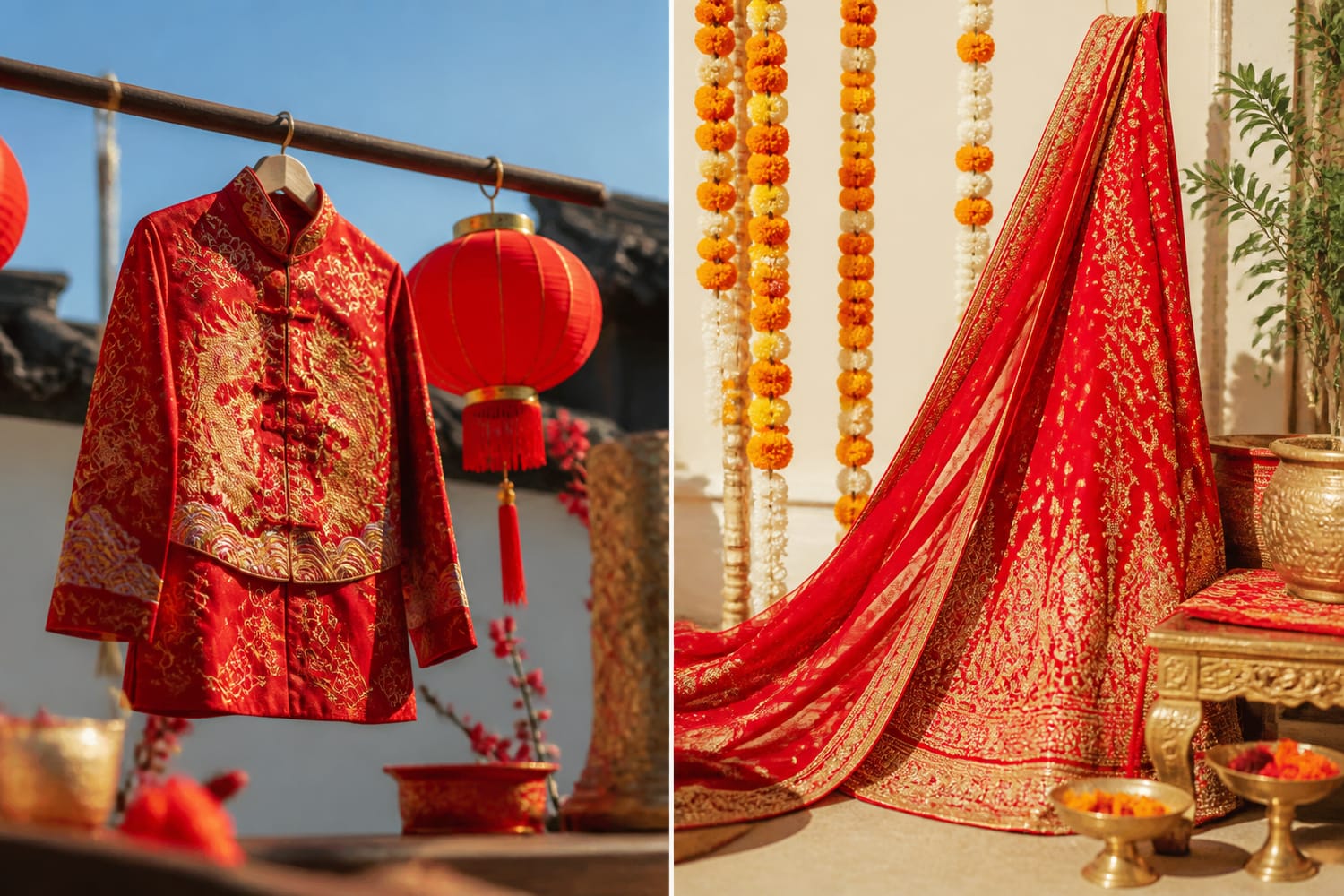
At many Chinese weddings, red conveys wishes for joy and prosperity. It can appear in clothing and decorations, making the celebration unmistakably festive. The Smithsonian’s National Museum of Asian Art describes red as an auspicious color associated with celebrations in China. A traditional red wedding outfit is therefore more than a bold fashion statement: it helps express hopes for the couple’s future.
Red also has deep bridal associations in India. In many communities, a bride may choose a red sari or lehenga, often with gold details. The Victoria and Albert Museum notes that red dyes in Indian textiles have long had auspicious associations with marriage and fertility. But India’s weddings cannot be reduced to one outfit or shade; choices differ across regions, faiths, families, and individual brides.
That contrast is worth remembering. A guest familiar only with Western wedding etiquette might instinctively treat white as the bridal color. At a celebration centered on red attire, that assumption may miss what the clothing is saying.
Japan: White at the Ceremony, Color at the Celebration
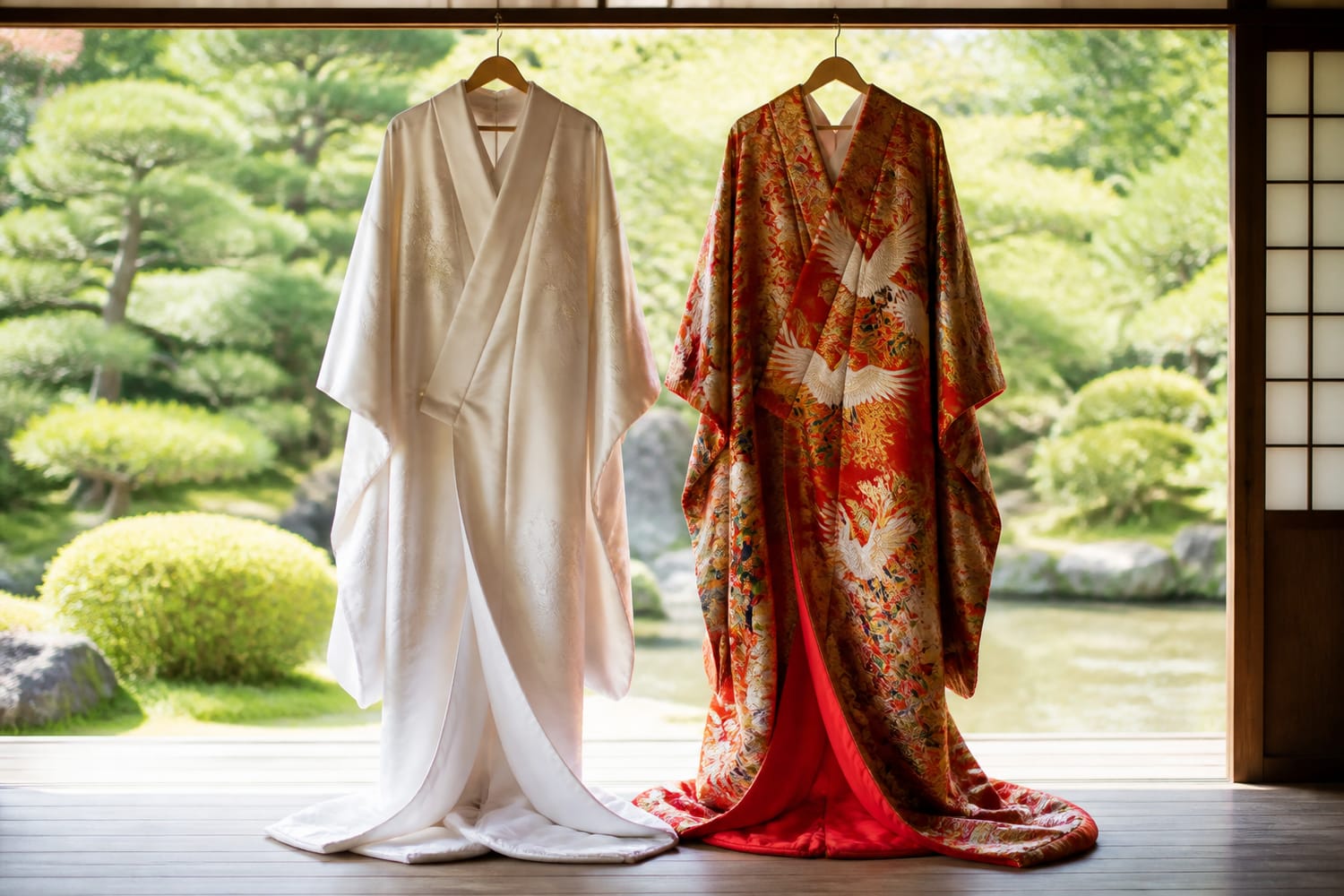
Japan offers an especially vivid reminder that one wedding need not have one color. In Edo-period wedding traditions documented by the Metropolitan Museum of Art, a bride wore white garments for the ceremony and could change afterward into a robe with a deep-red, black, or multicolored ground. The change of clothes marked a change in the celebration—not a rejection of the first outfit.
The designs on those robes mattered, too. An embroidered Japanese wedding robe in the Met’s collection features paired butterflies representing the newlyweds and a mandarin orange tree associated with longevity. Even before anyone explains a color, the garment’s patterns are offering wishes for married life.
It is tempting to make a simple rule—“white means this in Japan”—but ceremony, period, and garment all change the answer. Sometimes the story lies in the sequence: what the bride wears first, what she changes into, and when.
Korea: A Bridal Robe Full of Color
Traditional Korean bridal dress can be richly colored. The hwarot, an outer robe worn by brides, is known for its red fabric and elaborate decoration. According to South Korea’s official cultural information, its embroidery and vivid details made it a particularly splendid garment for a major life event.
Red has been associated with good fortune and prosperity in Korean bridal clothing. Yet a visitor to a Korean wedding today may also see a white Western-style gown, traditional dress, or both at different points in the festivities. The coexistence of these choices is a useful reminder that a living tradition does not have to look identical at every wedding.
Ghana: When the Cloth Tells the Story
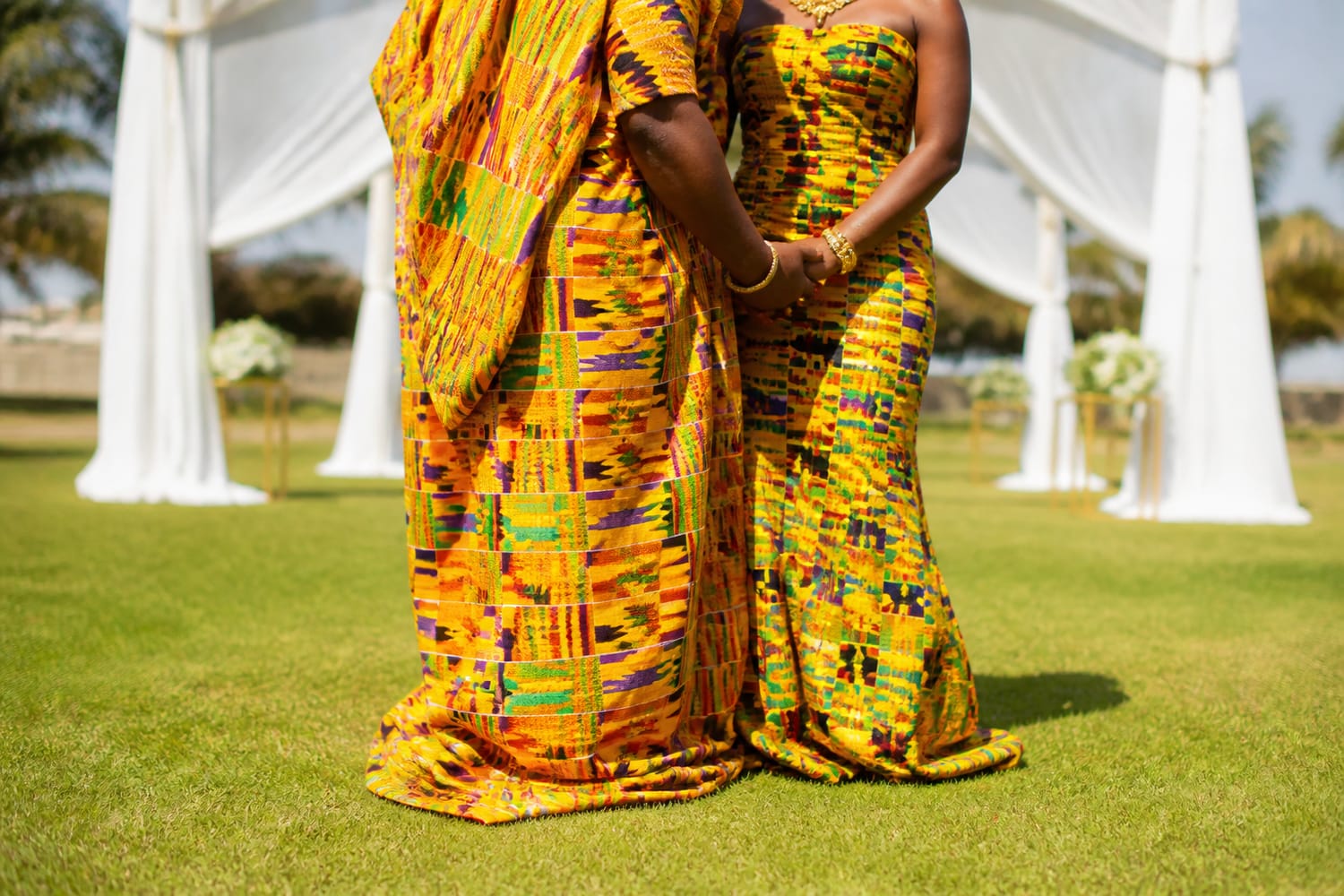
For some Ghanaian couples, the striking feature of wedding attire is not a single dominant shade but the textile itself. Kent State University Museum’s exhibition on global wedding traditions highlights handwoven kente cloth worn by a couple in Ghana. Its multiple colors and carefully worked patterns challenge the idea that bridal clothing must be defined by one color at all.
Kente also carries a history beyond weddings. The Metropolitan Museum of Art describes Ghanaian kente as a prestigious, labor-intensive textile woven in narrow strips and joined together. At a celebration, that craftsmanship can be as meaningful to notice as the finished outfit’s palette. Nor does every Ghanaian couple dress alike: community customs, family preferences, and the kind of ceremony all shape what they wear.
The Meaning Is in the Choice
Wedding colors are fascinating because there is no universal key to decode them. White can be a long-established family preference or a modern addition to another ceremony. Red can carry wishes for good fortune. A patterned cloth may speak through its weaving as well as its hues. And a bride who changes outfits can tell several stories over the course of one celebration.
If you’re attending a wedding in an unfamiliar setting, follow the couple’s dress guidance rather than relying on a rule from home. If you’re simply curious, ask about an outfit with interest instead of assuming what it means. Wedding clothes, like wedding rings worn on different hands, show how many ways people can make the same promise visible.