
A Small Coin, a Big Hope
Travelers toss coins into fountains to make a wish, invite good luck, or promise themselves a return trip. The gesture feels spontaneous, but it draws on a much older idea: water is a place where hopes can be offered. In Rome, that belief has become a travel ritual famous enough to outshine the fountain itself.
Before Fountains, There Were Sacred Springs
Long before tourists gathered at ornamental fountains, people left offerings at springs and wells. Water sustained communities, but a spring rising from the ground could also seem mysterious. Leaving something valuable there was a way to honor a deity or ask for help.
The Roman Baths in Bath, England, offer a striking example. Worshippers threw objects into a spring associated with the goddess Sulis Minerva. Archaeologists have found more than 12,000 Roman coins there, along with other offerings. These were not necessarily wishes in the modern sense; people came with prayers, requests, and grievances.
That distinction matters. Today’s coin toss is playful and often private. An ancient offering might have been part of a religious practice. The two gestures resemble each other, but no single ancient spring can be identified as the origin of every modern wishing fountain.
Why Toss a Coin?
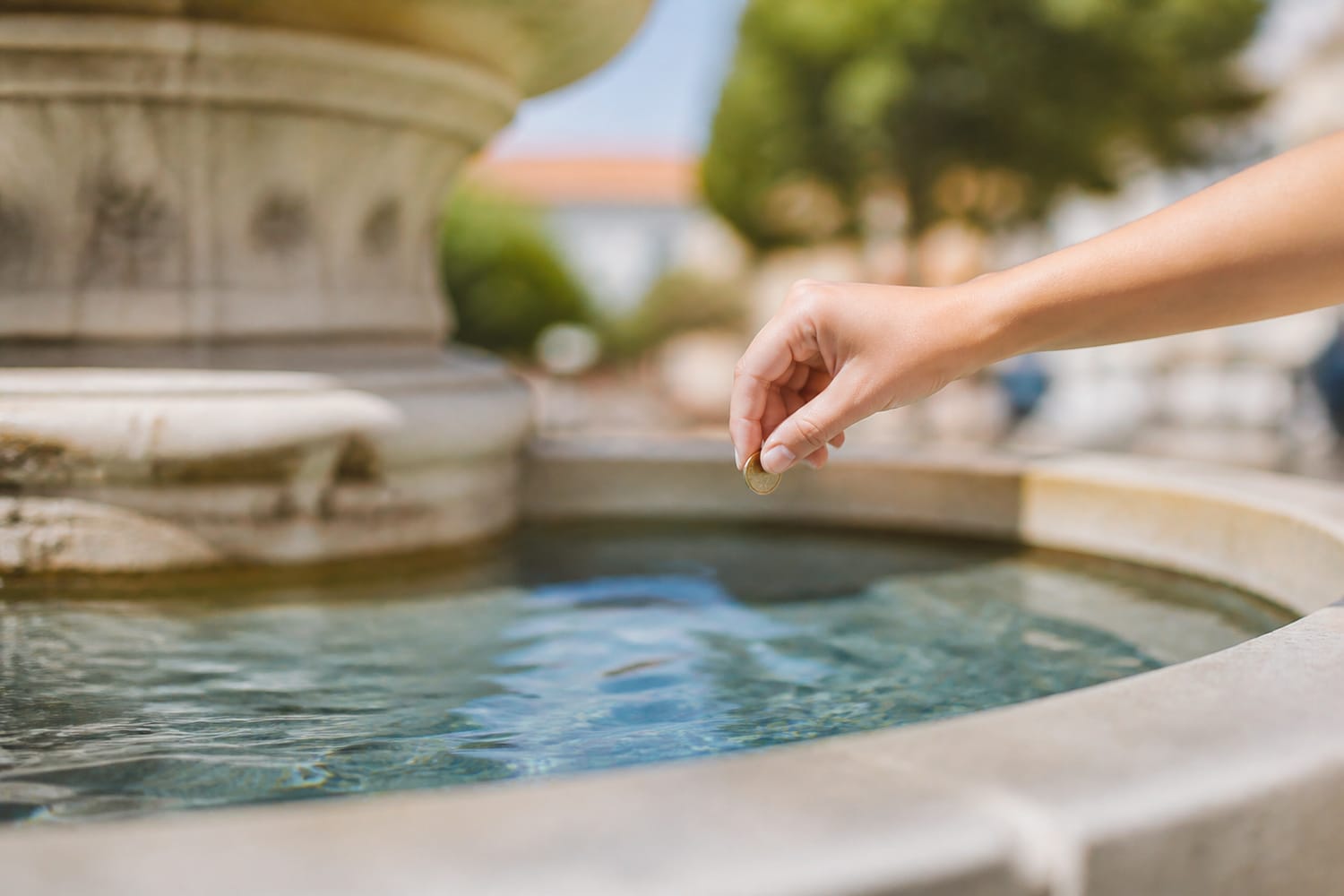
A coin is easy to carry, recognizable, and small enough to give away without much deliberation. Yet letting it go makes the wish feel like an action rather than just a thought. For a moment, the traveler trades something tangible for a possibility.
The water adds its own drama. A coin flashes, breaks the surface, and disappears from reach. You can’t retrieve it and try again because you thought of a better wish. That tiny point of no return is part of the ritual’s appeal.
Different people bring different meanings to the same toss. Some believe in luck; others enjoy taking part in a local tradition. A child may wish for something fantastical, while an adult quietly hopes to see the place again. The fountain has room for all of them without asking anyone to explain.
Trevi Fountain and the Promise of Rome
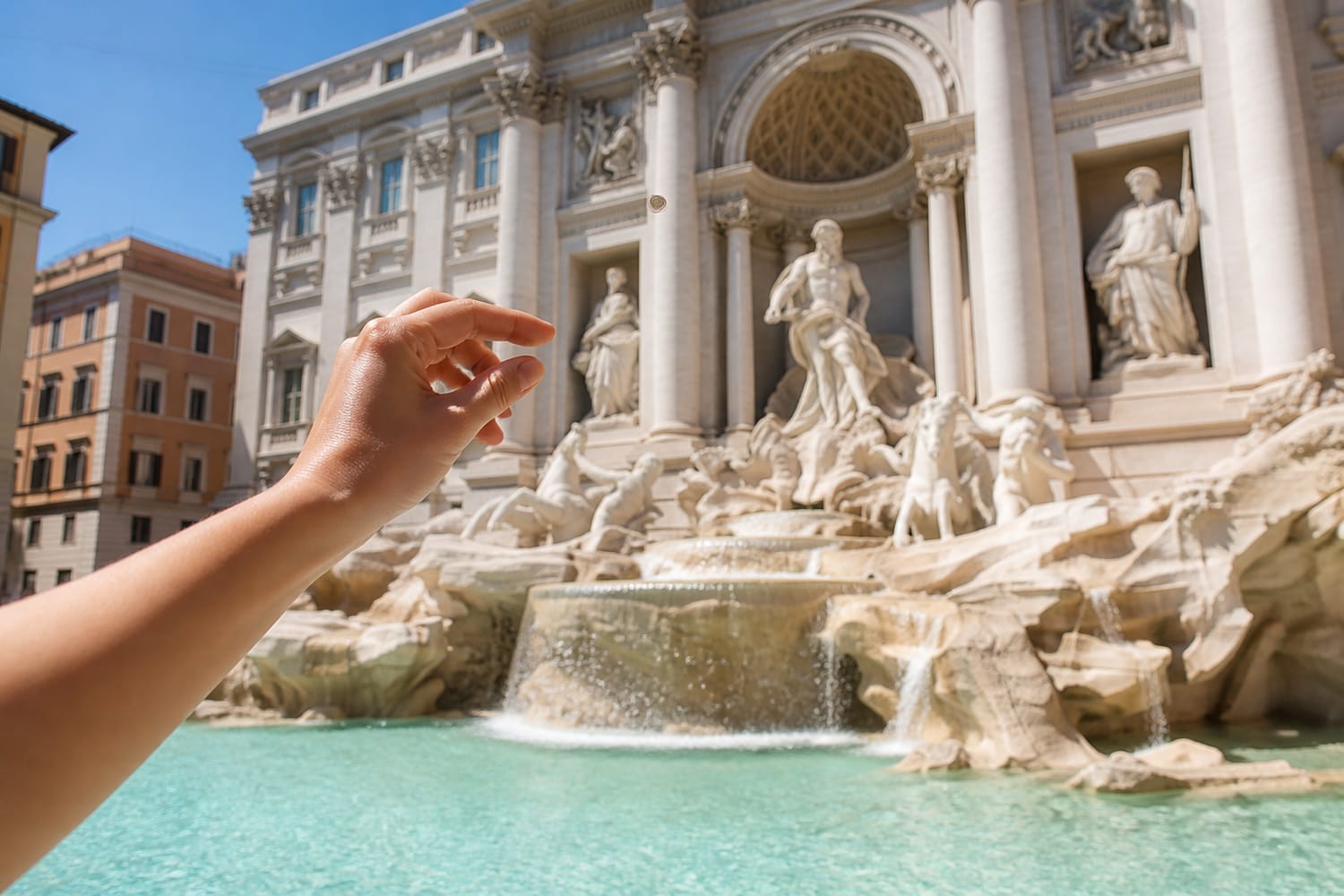
No fountain is more closely associated with the traveling wish than Rome’s Trevi Fountain. According to the custom described by Rome’s official tourism site, throwing in a coin means you will return to the city. The site also describes a more romantic version involving additional coins and hopes of love or marriage. These are legends, not guarantees—and part of their charm is that travelers get to play along.
Trevi makes an unusually fitting stage for the gesture. Its sculptures and rushing water turn a small movement of the hand into a memorable scene. Tour Trivia’s look at landmarks built to solve everyday problems tells another side of its story: the fountain stands at the end of an ancient water system. What began with the practical need to bring water into Rome is now also a place where visitors imagine coming back.
You may hear precise instructions about which hand or shoulder to use. Customs can pick up extra details as people pass them along, so there is little reason to worry about performing a perfect toss. The central idea is simple: leave a coin, make your wish, and let Rome surprise you later.
What Happens to the Coins?
At Trevi, the money does more than accumulate beneath the water. Rome’s municipal government says coins collected from the fountain are directed to charitable work through Caritas, supporting services for people facing disadvantage. A traveler’s private hope can therefore become a practical contribution to the city.
That outcome is worth remembering because it is specific to Trevi; it should not be assumed at every fountain. Elsewhere, coins may be collected for maintenance, donated, or simply become a problem for the people caring for a site. If a sign asks visitors not to throw anything into the water, respect it. An old spring, wildlife pond, or protected archaeological feature is not an invitation to start a new wishing tradition.
Why the Ritual Travels So Well
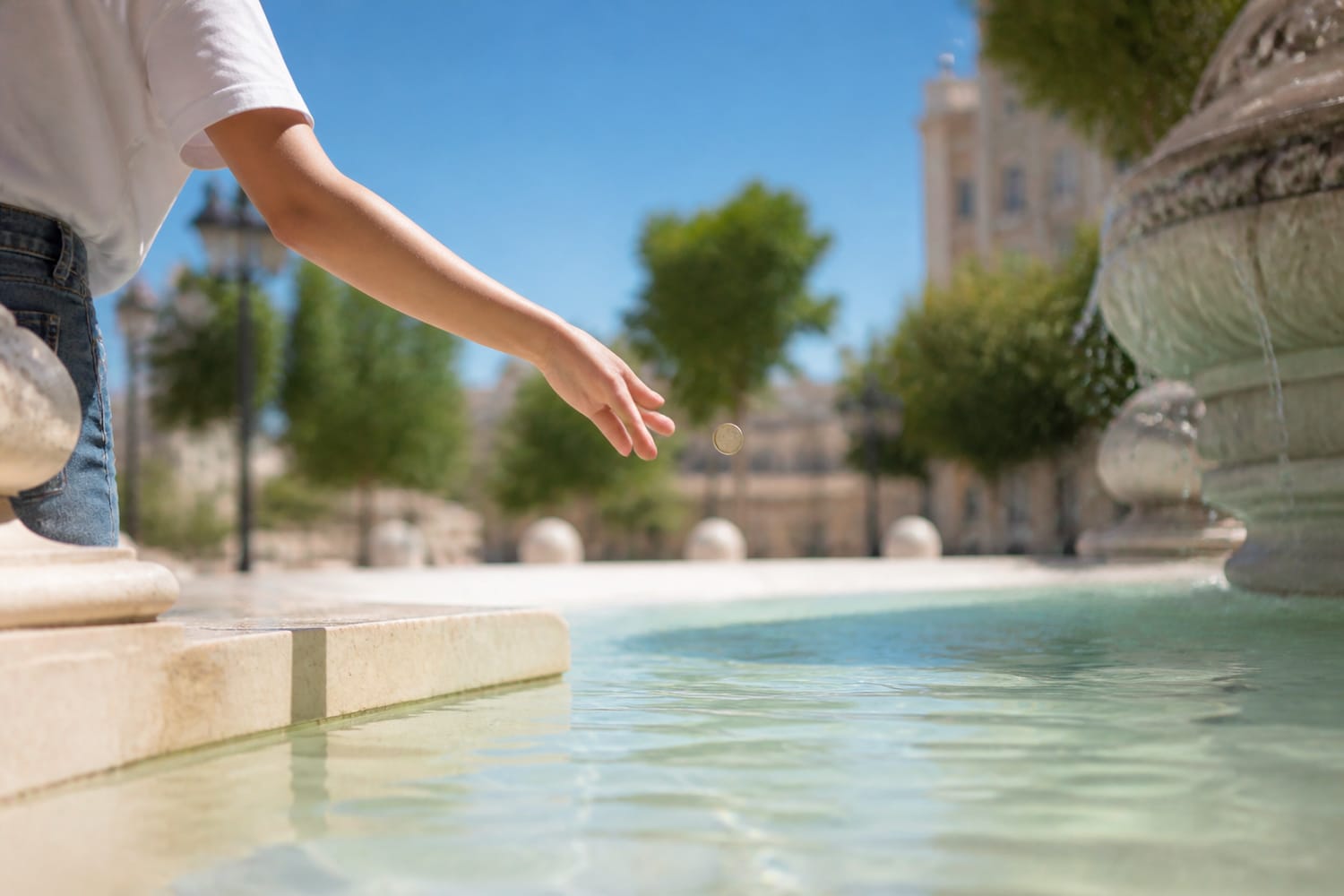
Coin tossing needs almost no shared language. A visitor can understand it by watching someone else pause at the water’s edge, close their eyes, and flick a coin into the basin. That makes the ritual easy to carry from one trip to the next, even when each place tells a different story about what the wish means.
It also gives travelers a way to mark a fleeting moment. Trips are full of departures: the last walk through a square, the final afternoon before a train, the glance back at a place you are not ready to leave. Wishing to return turns goodbye into something less final.
That may explain why fountains attract wishes even from people who would never describe themselves as superstitious. The coin does not have to change the future to mean something. It can be a reminder to remember the trip, or a promise to make another one possible.
Make a Wish Without Missing the Place
If you encounter a fountain where coin tossing is welcome, take a second before you throw. Look at the building around it, listen to the water, and notice who else has stopped there. The story of a place is usually richer than its best-known ritual.
Then make your wish if you like. Perhaps you will return; perhaps you will discover somewhere entirely new. Either way, you will have joined a long-running human habit: standing beside water, giving up something small, and imagining what might happen next.