
One Holiday, Two Calendar Dates
Christmas falls in January for some Christian communities because they calculate the holiday using an older calendar. While most of the world follows the Gregorian calendar, several Eastern Orthodox and Oriental Orthodox churches preserve calendars that place their December 25 on January 7—or, in some traditions, celebrate Christmas on January 6.
The result is not a disagreement about the meaning of Christmas. It is a fascinating example of how astronomy, history, religion, and cultural identity can give the same holiday different dates.
The Julian Calendar Came First
The calendar story begins in ancient Rome. Julius Caesar introduced the Julian calendar in 45 BCE, replacing a complicated Roman system that had frequently fallen out of step with the seasons.
The Julian calendar treated a year as 365 days, with an additional leap day every four years. That calculation was impressively close to the actual solar year, but it was not exact. The Julian year was slightly too long, causing the calendar to drift gradually away from astronomical events such as the spring equinox.
The error amounted to only minutes each year, but small inaccuracies add up across centuries. By the 1500s, the calendar had drifted by approximately 10 days.
The Gregorian Calendar Corrected the Drift

In 1582, Pope Gregory XIII introduced a revised system known as the Gregorian calendar. It adjusted the leap-year rules and removed accumulated calendar drift, bringing important seasonal dates back into alignment.
Catholic countries adopted the new calendar first. Protestant nations generally followed later, while some Orthodox countries resisted the change or adopted it only for civil purposes. Today, the Gregorian calendar is the standard international calendar used for business, travel, government, and everyday life.
However, changing the calendar used at the post office did not automatically change the one used in church. Several Christian communities continued following the Julian calendar when setting religious feasts.
As Timeanddate’s explanation of the Julian calendar notes, the older system remains important to some Orthodox churches even though it is no longer widely used as a civil calendar.
Why December 25 Becomes January 7
The Julian calendar is currently 13 days behind the Gregorian calendar. Therefore, when a church following the Julian calendar reaches December 25, the calendar used in everyday international life already reads January 7.
In other words, these churches are not technically moving Christmas away from December 25. They are celebrating December 25 according to a different calendar.
The relationship can be summarized simply:
- December 25, Gregorian calendar: Christmas for most Catholic, Protestant, and some Orthodox Christians
- December 25, Julian calendar: January 7 on the Gregorian calendar
- January 6: Christmas and Epiphany in the Armenian Apostolic tradition
January 7 is not a permanent translation of Julian December 25. Because the two calendars handle certain century years differently, their gap will eventually increase. If the Julian calendar remains in use, December 25, 2100, on that calendar will fall on January 8, 2101, in the Gregorian system.
Not Every Orthodox Church Uses the Same Calendar
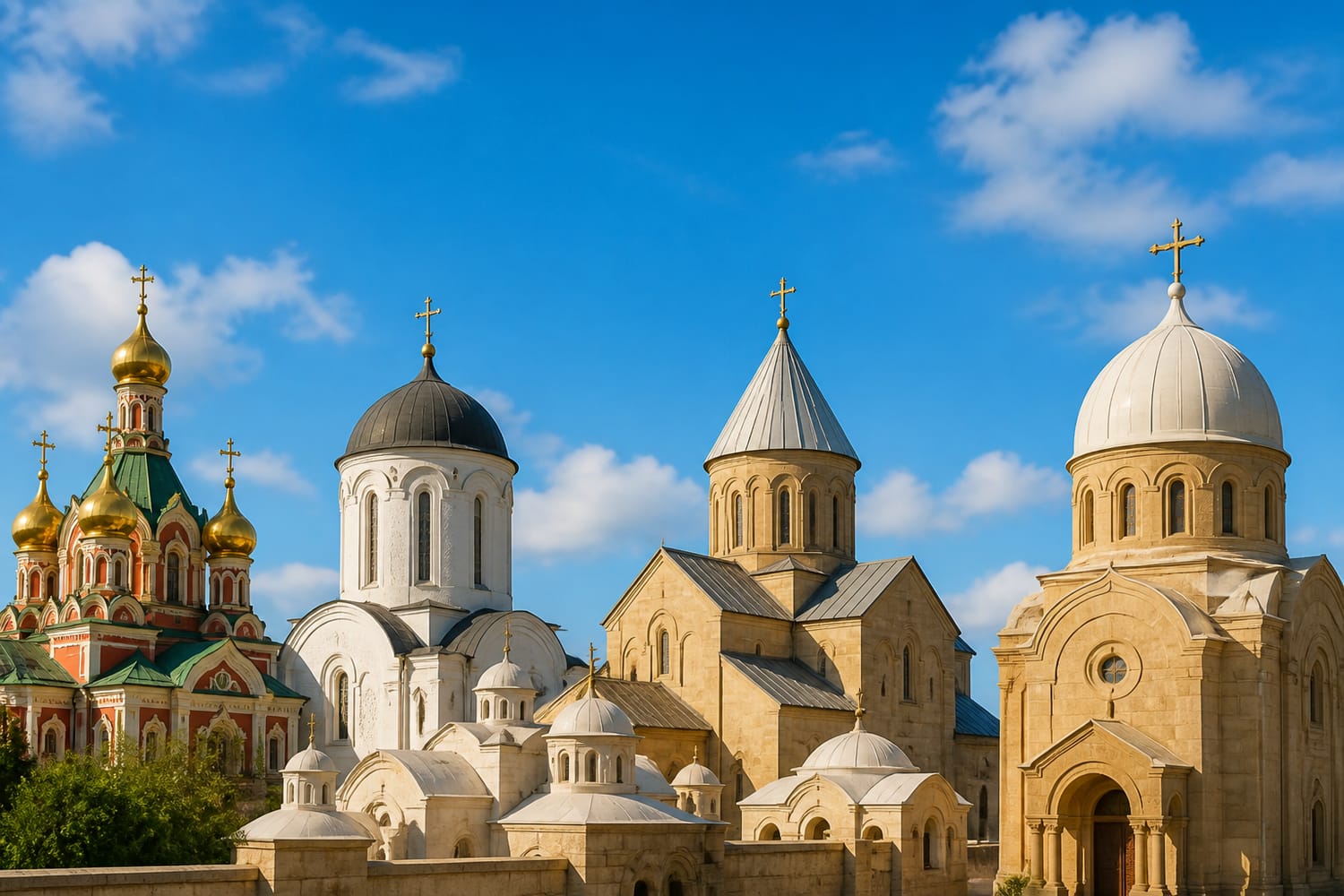
It is tempting to call January 7 “Orthodox Christmas,” but that phrase can be misleading. Orthodox Christianity includes numerous self-governing churches, and they do not all follow the same calendar for fixed religious holidays.
Churches in traditions associated with Russia, Serbia, Georgia, and Jerusalem continue to observe Christmas according to the older Julian calendar. January celebrations are also important among many Coptic Christians in Egypt and Orthodox communities in Ethiopia and Eritrea.
Other Orthodox churches use the Gregorian calendar or the Revised Julian calendar for fixed feasts. Orthodox Christians in countries such as Greece, Romania, Bulgaria, and Cyprus commonly celebrate Christmas on December 25 alongside Western Christians.
The Revised Julian calendar was developed during the 20th century and currently matches the Gregorian calendar for dates such as Christmas. Its adoption created a middle path: churches could reform their calendar without simply describing it as the Gregorian system.
Armenia’s January 6 Christmas
Armenia offers another variation. The Armenian Apostolic Church traditionally celebrates the Nativity and the Epiphany together on January 6.
In the early centuries of Christianity, the birth and baptism of Jesus were commemorated together in one festival. Many churches later separated the observances, placing Christmas on December 25 and keeping Epiphany on January 6. The Armenian Church preserved the combined celebration.
Consequently, Armenia’s Christmas date is not simply another result of the 13-day difference between the Julian and Gregorian calendars. It represents a distinct and ancient liturgical tradition. Armenia’s official tourism site describes January 6 as the Armenian Apostolic Church’s Christmas celebration.
Christmas Traditions Beyond the Date

January Christmas celebrations vary considerably, but religious observance is often more prominent than commercial gift-giving. Many communities prepare through a period of fasting, prayer, and reflection before gathering for church services and festive meals.
Customs may include:
- Attending a lengthy Christmas Eve or Christmas Day liturgy
- Breaking a fast with meat, pastries, breads, or regional specialties
- Lighting candles to symbolize hope and spiritual light
- Placing straw on or beneath a table as a reminder of the Nativity
- Visiting relatives and welcoming guests with repeated servings of food
- Singing carols or joining community processions
Holiday food is especially effective at preserving identity. Recipes passed through families can connect diaspora communities with countries their relatives left generations earlier. Tour Trivia’s look at festival feasts around the world explores how shared dishes turn religious and cultural festivals into living traditions.
Hospitality matters just as much as the menu. In many Eastern European, African, and Middle Eastern households, offering guests generous portions is a sign of affection and belonging. These customs reflect the broader hospitality rituals surrounding repeated offers of food.
Countries Can Have More Than One Christmas
National borders do not always match religious calendars. A country may contain Orthodox, Catholic, Protestant, Armenian, or other Christian communities, each with its own holiday traditions.
Some families celebrate both December 25 and January 7, particularly in multicultural households or diaspora communities. One date may be a public, gift-centered celebration, while the other is reserved for church and family. In places where multiple traditions coexist, both dates may receive formal or informal recognition.
Calendar choices can also carry cultural meaning. Retaining the older calendar may express continuity with ancestors, while adopting a newer one may reflect changing national relationships or social priorities. Even within the same country, families may make different choices.
For travelers, the safest approach is to avoid assuming that everyone celebrates on the nationally dominant date. Tour Trivia’s guide to cultural etiquette around the globe offers a useful reminder: observing local customs is usually more respectful than expecting one universal rule.
A Holiday Shaped by History
January Christmas is ultimately a story about the ways people measure and remember time. A minor astronomical mismatch created a calendar reform, the reform encountered religious and political resistance, and centuries later, families still gather on different days to honor the same sacred event.
The calendar explains the date, but tradition explains its endurance. Whether Christmas arrives on December 25, January 6, or January 7, its timing reflects generations of faith, identity, and cultural memory.