
A Celebration That Must Wait
In several cultures, celebrating a birthday early is believed to tempt fate. Offering congratulations before the date may symbolically assume that the person will safely complete another year of life. Waiting until the birthday—or celebrating afterward—avoids this presumption and respects the idea that milestones should be acknowledged only once they truly arrive.
To many Americans, an early birthday dinner is simply practical. If the actual date falls on a Tuesday, why not have cake over the weekend? Elsewhere, however, that harmless schedule change can feel like a genuine jinx. The rule is especially familiar in Germany and Russia, while similar beliefs appear within some Indian families and other communities.
These customs are not followed by every person, household, or generation. Nevertheless, they reveal something fascinating: a birthday is not merely a party. It is a symbolic crossing from one completed year of life into the next.
Why an Early Birthday Can Seem Unlucky
The central superstition is surprisingly logical once viewed through the lens of older beliefs about fate. You cannot be certain that a future event will occur, so behaving as though it already has may appear arrogant, reckless, or spiritually dangerous.
An early celebration can therefore carry several uncomfortable meanings:
- It assumes the birthday person will reach the coming date.
- It claims a milestone before it has been completed.
- It may attract the attention of bad luck or envious forces.
- It disrupts the proper timing of a meaningful life-cycle ritual.
- It treats the future as guaranteed rather than uncertain.
In societies where words and rituals are believed to carry power, saying “Happy Birthday” is more than casual politeness. It is a blessing intended for a particular moment. Delivering it too soon is like opening a door before it is safe to enter.
This concern belongs to a much wider human tendency to protect important transitions. Births, marriages, journeys, harvests, and new years are frequently surrounded by symbolic precautions. Tour Trivia’s look at good-luck practices around the world shows how people use carefully timed actions to invite fortune and keep misfortune away.
Germany’s Strict Birthday Clock
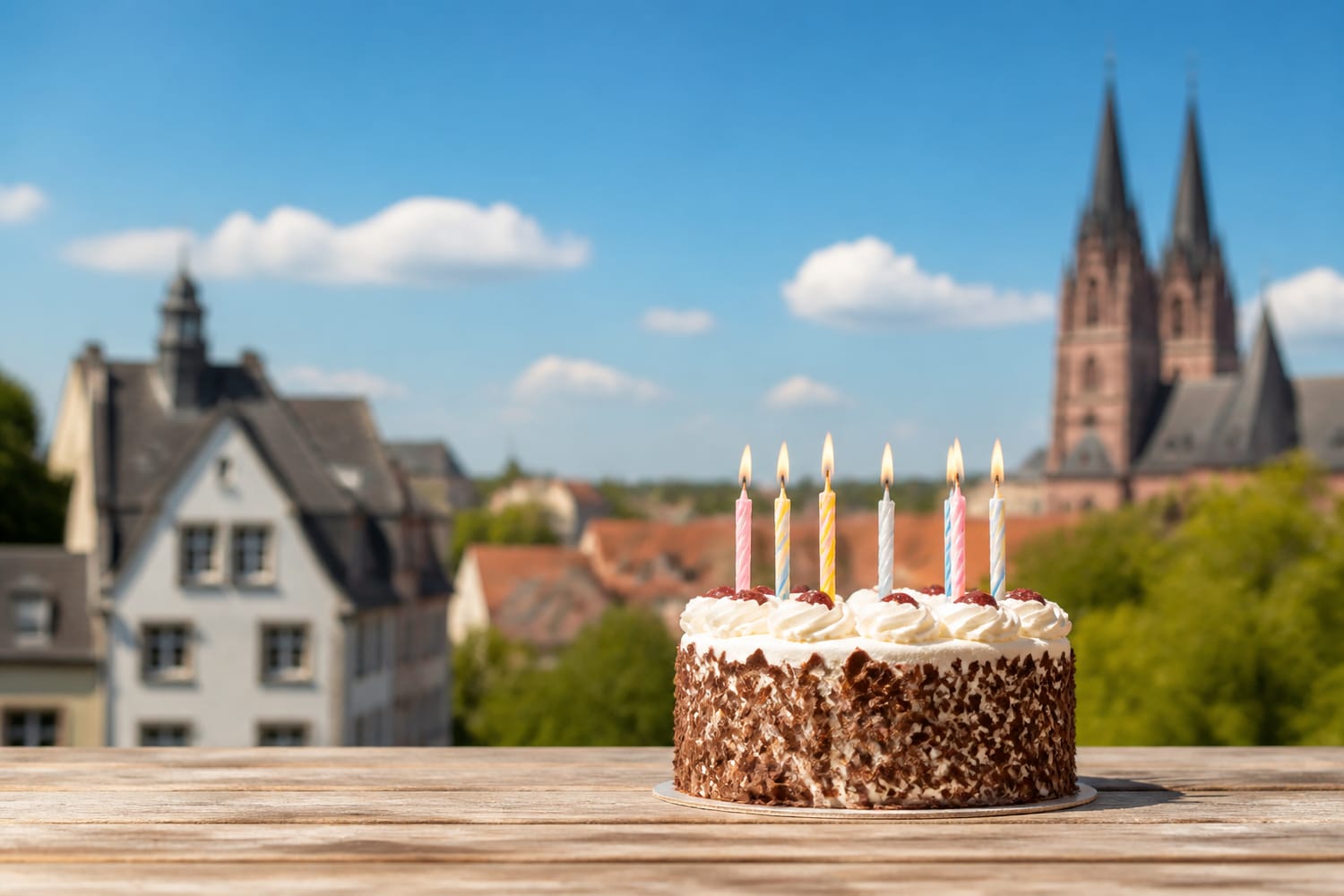
Germany offers one of the clearest examples of the custom. Wishing a German Alles Gute zum Geburtstag before the actual birthday may earn an awkward correction rather than a grateful smile. As Deutsche Welle’s guide to German birthday etiquette explains, premature congratulations are widely associated with bad luck.
The rule does not prevent people from gathering the evening before. Friends may celebrate “into” the birthday, known as reinfeiern. The important detail is that the formal greetings, gifts, and birthday song wait until midnight. At 11:59 p.m., the milestone is still in the future; at midnight, it has officially arrived.
When an on-time party is impossible, many traditional-minded Germans would rather celebrate late than early. A delayed dinner acknowledges something that has already happened, whereas an early one makes a claim about what has not yet occurred.
The custom also fits neatly with the cultural importance placed on correct timing. Just as arriving at an appointment too late can be discourteous, recognizing a birthday too soon can feel equally mistimed. The date itself matters, not simply the friendly intention behind the gesture.
Russia and the Danger of Tempting Fate
A similar belief is common in Russia, where advance birthday wishes may be interpreted as inviting misfortune. Birthdays are important social occasions, but congratulations traditionally belong on or after the correct date. Russia Beyond’s overview of Russian superstitions notes that wishing someone well later is acceptable, while doing so prematurely may be connected with bad fortune.
The custom reflects a broader reluctance to announce a successful outcome before it is secure. Talking too confidently about future plans can feel like tempting fate, as though boasting might cause fortune to reverse direction.
For that reason, a well-meaning visitor who says “Happy early birthday!” may receive a response that seems unusually serious. The recipient is not necessarily rejecting the affection. They may simply want the words saved until they can be safely and properly offered.
Humility and Mortality in Indian Family Traditions

Versions of the superstition also appear in some Indian families, although India is far too culturally and religiously diverse for the practice to be called universal. A record in the Dartmouth Folklore Archive describes a northern Indian family tradition in which celebrating early suggests excessive confidence that the person will live to see the date.
Here, the belief emphasizes humility more than rigid calendar etiquette. Life is uncertain, and no one should behave as though another day is guaranteed. Waiting becomes an acknowledgment of human vulnerability.
Traditional calendars can add another layer. Some Hindu families observe birthdays according to a lunar date or birth star rather than—or alongside—the familiar Gregorian calendar date. Consequently, what appears “early” to an outsider may actually be the correct ritual date within the family’s tradition.
Birthdays as Vulnerable Thresholds
Historically, birthdays have often been treated as spiritually charged occasions. Folklore associated important life transitions with vulnerability, making protection from harmful forces especially important. Even familiar birthday customs, including candles and wishes, have been connected with blessing, protection, and good fortune rather than entertainment alone.
From this perspective, a birthday marks a threshold. Until the date arrives, the previous year is not symbolically complete. Celebrating early attempts to cross that threshold before reaching it.
This explains why late celebrations are usually safer. Once the person has reached the birthday, the transition is complete. The party may be delayed, but it no longer anticipates an uncertain event.
When the Birthday Is Not the Main Celebration
Not every culture has historically placed the greatest importance on a person’s birth date. In parts of Europe, name days connected with saints’ feast days have sometimes rivaled or surpassed birthdays. Tour Trivia’s guide to why name days matter explores how these celebrations connect individuals with religion, family history, and a wider community.
Other societies emphasize a first birthday, coming-of-age ceremony, lunar birthday, or another milestone. These variations remind travelers that the Western-style birthday party—complete with cake, candles, gifts, and a convenient weekend gathering—is only one approach.
How Travelers Can Avoid a Birthday Faux Pas
If you are visiting friends or relatives abroad, a few simple precautions can prevent an uncomfortable moment:
- Wait until the local calendar reaches the person’s birthday before offering congratulations.
- Ask whether an early party is culturally acceptable.
- If you must give a present in advance, suggest that the recipient open it on the correct day.
- Schedule an inconvenient celebration after the birthday rather than before it.
- Remember that practices may vary among generations, regions, and families.
- Follow the birthday person’s preference instead of debating the superstition.
There is no need to pretend that you personally believe an early greeting causes bad luck. Respecting the custom simply shows that you understand the emotional weight it may carry for someone else.
Why the Date Still Matters
Modern schedules encourage us to treat celebrations as movable appointments. Yet the refusal to celebrate birthdays early preserves an older idea: some moments cannot be rushed.
Whether the reasoning involves fate, mortality, humility, or ritual timing, waiting gives the date significance. The birthday is not merely an excuse to gather. It is proof that another year has genuinely been completed.
That is why, in some homes, an enthusiastic “Happy early birthday!” may be less welcome than silence. The warm wishes are still wanted—just not yet.