
Built to Bend, Rock, and Endure
Ancient landmarks survived earthquakes not because they were indestructible, but because their builders balanced mass, flexibility, strong foundations, and carefully fitted materials. Some structures could rock without falling, while others transferred seismic forces through arches, timber joints, or enormous stone bases. Their scars reveal both inspired engineering and centuries of repair.
The monuments below belong to a broader group of ancient landmarks still standing strong, but each has faced the additional challenge of unstable ground.
The Great Pyramid of Giza, Egypt
The Great Pyramid has survived tremors for more than 4,500 years, including the powerful eastern Mediterranean earthquake of 1303. That event likely loosened or displaced some of its smooth outer casing, much of which was subsequently removed for building projects in Cairo.
Its stability begins with an enormous footprint resting on solid limestone. The pyramid’s broad base, low center of gravity, symmetrical shape, and tightly arranged masonry distribute loads instead of concentrating them in slender walls. A 2026 seismic study of the Great Pyramid also suggested that its internal chambers and differences between the monument’s natural frequency and ground vibrations help limit damaging amplification.
Its precise orientation is equally fascinating, as Tour Trivia’s guide to landmarks aligned with the stars explains.
The Parthenon, Greece
The Parthenon has stood on the Acropolis since the fifth century BCE, enduring repeated earthquakes alongside warfare, explosion, fire, and stone removal. The 1981 Gulf of Corinth earthquake sequence damaged parts of its eastern side but did not bring down its surviving colonnades.
Each column consists of separate marble drums stacked without mortar. During shaking, these sections can rock and slide slightly, dissipating energy rather than behaving like one brittle, rigid shaft. Gravity then helps the drums settle back toward their original position. Modern studies of classical columns confirm that this controlled rocking can provide surprising seismic resilience.
The Colosseum, Italy
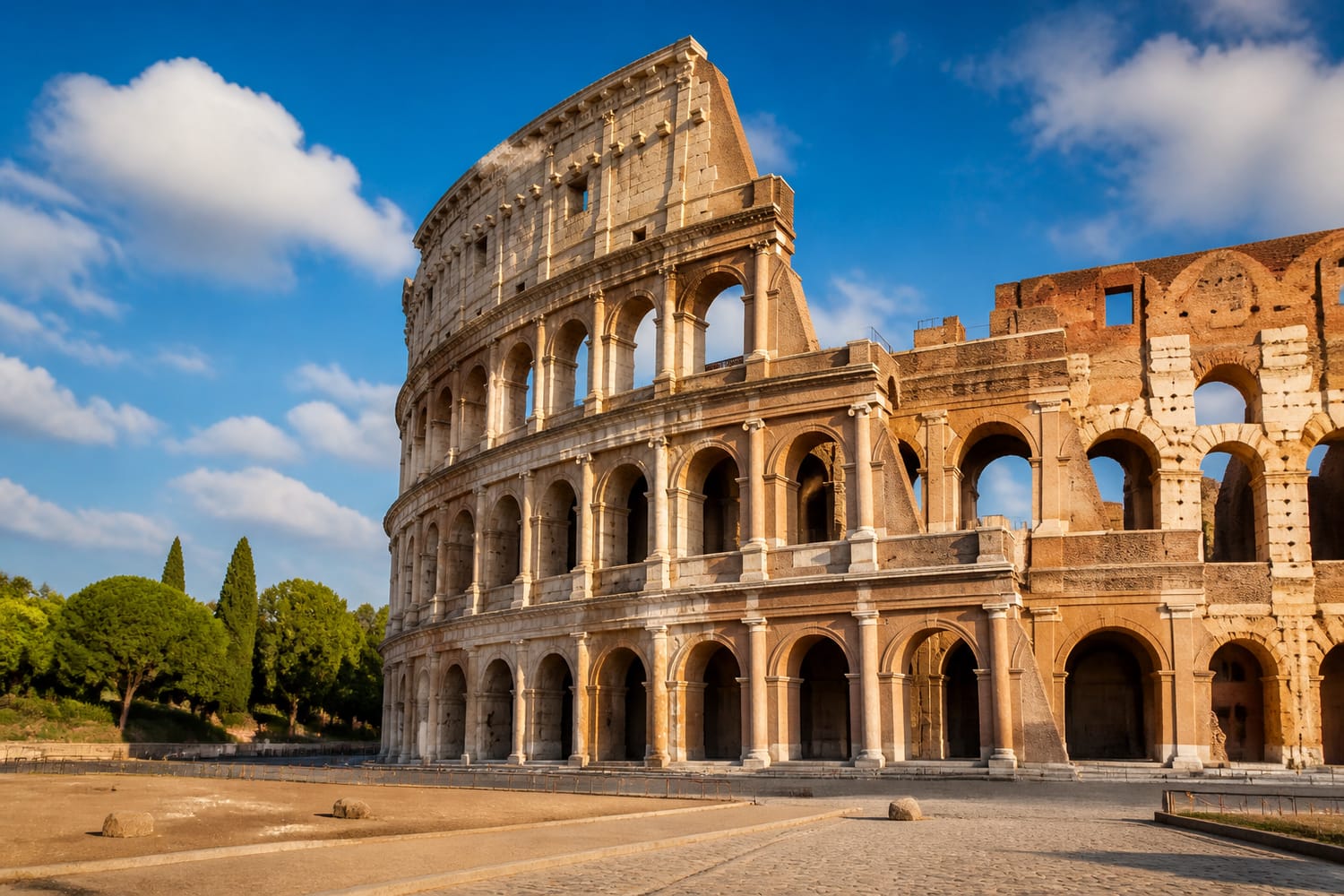
Earthquakes in 847, 1349, 1703, and later years damaged the Colosseum, with the 1349 event contributing to the collapse of much of its southern outer wall. Yet the greater part of the amphitheater remained standing.
Roman engineers created an interconnected skeleton of arches, vaults, radial walls, travertine blocks, and concrete foundations. Loads could travel through numerous paths, so the failure of one section did not necessarily trigger total collapse. Ground conditions also mattered: the southern side stood on less stable alluvial soil, while better-supported portions survived. The missing wall became one of the accidental features that made famous landmarks iconic.
The Treasury at Petra, Jordan
A devastating earthquake in 363 CE severely damaged Petra’s freestanding temples, houses, and infrastructure. The city declined further after later tremors, but its celebrated Treasury façade remained recognizable.
Its advantage was simple: it was carved directly into a sandstone cliff. Unlike a conventional building, the façade had relatively few structural joints that could separate during shaking. Most of its mass was the mountain itself, while its interior rooms were small compared with the immense rock surrounding them. Bedrock construction did not prevent cracking or erosion, but it reduced the danger of walls and roofs collapsing independently.
Hagia Sophia, Türkiye
Hagia Sophia’s survival is a story of engineering through adaptation. Earthquakes in 553 and 557 weakened its original dome, which partly collapsed in 558. Its replacement was raised higher and built with ribs, reducing the dangerous outward force placed on the supporting structure.
Later earthquakes caused additional failures, but Byzantine and Ottoman builders repeatedly strengthened the monument with repairs, tie rods, and massive exterior buttresses. Its pendentives, arches, semi-domes, and piers spread the central dome’s load through a complex hierarchy of supports. The American Society of Civil Engineers’ history of Hagia Sophia shows how rebuilding became part of its seismic defense.
Machu Picchu, Peru
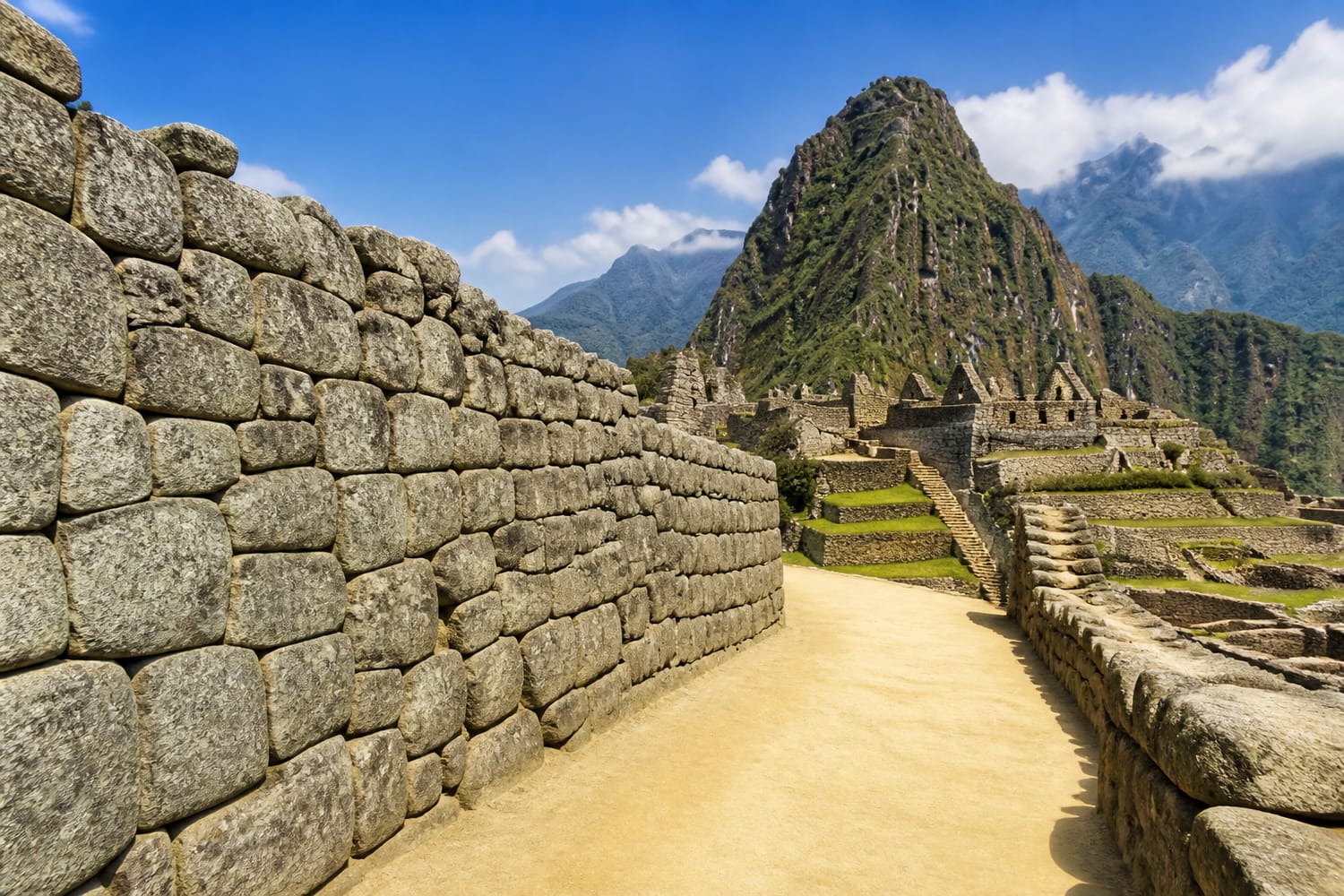
Machu Picchu occupies an exceptionally seismic region, yet its most important walls have endured for centuries. Inca builders shaped irregular stone blocks so precisely that they interlocked without mortar.
These dry-stone walls can move fractionally when the earth shakes. Instead of cracking rigid mortar, the blocks rock, rub against neighboring stones, and settle again. Walls often lean slightly inward, while rounded corners and wide bases improve stability. Extensive terraces and drainage channels also manage water, helping prevent saturated soil and slope failure beneath the mountaintop city.
Sacsayhuamán, Peru
The enormous walls of Sacsayhuamán survived major Cusco earthquakes, including destructive events in 1650 and 1950 that damaged many later colonial buildings. Some individual blocks weigh well over 100 tons, but size alone does not explain their endurance.
The stones have polygonal shapes, creating many contact points that help distribute force in different directions. Tight joints limit uncontrolled movement, while broad lower courses support smaller stones above. The walls also lean into the hillside rather than standing as thin vertical barriers. Their strength comes from geometry, gravity, and meticulous craftsmanship working together.
Borobudur, Indonesia
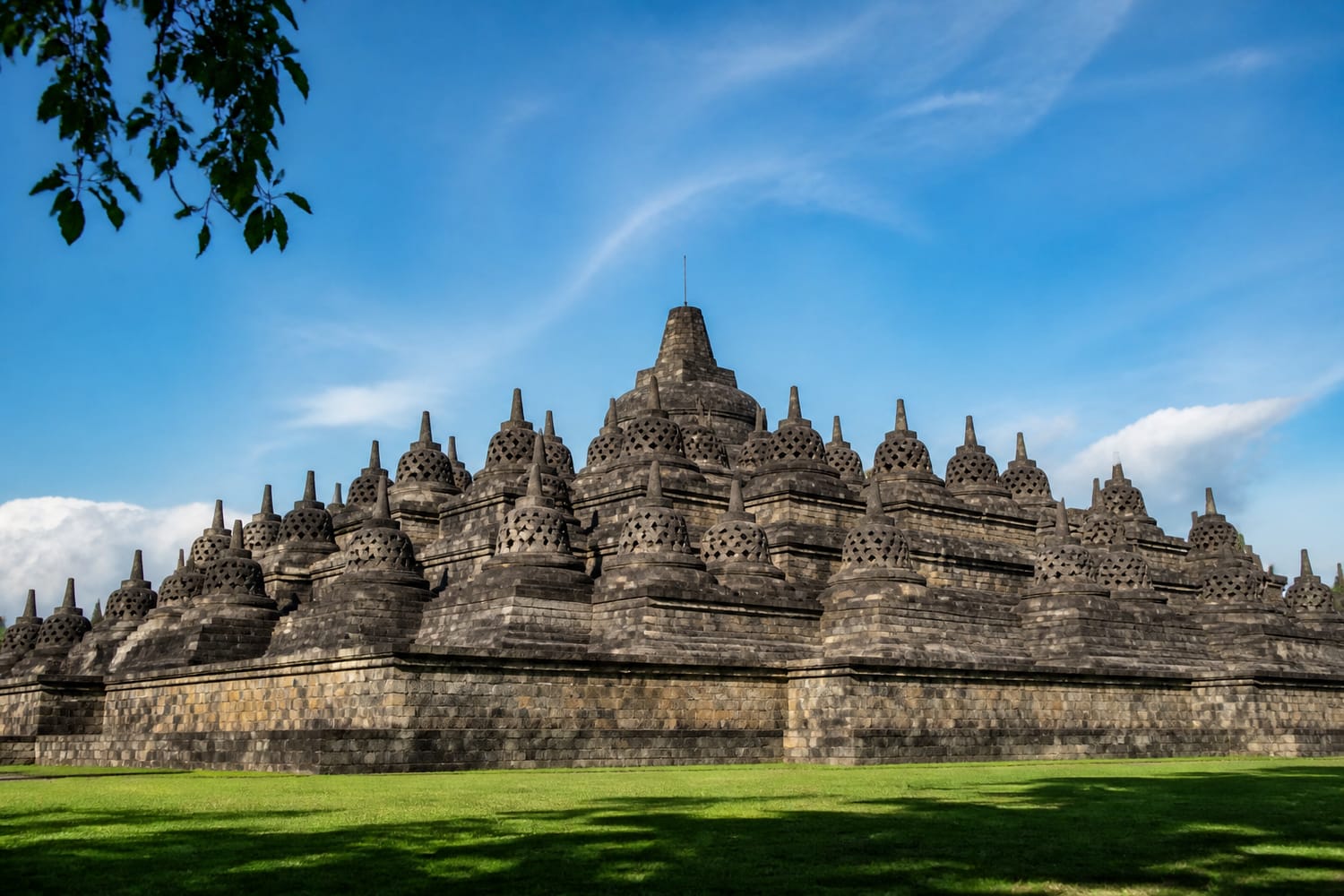
The ninth-century Borobudur temple remained intact during the destructive 2006 Yogyakarta earthquake, even as other monuments and communities in the region suffered severe damage. Its shape gave it an important advantage.
Borobudur is essentially a broad, stepped artificial mountain rather than a tall hollow building. Its weight is spread across a large area, and each rising terrace becomes smaller, keeping the center of gravity low. Thousands of fitted volcanic-stone blocks form interlocking layers. Drainage systems also protect the internal earth-and-stone mass from water saturation, although modern restoration has contributed greatly to the monument’s continued stability.
Hōryū-ji Pagoda, Japan
Hōryū-ji’s five-story pagoda is one of the world’s oldest surviving wooden towers. Japan experiences frequent earthquakes, yet the pagoda has avoided catastrophic seismic collapse for roughly 1,300 years.
Its floors are not rigidly locked into one solid tower. Flexible timber joints allow different levels to sway, sometimes in opposing directions, reducing the transfer of violent motion upward. A central wooden pillar runs through the structure, while broad eaves and progressively smaller stories help balance movement. The timber frame absorbs and releases energy that would crack rigid masonry.
The Wooden Pagoda of Yingxian, China
Built in 1056, the Wooden Pagoda of Yingxian has faced repeated seismic events while remaining one of the tallest and oldest wooden pagodas on Earth.
Its octagonal plan spreads forces across several directions. A double-ring, or “double-barrel,” system of inner and outer columns provides multiple structural paths, while mortise-and-tenon connections permit limited movement without immediately breaking apart. Elaborate bracket sets between columns and roofs act like flexible cushions, deforming as the pagoda sways. UNESCO’s description of the Wooden Pagoda of Yingxian specifically credits its layered timber system and joinery with providing earthquake resistance.
Survival Was Never a Single Moment
None of these landmarks emerged from earthquakes completely untouched. They lost stones, cracked, leaned, or required major reconstruction. Their endurance combines original design with generations of maintenance.
The most important shared lesson is flexibility. Whether through rocking marble drums, movable timber joints, dry-stone masonry, or interconnected arches, successful structures found ways to release seismic energy. Ancient builders may not have possessed modern calculations, but observation taught them an enduring principle: when the ground refuses to stay still, the safest landmark is often one capable of moving with it.