
When Architecture Begins Below the Waterline
Artificial-island landmarks are more than buildings surrounded by photogenic water. Before architects can shape a skyline, engineers must create stable ground, control erosion, drain soft seabeds, and transfer enormous loads through sand, clay, or rock. From centuries-old sea forts to futuristic airports, these ten landmarks reveal the hidden engineering beneath the postcard view.
Palm Jumeirah, Dubai
Palm Jumeirah is both an island and a globally recognized landmark. Its trunk, fronds, and crescent transformed Dubai’s coastline into a pattern so distinctive that it frequently appears in satellite photography, as explored in Tour Trivia’s guide to landmarks seen from space.
The palm was formed from dredged marine material sprayed into position using GPS-guided “rainbowing.” Vibroflotation then compacted the sand, while a huge rock crescent became a breakwater against waves and storms. The result is not simply a pile of sand but a carefully consolidated coastal system requiring continued monitoring and protection. NASA’s overview of Dubai’s reclaimed islands shows the project’s remarkable scale.
Burj Al Arab, Dubai
The sail-shaped Burj Al Arab stands on a small artificial island approximately 280 meters offshore. Designers intentionally kept the island low, helping the hotel appear to float above the Persian Gulf.
Its foundations tell a heavier story. Engineers drove 230 concrete piles roughly 40 meters into the seabed, relying on friction with the surrounding sand to support the tower. Large rocks armored the island, while specially shaped concrete units helped absorb wave energy and limit erosion. Nearly as much thought went into keeping the sea away as into raising the hotel skyward.
Ain Dubai, Dubai
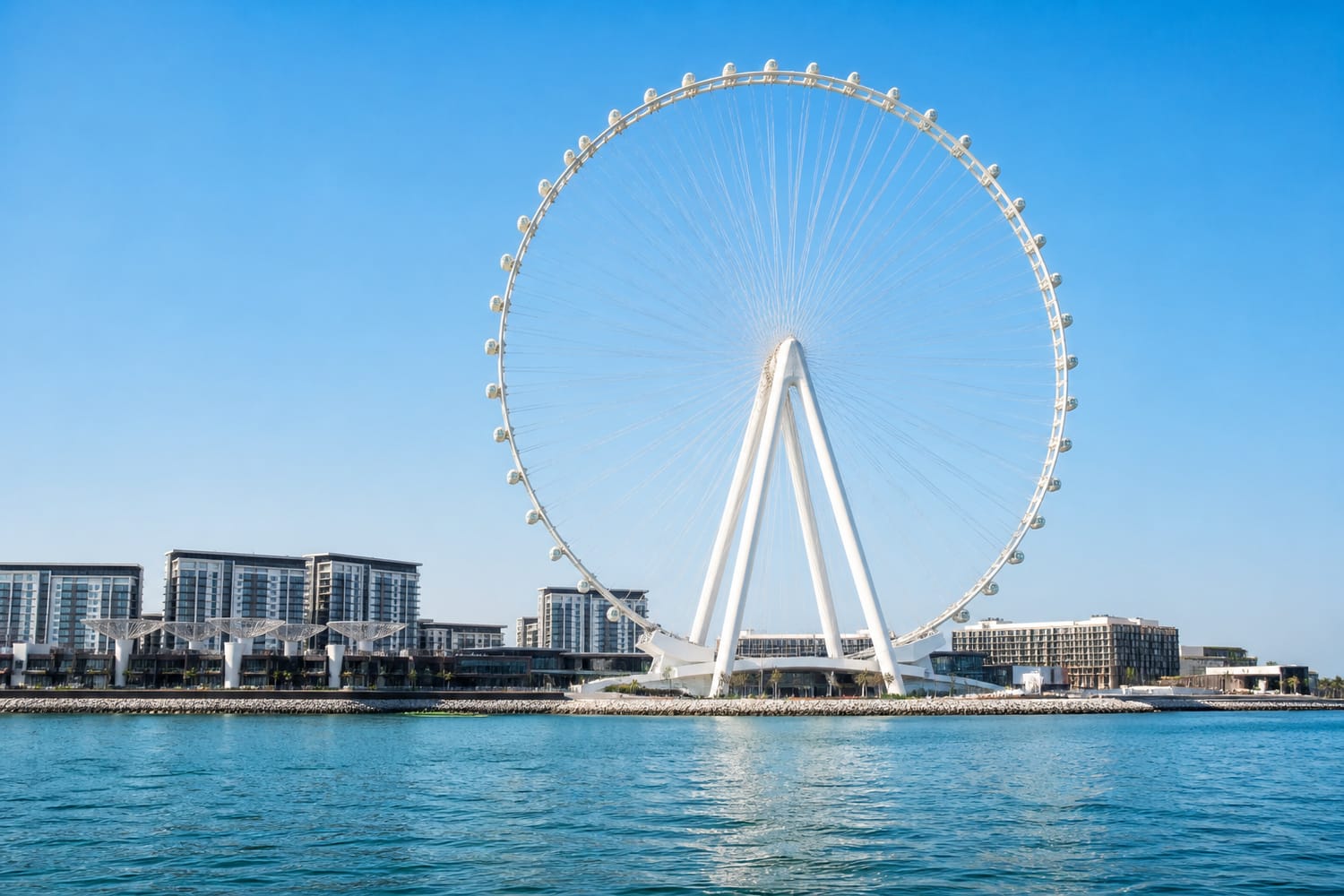
Ain Dubai rises above Bluewaters, a reclaimed island off the Dubai Marina coastline. At more than 250 meters tall, the observation wheel places exceptional vertical and sideways forces on ground that did not naturally exist.
The wheel’s 192 spoke cables hold its rim in tension, while its legs transfer the load toward substantial concrete substructures. Piled foundations and reinforced rafts allow heavy buildings to bypass weaker surface fill and reach more dependable layers below. Meanwhile, seawalls and ground reinforcement protect the wider island from settlement and wave action.
Kansai International Airport, Japan
Kansai International Airport opened in 1994 on an artificial island in Osaka Bay. Building an airport over water reduced noise over populated neighborhoods, but the seabed presented a major problem: deep layers of waterlogged clay compressed beneath the island’s weight.
Engineers installed vertical sand drains to give trapped water an escape route and accelerate consolidation. The island still experienced greater settlement than originally expected, making continuous measurement and structural adjustment essential. Sliding joints also helped the airport survive the powerful 1995 Kobe earthquake—a dramatic example of the principles discussed in Tour Trivia’s look at landmarks engineered to survive earthquakes. The Institution of Civil Engineers explains Kansai’s construction challenges in greater detail.
Hong Kong International Airport
Hong Kong International Airport occupies a vast platform created by leveling Chek Lap Kok and Lam Chau and reclaiming the water between and around them. Approximately three-quarters of the original airport site was reclaimed from the sea.
Marine sand fill could have remained too loose to support runways and terminals safely, so engineers used vibrocompaction to increase its density, stiffness, and uniformity. Later expansion introduced deep cement mixing, which strengthens soft marine deposits without removing them. Beneath the polished terminal floors lies an enormous exercise in earthmoving and soil improvement.
Museum of Islamic Art, Doha
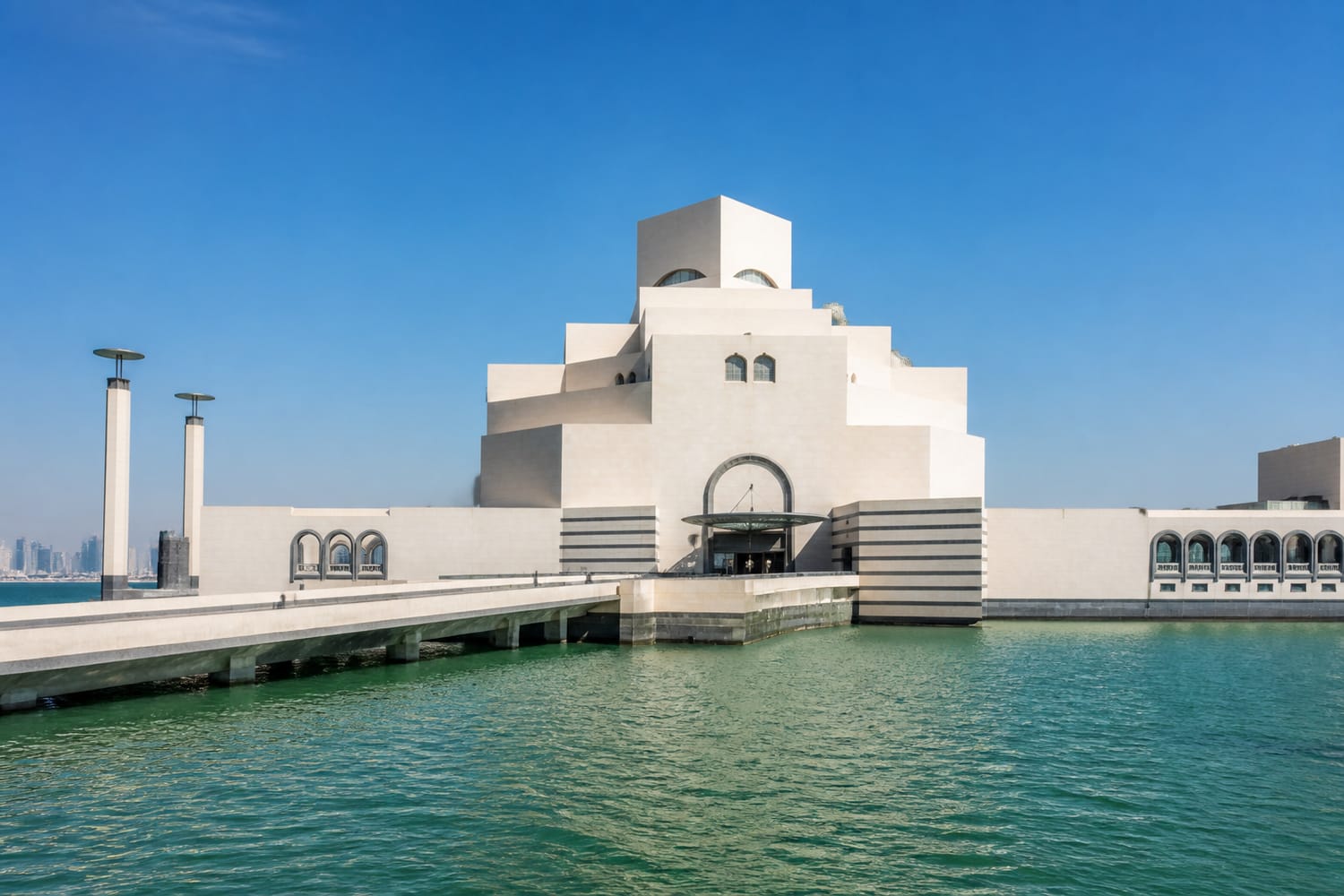
Architect I.M. Pei requested that Doha’s Museum of Islamic Art be placed on a purpose-built island, protecting its visibility from future development. Its geometric limestone form consequently appears isolated against the water.
The engineering had to address corrosive saltwater, heavy stone cladding, and unusually strict construction tolerances. Foundations support the five-story museum while waterfront walls rise almost directly from the bay. The island is therefore part pedestal, part protective barrier, and part architectural composition—proof that reclaimed ground can shape how a landmark is experienced.
Our Lady of the Rocks, Montenegro
Our Lady of the Rocks demonstrates that artificial islands are not exclusively modern megaprojects. According to local tradition, residents of Perast spent centuries dropping stones and sinking rock-filled ships around a small reef in the Bay of Kotor.
Gradually, the accumulated material formed an island stable enough to support a church completed in the 17th century. Locals still add stones during the annual Fašinada festival. Its foundation is effectively a communal structure assembled across generations—part rubble mound, part maritime time capsule, and part expression of faith.
Fort Boyard, France
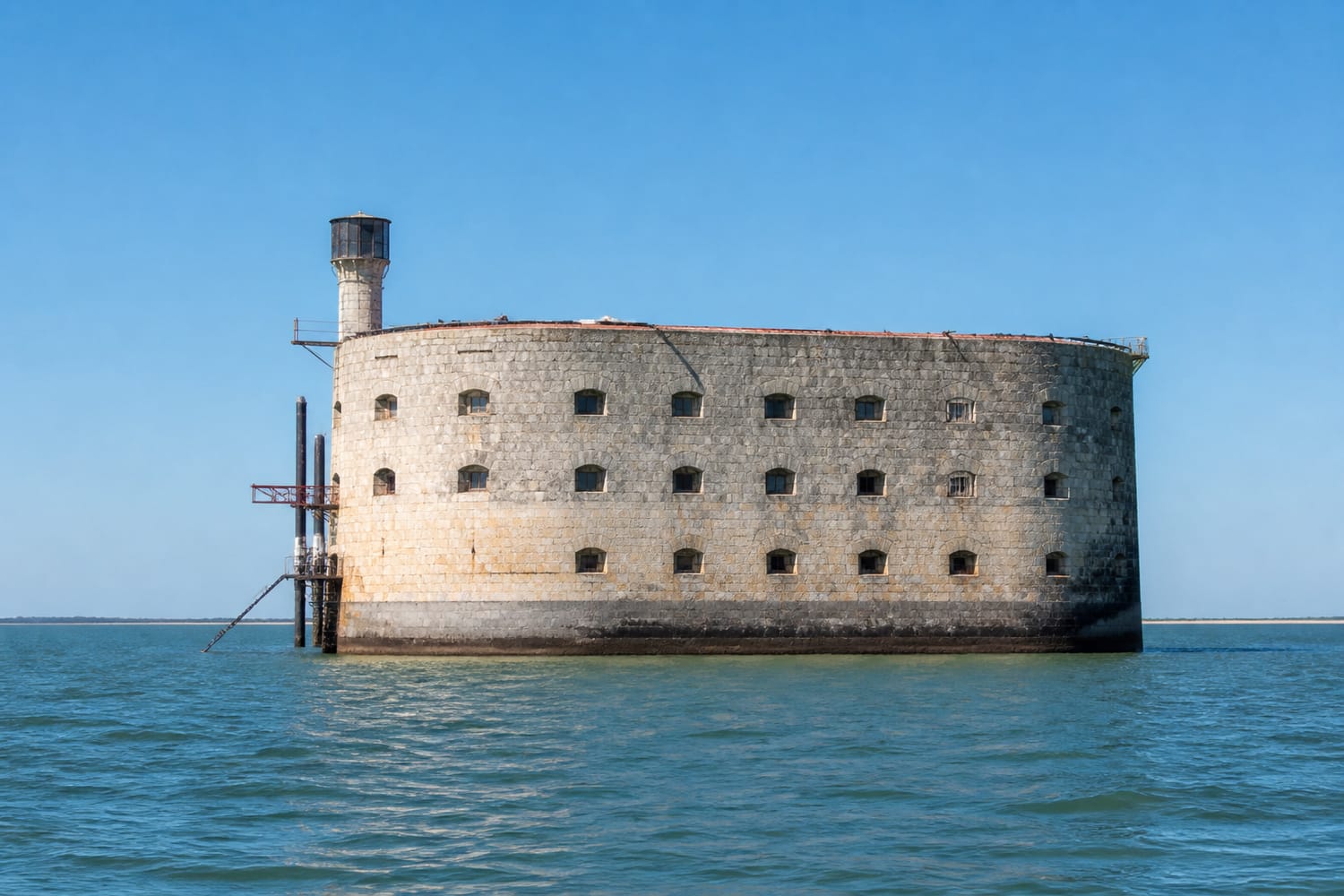
Fort Boyard stands between Île-d’Aix and Oléron on France’s Atlantic coast. Construction began under Napoleon, but establishing a foundation on an exposed sandbank proved painfully difficult.
Workers first dumped stone blocks into the sea to create an artificial plateau. Waves shifted the blocks, and their immense weight caused settlement into the seabed. After a long interruption, builders returned with improved techniques, including prefabricated concrete caissons installed during favorable tides. The completed fortress became internationally famous through television, although its greatest challenge happened beneath the cameras: persuading an unstable shoal to carry masonry walls.
Fuji Television Headquarters, Tokyo
The Fuji Television Headquarters, with its enormous titanium-clad sphere, is one of Odaiba’s defining landmarks. Odaiba began as a group of defensive island forts in the 1850s before extensive reclamation transformed it into Tokyo’s modern waterfront district.
Building a high-rise complex on reclaimed ground required a structural system capable of managing heavy studios, offices, and broadcasting equipment. Large mast columns support and visually organize the building, while carefully engineered foundations address the variable conditions beneath the reclaimed surface. It is a fitting symbol for a district where urban planning began by creating the land itself.
Umihotaru, Tokyo Bay
Umihotaru is a five-level rest area built on a 650-meter artificial island in Tokyo Bay. More importantly, it marks the point where the Tokyo Bay Aqua-Line changes from an undersea tunnel into a bridge.
Engineers constructed the island over deep water and soft sediments, using sand compaction and deep soil mixing to strengthen the foundation zone. The island had to support buildings, traffic, tunnel infrastructure, and the transition to the bridge while resisting earthquakes and marine pressure. What looks like a floating shopping center is actually a critical piece of transportation engineering.
The Hidden Half of Every Island Landmark
Artificial-island landmarks challenge engineers twice: first they must build the ground, and then they must build on it. Dredged sand, sunken ships, compacted clay, caissons, piles, and breakwaters rarely appear in vacation photos, yet they determine whether the attraction survives.
These projects belong among the world’s most fascinating modern engineering feats. Their most impressive features may not be the ones travelers can see, but the hidden systems quietly holding architecture above the waves.