
Monuments With a Mortal Purpose
Some of the world’s most recognizable landmarks were created not as palaces, temples, or fortresses, but as final resting places. From marble masterpieces to enormous stone pyramids, these monuments transformed grief, political power, and beliefs about the afterlife into architecture designed to outlast the people buried within.
The Great Pyramid of Giza, Egypt
The largest pyramid on the Giza Plateau was constructed as a royal tomb for Pharaoh Khufu, who ruled Egypt during the Fourth Dynasty. Its internal passages lead to chambers deep inside the masonry, including the so-called King’s Chamber, where an empty granite sarcophagus remains.
Although Khufu’s remains and burial treasures have never been found, the pyramid formed part of a larger funerary complex containing temples, smaller pyramids, and tombs. It is the oldest surviving Wonder of the Ancient World and a remarkable highlight among ancient landmarks still standing.
The Taj Mahal, India
Its white marble, reflecting pools, and balanced gardens make the Taj Mahal look like an impossibly romantic palace. In reality, it is an immense mausoleum commissioned by Mughal emperor Shah Jahan for his wife Mumtaz Mahal, who died in 1631.
Construction of the main tomb began the following year. Shah Jahan was eventually buried beside Mumtaz, disrupting the otherwise perfect symmetry of the central chamber. The visible marble cenotaphs are ceremonial markers; the couple’s actual graves lie in a lower chamber. The UNESCO history of the Taj Mahal explains how the wider complex developed between the 1630s and 1650s.
The Mausoleum at Halicarnassus, Turkey
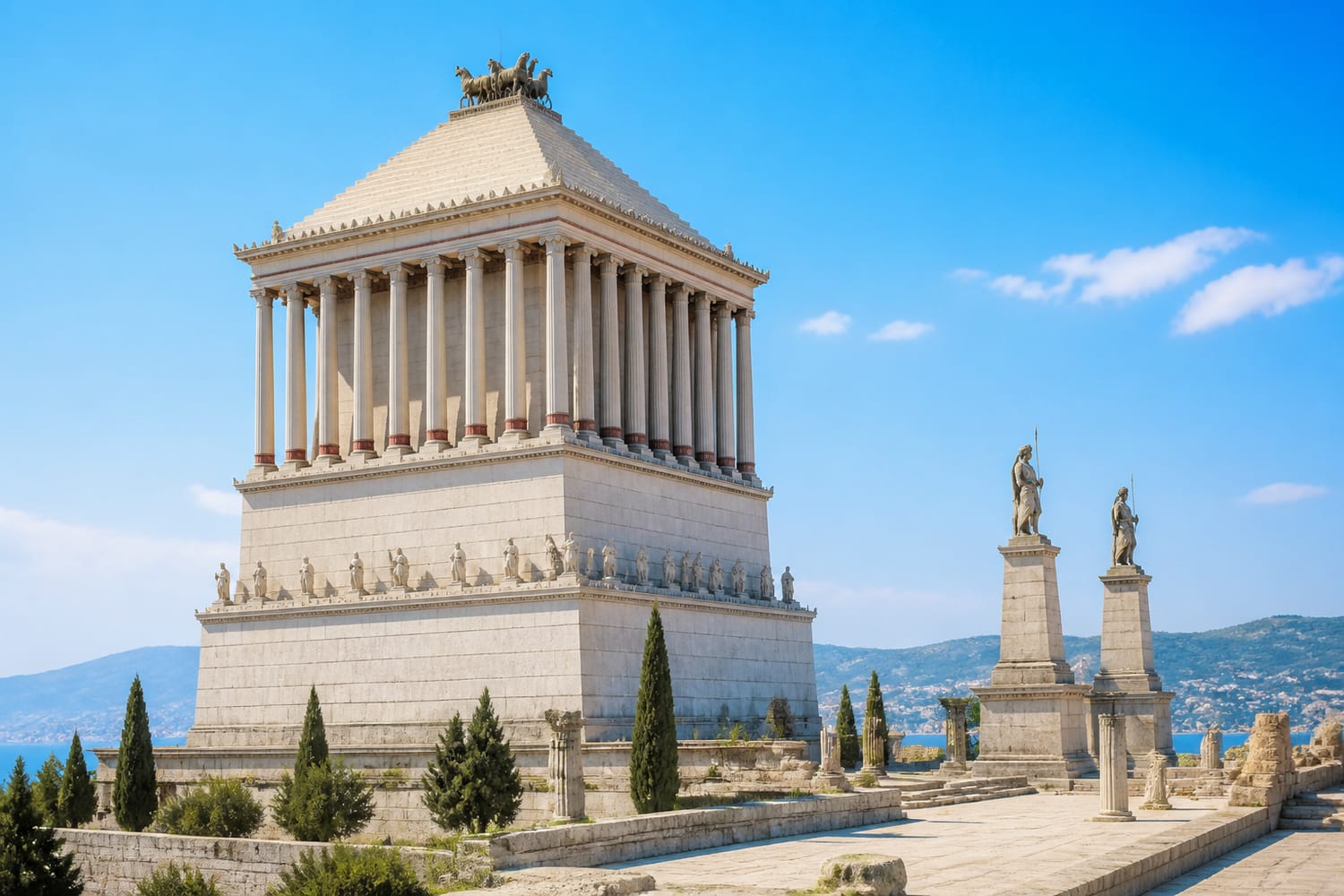
This ancient wonder was built for Mausolus, the ruler of Caria, in what is now Bodrum, Turkey. His wife and sister, Artemisia II, oversaw the project following his death around 353 BCE and may also have been buried there.
The finished structure combined a monumental base, Greek-style columns, extensive sculpture, and a pyramid-shaped roof crowned by a chariot. It became so famous that Mausolus’ name gave the English language the word “mausoleum.” Earthquakes eventually reduced the landmark to ruins, while some of its stone was reused in Bodrum Castle.
Castel Sant’Angelo, Italy
Rome’s imposing Castel Sant’Angelo looks every inch a military fortress, and for much of its history, that is what it was. However, the circular landmark began as a mausoleum for the Roman emperor Hadrian and his family.
Construction started during Hadrian’s reign and was completed after his death in 138 CE. The ashes of Hadrian and several later emperors were placed inside. Over the centuries, defensive walls, papal apartments, prison cells, and artillery positions transformed the imperial tomb into a castle—one of history’s most dramatic architectural reinventions.
Napoleon’s Tomb at Les Invalides, France
The gilded dome of Les Invalides was already a Paris landmark when it became associated with Napoleon Bonaparte. The former emperor died in exile on Saint Helena in 1821, but King Louis-Philippe arranged for his remains to be returned to France in 1840.
Architect Louis Visconti created a monumental circular crypt beneath the dome specifically for Napoleon. His remains were placed there in 1861 inside a series of coffins and an enormous red stone sarcophagus. Other military figures and members of the Bonaparte family are buried nearby.
Grant’s Tomb, United States
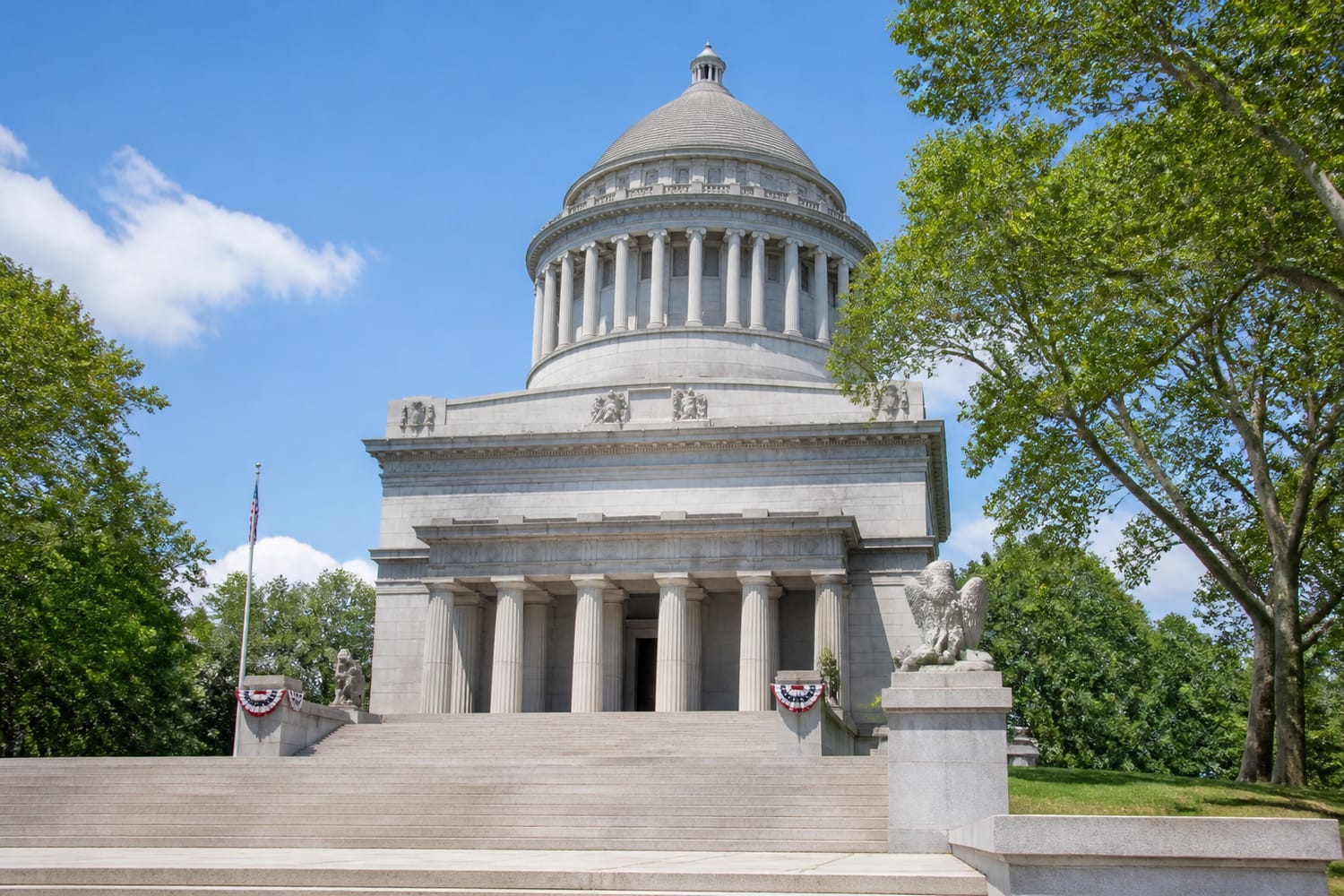
The General Grant National Memorial in New York City was built for Ulysses S. Grant, the Union commander who became the 18th president of the United States. Completed in 1897, the domed classical monument overlooks the Hudson River from Riverside Park.
Grant had wanted a burial place where his wife could eventually rest beside him. Julia Dent Grant joined him there after her death in 1902, and their matching red granite sarcophagi occupy the central crypt. The National Park Service’s guide to Grant’s Tomb calls it the largest mausoleum in North America.
Lenin’s Mausoleum, Russia
The dark red-and-black structure beside the Kremlin wall was created for Vladimir Lenin after the Soviet revolutionary leader died in January 1924. Architect Alexey Shchusev designed an initial wooden tomb in time for Lenin’s funeral, followed by another wooden version and the permanent stone mausoleum seen today.
Lenin’s embalmed body was placed on public display, turning the tomb into both a funerary site and a powerful symbol of the Soviet state. Its stepped, geometric design recalls the monumental tombs of much older civilizations.
Humayun’s Tomb, India
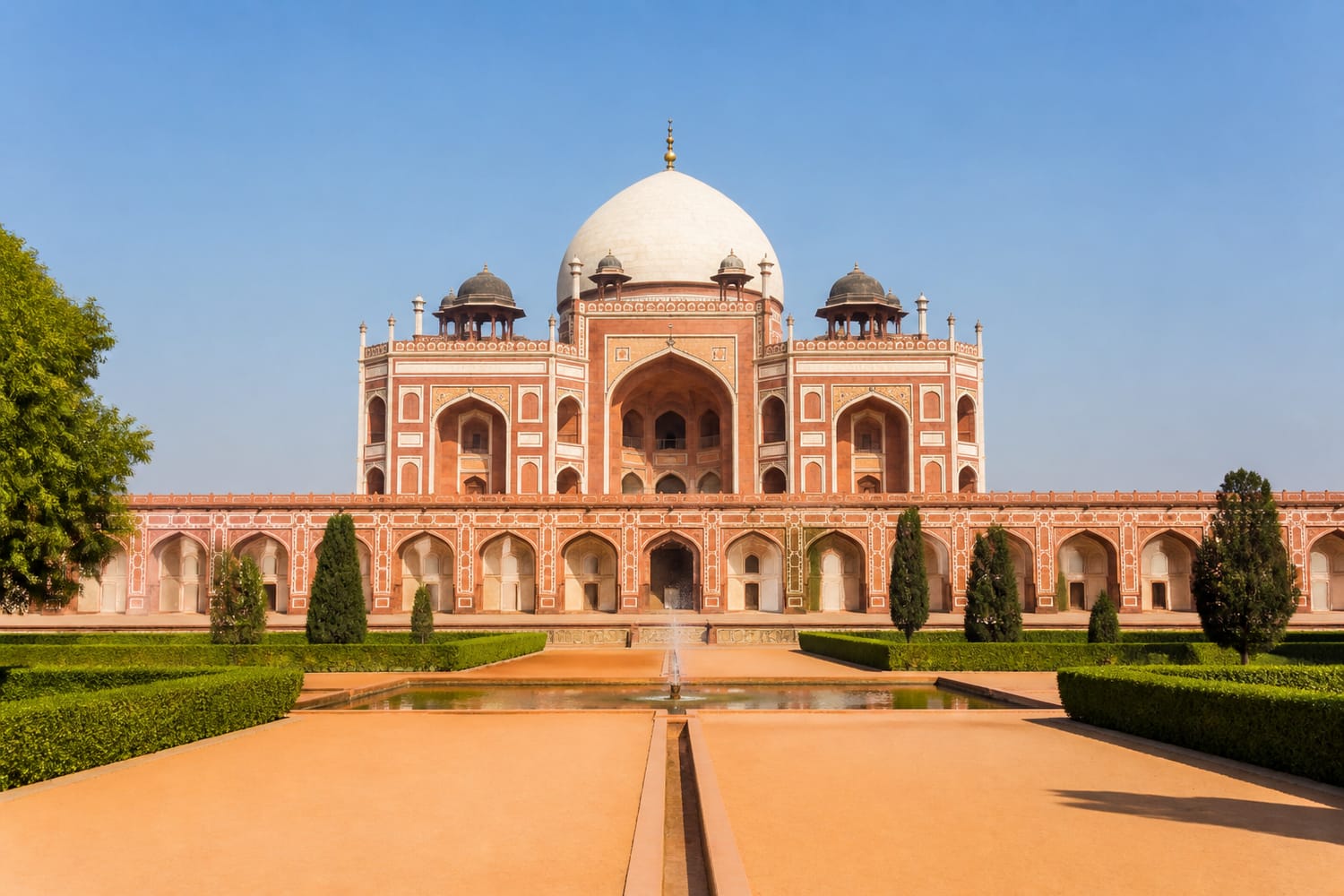
Delhi’s Humayun’s Tomb was commissioned for the Mughal emperor Humayun by his widow, Bega Begum, also known as Haji Begum. Completed in the 16th century, it introduced the grand garden-tomb style that would later reach its most celebrated form in the Taj Mahal.
The mausoleum’s high dome, red sandstone exterior, marble details, and carefully planned gardens established a new model for Mughal architecture. It also became a dynastic burial place containing the graves of numerous members of the royal family.
The Tomb of Cyrus the Great, Iran
At Pasargadae stands a deceptively simple stone monument traditionally identified as the tomb of Cyrus the Great, founder of the Achaemenid Persian Empire. It consists of a small gabled chamber raised above the landscape on six broad stone tiers.
Unlike later royal mausoleums covered in sculpture and decoration, Cyrus’ tomb gains its visual power from proportion, isolation, and massive blocks of pale stone. The wider archaeological site includes palaces and gardens associated with his sixth-century BCE capital.
The Mausoleum of the First Qin Emperor, China
The Terracotta Army is often treated as an attraction in its own right, but its thousands of soldiers, horses, and chariots belong to an enormous burial complex created for Qin Shi Huang, the first emperor to unify China.
The figures were intended to guard and serve the emperor in the afterlife. They stand in pits some distance from the central burial mound, which remains largely unexcavated. According to UNESCO’s overview of the First Qin Emperor’s mausoleum, the complex was designed to reflect the organization of an imperial capital. Its faded warriors also reveal how famous landmarks have changed color.
Architecture Designed for Eternity
These landmarks demonstrate that tombs can serve purposes far beyond burial. They preserve personal relationships, proclaim political authority, express ideas about eternity, and shape how later generations remember rulers and revolutionaries. Their occupants were mortal, but the monuments created for them continue to dominate skylines, travel itineraries, and popular imagination.