
When the World’s Icons See Double
Some landmarks are so recognizable that other cities cannot resist recreating them. These architectural twins range from faithful, full-scale copies to playful tributes with unmistakable local twists. Like the hidden details inside famous monuments, these unexpected replicas reveal stories that ordinary sightseeing can easily overlook.
Here are ten famous landmarks with surprising look-alikes scattered around the world.
The Eiffel Tower and Its Cowboy Cousin
The Eiffel Tower has inspired copies from Las Vegas to Shenzhen, but few have as much personality as the version in Paris, Texas. Standing 65 feet tall, the American tower is topped with a bright red cowboy hat.
The hat was added to distinguish it from rival replicas and transform a small-town attraction into something unmistakably Texan. Although dramatically shorter than Gustave Eiffel’s original, this secret twin has become a landmark in its own right—and a wonderfully strange road-trip photo stop.
The Statue of Liberty Returns to Paris
New York’s Statue of Liberty was a gift from France, so it seems appropriate that Paris has several Liberties of its own. The most impressive stands on Île aux Cygnes, a narrow artificial island in the Seine.
At 16 meters tall, the bronze replica faces west toward its much larger sibling across the Atlantic. It was created by Frédéric Auguste Bartholdi, the sculptor responsible for the New York monument, and presented as an American thank-you following France’s original gift.
The Parthenon Reappears in Nashville
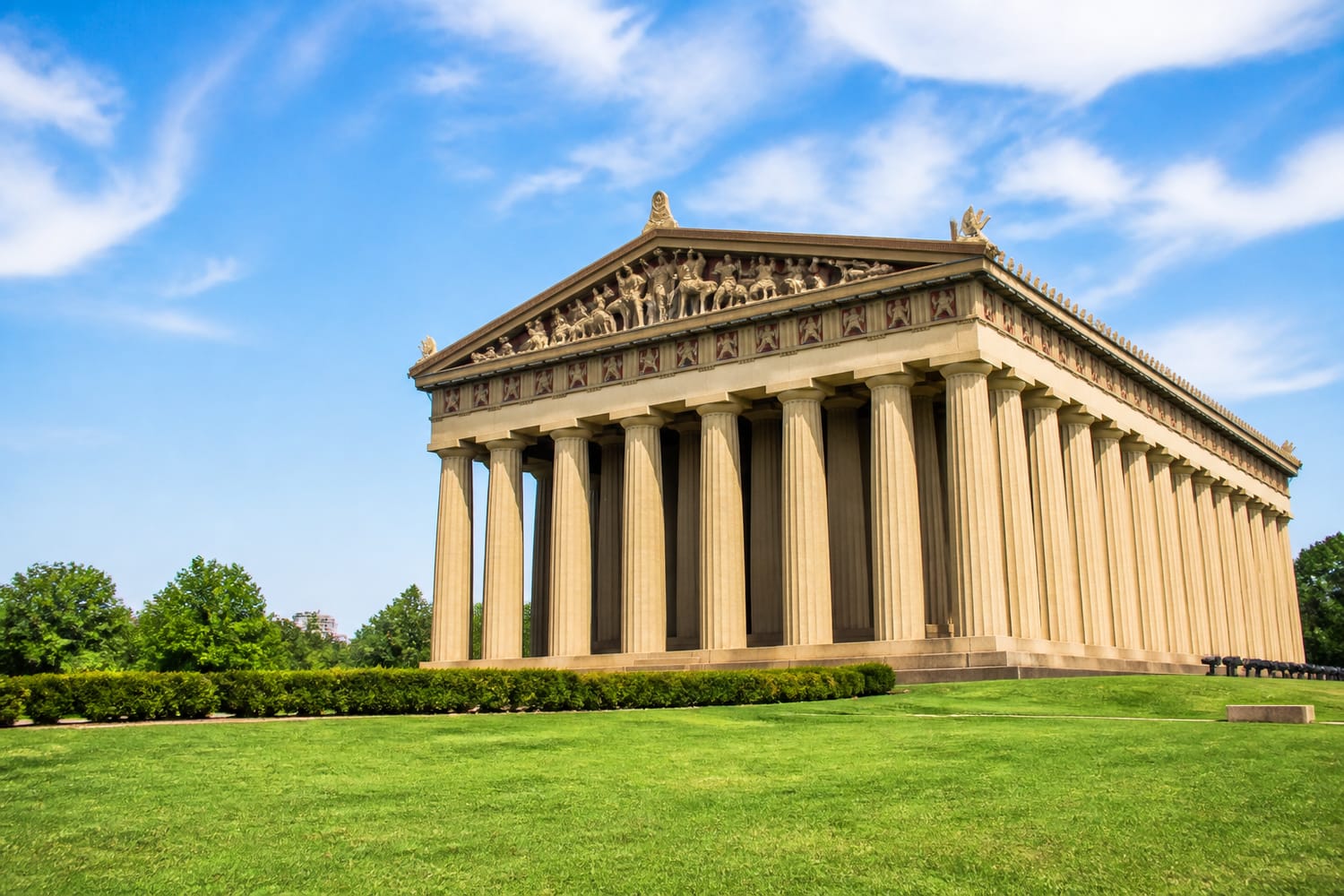
Athens may possess the ancient original, but Nashville, Tennessee, offers a remarkable glimpse of how the Parthenon might have appeared in its prime. The building in Centennial Park is a full-scale recreation constructed for Tennessee’s 1897 Centennial Exposition.
Unlike the weathered Greek temple, Nashville’s version is complete. Inside stands a 42-foot statue of Athena, surrounded by colorful details that challenge the popular image of Greek temples as plain white structures. Today, the Nashville Parthenon also serves as an art museum.
Stonehenge Stands Above the Columbia River
On a bluff in Washington State, massive concrete blocks form a full-scale recreation of England’s Stonehenge. Museum founder Sam Hill commissioned the structure as a memorial to local servicemen who died during World War I.
Rather than copying Stonehenge’s present-day ruins, the American version imagines the monument with its stones standing upright and complete. The result feels simultaneously ancient and modern, especially against the dramatic Columbia River landscape. The Maryhill Stonehenge Memorial is free to visit.
Pisa’s Leaning Tower Hides a Water Tank
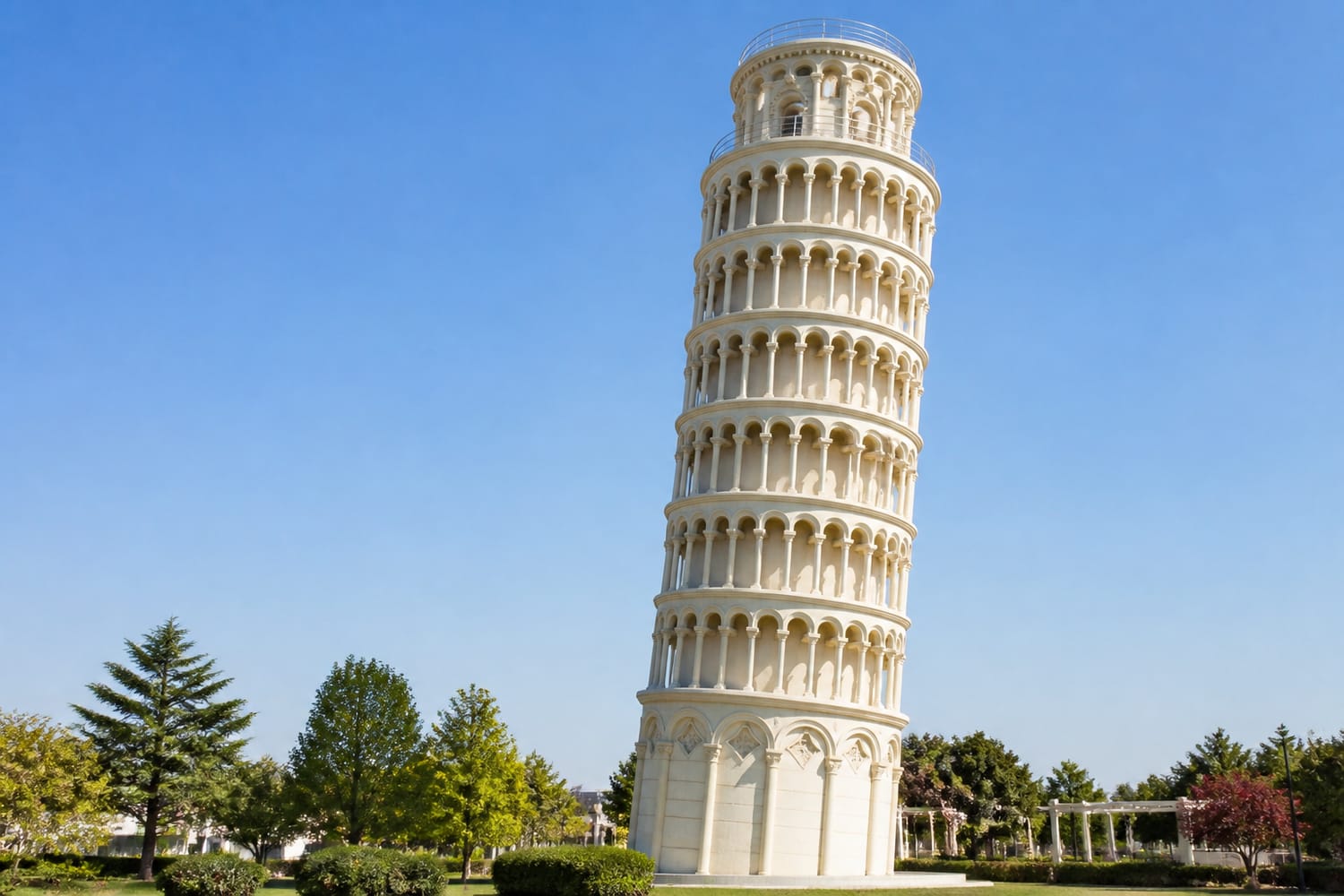
The Leaning Tower of Niles, Illinois, resembles a roadside fantasy, but it originally had a practical job. Completed in 1934, the half-size replica was designed to conceal water-storage and pumping equipment used by a recreational park.
Its reinforced-concrete structure stands 94 feet tall and deliberately leans, unlike the Italian tower, whose tilt developed because of unstable ground. It is a particularly entertaining example of how famous landmarks can solve everyday problems. Niles later established a sister-city relationship with Pisa, making the resemblance official.
The Taj Mahal Has a Deccan Double
Bibi Ka Maqbara in Chhatrapati Sambhajinagar, India, is often called the “Taj of the Deccan.” Built as a mausoleum during the Mughal period, it echoes the Taj Mahal through its central dome, four minarets, symmetrical gardens and monumental entrance.
The structure is smaller and less lavish than its famous counterpart in Agra, but that gives it a distinct character. Its combination of marble, plaster and stucco demonstrates how builders adapted an imperial design to a more modest budget. Maharashtra Tourism describes it as an imitation of the Taj.
Tower Bridge Gains Two Extra Towers
London’s Tower Bridge is famous for its two Gothic Revival towers and opening roadway. Its unusual twin in Suzhou, China, makes the design even more dramatic by doubling the number of towers.
The Chinese interpretation crosses a roadway rather than the Thames and does not replicate the original bridge’s engineering function. Nevertheless, its blue suspension details, stone-colored façades and pointed roofs create an instantly recognizable silhouette. Suzhou has become particularly famous for this kind of “duplitecture,” with recreated European streets, bridges and buildings appearing throughout the city.
Rome’s Great Basilica Finds an African Relative
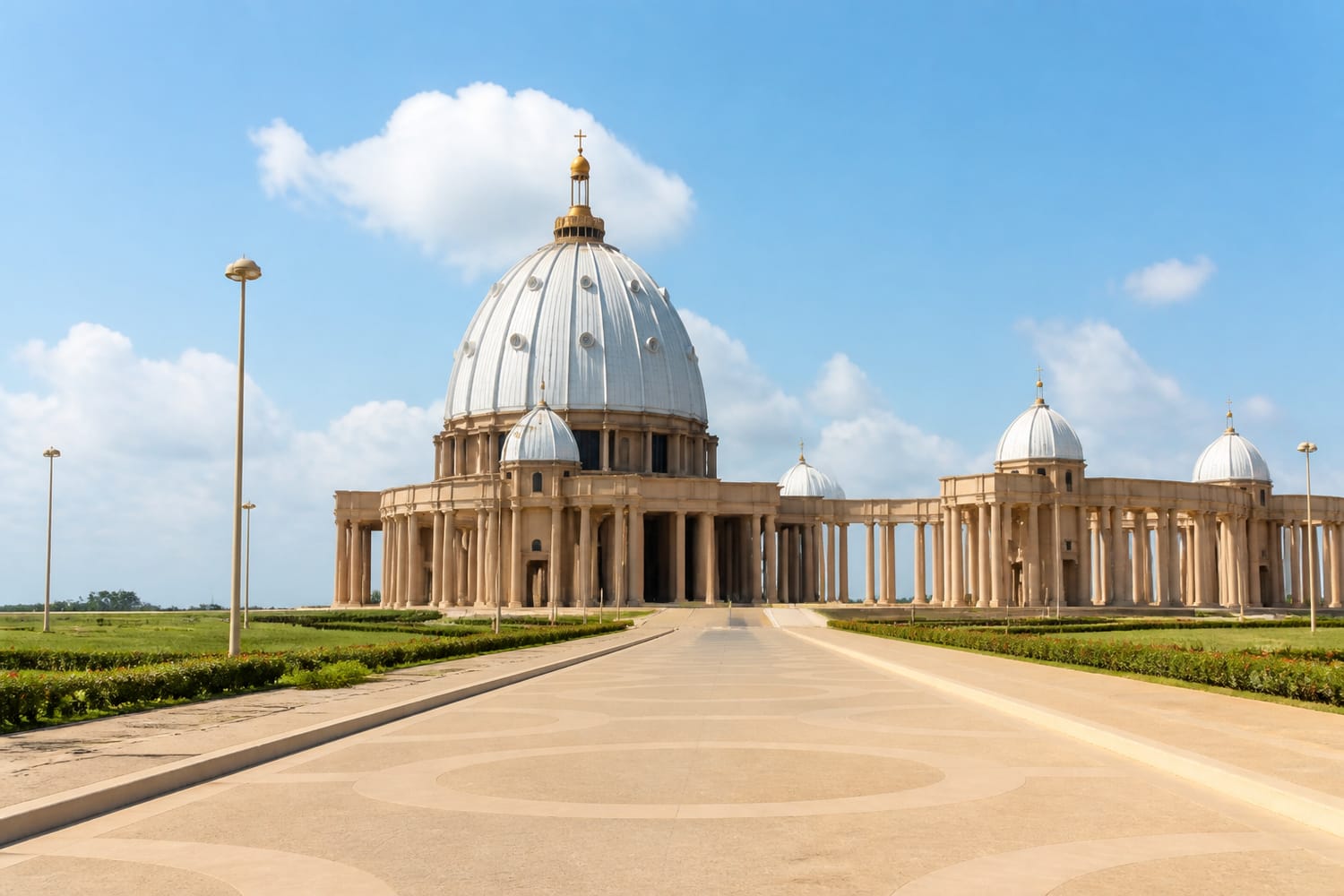
The Basilica of Our Lady of Peace dominates Yamoussoukro, Côte d’Ivoire, with a vast dome, sweeping colonnades and immense ceremonial plaza. Its design was modeled on St. Peter’s Basilica in Vatican City, though it incorporates its own materials and artistic details.
Constructed between 1986 and 1989, the basilica demonstrates how familiar architecture can acquire new meaning in another cultural setting. Its scale places it among the world’s most astonishing religious buildings and the architectural feats that once seemed impossible.
Christ the Redeemer Looks Toward Bolivia
Rio de Janeiro’s Christ the Redeemer is one of South America’s defining images, but Bolivia has a larger relative. Cristo de la Concordia stands above Cochabamba on San Pedro Hill, extending its arms over the city.
The Bolivian statue strongly recalls Rio’s Art Deco monument, although its design, setting and symbolism give it a separate identity. Visitors can reach the hilltop for sweeping views across Cochabamba, making the surrounding panorama as important as the statue itself. It proves that even a globally familiar pose can become a powerful local emblem.
Paris’ Triumphal Arch Gets a Taller Twin
The Arc de Triomphe anchors one of Paris’ grandest avenues, but a larger interpretation stands in Pyongyang, North Korea. Completed in 1982, the Arch of Triumph follows the general form of the Parisian monument while rising approximately 10 meters higher.
Both structures use imposing arches, sculptural decoration and monumental scale to commemorate national history. Yet their political contexts and decorative programs are very different. This makes the pair more than architectural twins: they demonstrate how governments can borrow a recognizable visual language and reshape it to tell entirely different stories.