
Messages Built Into Monuments
Some famous landmarks preserve more than architecture: they hold sealed messages from the people who built or restored them. Hidden in cornerstones, rooftops, statues, and inaccessible chambers, these caches contain everything from newspapers and coins to construction records. They add another layer of intrigue to the surprising things hidden in famous landmarks.
Strictly speaking, historians sometimes distinguish between time capsules with scheduled opening dates and cornerstone deposits intended to remain sealed indefinitely. In everyday conversation, however, both serve the same fascinating purpose—sending a snapshot of one era into the future.
Gateway Arch, St. Louis
When builders prepared to install the Gateway Arch’s final stainless-steel section in 1965, thousands of local residents added their names to “signatorium sheets.” Approximately 762,000 signatures were collected through schools, the visitor center, and community organizations.
The papers were placed inside a welded time capsule in the Arch’s final section. According to the National Park Service’s Gateway Arch history, the capsule cannot be removed while the monument remains standing. It is a remarkably democratic secret hidden at the summit of America’s tallest monument.
Mount Rushmore, South Dakota
Sculptor Gutzon Borglum originally imagined a grand Hall of Records behind Mount Rushmore’s presidential faces. Although the ambitious chamber was never completed, a scaled-down version of his dream became reality in 1998.
A teakwood box was placed inside a titanium vault and covered with a granite capstone in the unfinished hall. Its 16 porcelain-enamel panels explain why Mount Rushmore was created, identify its sculptors, and summarize American history. The Mount Rushmore Hall of Records remains inaccessible to visitors and is intended for people thousands of years in the future.
Statue of Liberty, New York
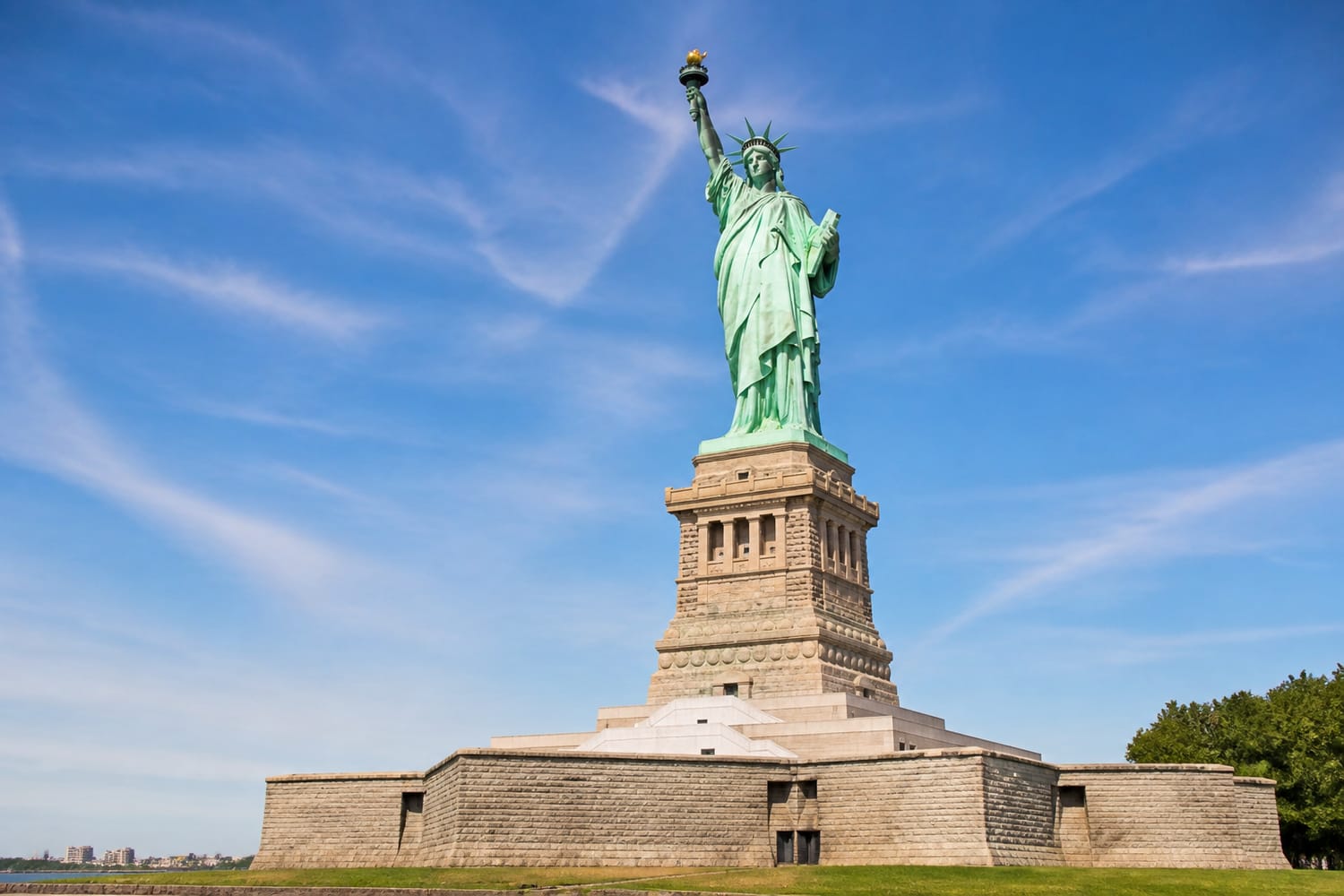
The Statue of Liberty’s pedestal has guarded a copper cornerstone box since August 5, 1884—two years before the monument was dedicated. The box was installed during an elaborate Masonic ceremony attended by civic leaders despite heavy rain.
Its contents reportedly include a copy of the Constitution, George Washington’s Farewell Address, New York newspapers, presidential medals, a portrait of sculptor Frédéric Auguste Bartholdi, and a parchment identifying participating Masonic officials.
The sealed collection is not Lady Liberty’s only transformation. Her famous green surface also makes her one of several landmarks that dramatically changed color.
Elizabeth Tower, London
The landmark popularly called Big Ben—technically the name of its largest bell—has a tradition of workers leaving records inside its roof. During restoration in 2019, craftspeople discovered a time capsule hidden above the Ayrton Light in 1956.
That container listed people who had worked on the tower and described an even earlier capsule found during repairs in 1906. Continuing the architectural chain letter, the latest restoration team placed a new capsule in the same area. The discovery means that generations of workers have quietly recorded their presence inside one of London’s most recognizable structures.
Edinburgh Castle, Scotland
During 2026 renovations to Edinburgh Castle’s Crown Room, workers uncovered handwritten records behind historic oak paneling. One note, originally discovered in 1992, had been written on sandpaper in 1848 by craftspeople who installed the room’s woodwork.
Later workers had added their own messages, creating an accidental, multi-generational time capsule. Historic Environment Scotland placed the papers inside a purpose-built wooden container and returned them behind the paneling. Future restorers may eventually discover this evolving record of the people responsible for maintaining the room that houses Scotland’s crown jewels.
Massachusetts State House, Boston
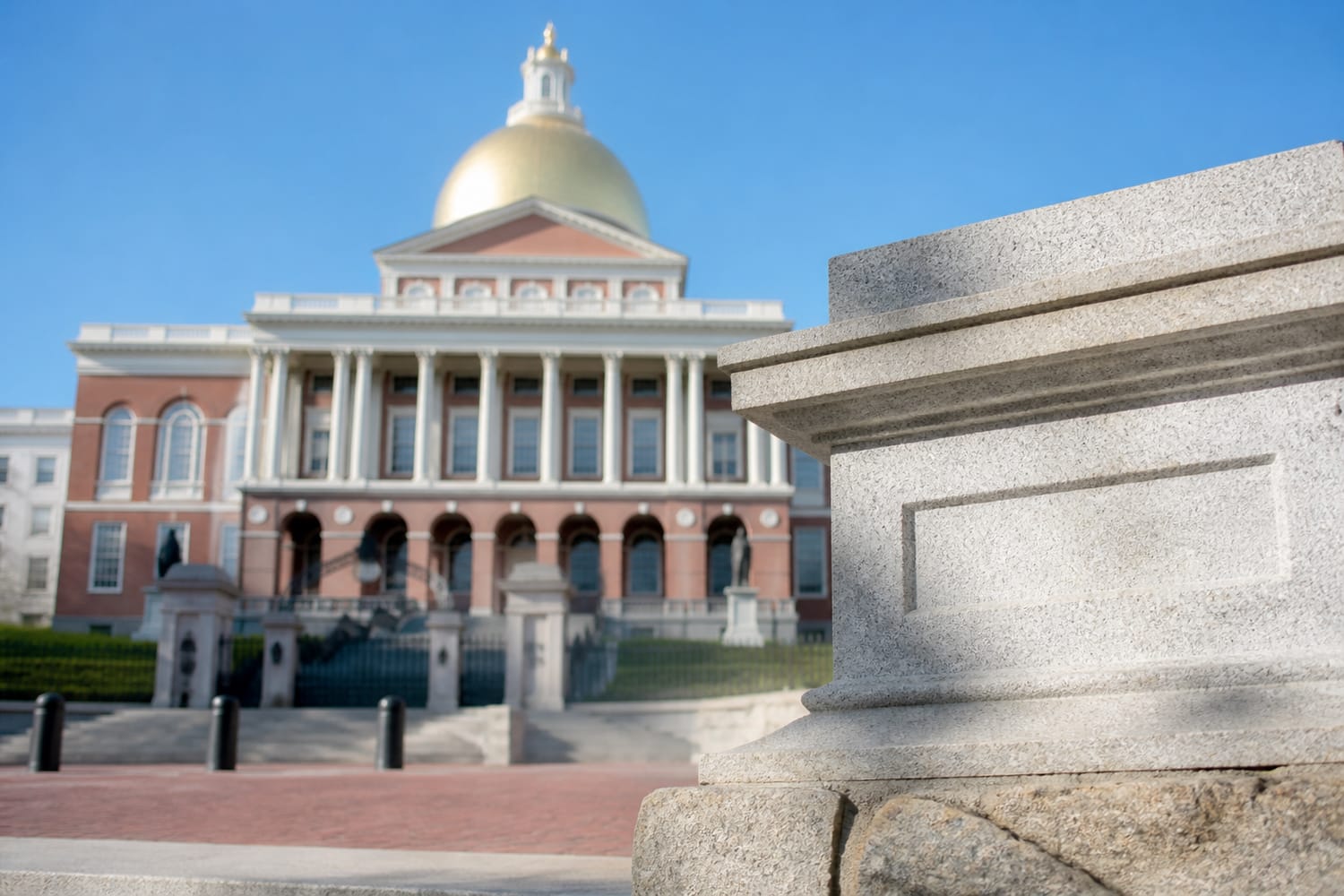
One of America’s oldest known cornerstone deposits was placed in the Massachusetts State House in 1795 by Governor Samuel Adams and silversmith Paul Revere. The small metal box contained coins, newspapers, a medal depicting George Washington, and a silver plate believed to have been engraved by Revere.
It was opened and expanded in 1855, then uncovered again during building work in 2014. After specialists conserved its contents, the collection was returned to the cornerstone in 2015 along with contemporary coins and a plaque documenting its latest journey.
Old State House, Boston
Boston’s Old State House hides its capsule in an especially theatrical location: inside the gilded lion overlooking the building’s east façade. A 1901 copper box was discovered when the lion and its companion unicorn were removed for restoration in 2014.
The original cache contained letters, photographs, newspaper clippings, and political campaign buttons. Rather than simply returning the old objects, preservationists installed a new capsule documenting 21st-century Boston. It entered the lion through an opening underneath the statue, safely above the crowds walking the Freedom Trail below.
Jefferson Memorial, Washington, D.C.
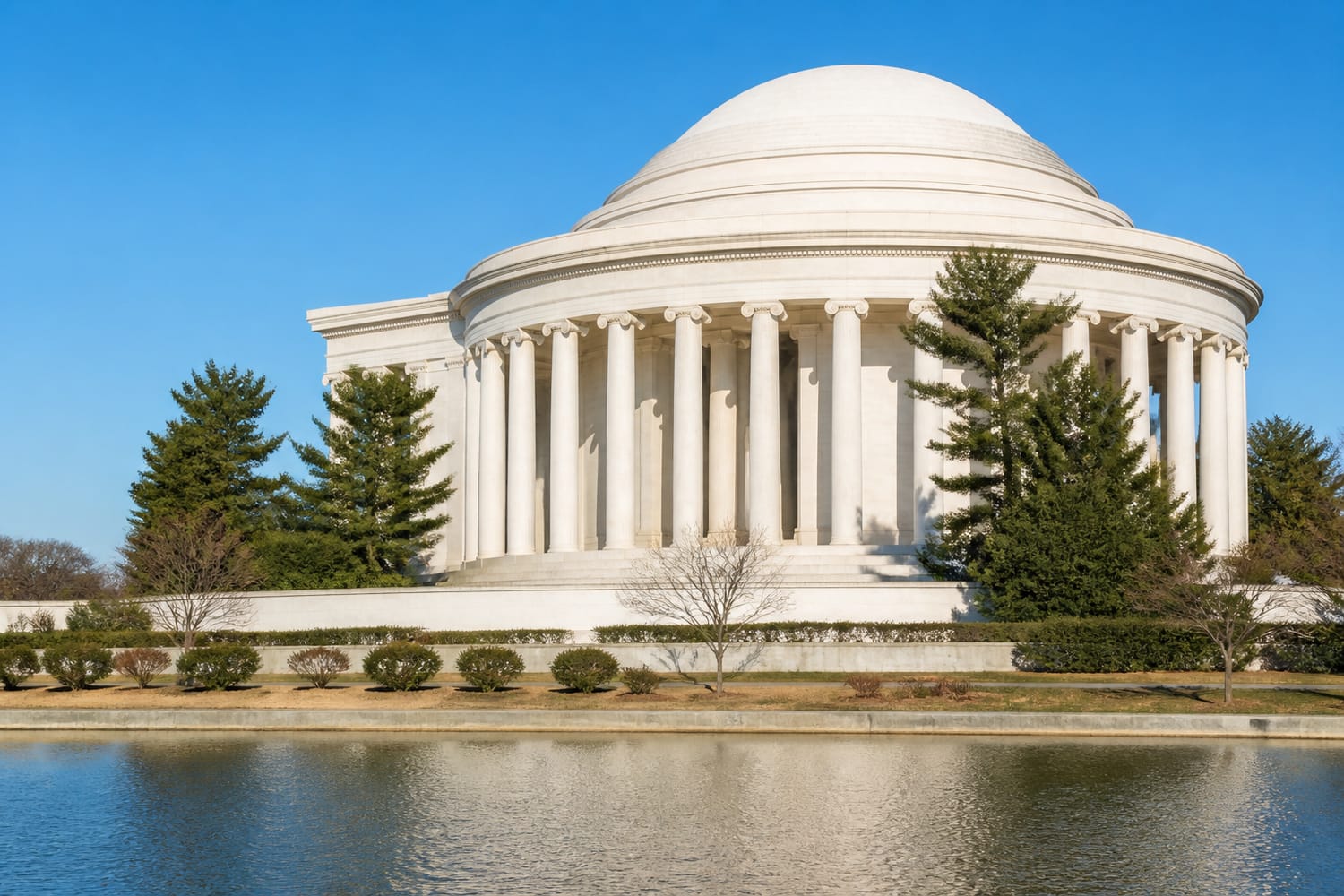
President Franklin D. Roosevelt helped break ground for the Jefferson Memorial in December 1938. He returned on November 15, 1939, to install its cornerstone and a time capsule within the memorial’s foundation.
The ceremony connected several generations of American history. Roosevelt used the same Masonic trowel that George Washington had employed when laying the U.S. Capitol cornerstone in 1793. Although visitors focus on Thomas Jefferson’s bronze statue and the quotations lining the memorial’s interior, an unseen collection from the late 1930s remains sealed within the neoclassical landmark.
Library of Congress Jefferson Building, Washington, D.C.
The Library of Congress’s ornate Jefferson Building contains a copper box that was almost forgotten before it was even buried. Construction was progressing so quickly in 1890 that officials installed the cornerstone without the elaborate ceremony Congress had considered organizing.
The hermetically sealed container holds construction photographs, government reports, newspapers, an almanac, and a legislative history of the building. The date—August 28, 1890—was not carved onto the exterior cornerstone until 1952, more than six decades after workers quietly sealed the capsule inside.
National Archives Building, Washington, D.C.
A time capsule seems particularly appropriate for the National Archives, a landmark devoted to preserving the country’s documentary history. President Herbert Hoover laid its cornerstone on February 20, 1933.
Inside, he placed copies of the Declaration of Independence and Constitution, an American flag, Washington newspapers, a Bible, official construction documents, portraits, and even a 1932 Treasury Department telephone directory. The telephone book may seem mundane, but such everyday objects can reveal as much about an era as its grandest political statements.
History Waiting Behind the Walls
These capsules transform landmarks into messages as well as monuments. Some commemorate national ideals, while others preserve the names of workers whose contributions might otherwise disappear from history.
Most visitors will never see these concealed collections, but knowing they exist changes how the buildings feel. Behind the stone, steel, copper, and timber, voices from the past are patiently waiting for someone in the future to listen.