
Where Every Journey Has an Official Beginning
Kilometer zero is the reference point from which a country traditionally measures road distances. Usually positioned in a capital’s historic center, it may appear as a plaque, monument, bridge marker, or even a gemstone. Although modern road systems sometimes use additional starting points, these ten landmarks remain symbolic centers of their national networks.
They are easy to overlook, but each one transforms an ordinary distance sign into a connection with the country’s history. Like the hidden symbols in famous landmarks, they reward travelers who remember to look down as well as up.
Point Zéro, Paris, France
Set into the square outside Notre-Dame Cathedral, Point Zéro des Routes de France is a brass medallion decorated with a compass rose. Distances separating Paris from other French cities have traditionally been calculated from this spot.
The marker was installed in 1924, although the location had served as a geographic reference much earlier. Removed following the cathedral fire of April 2019, it returned to the square on July 1, 2025. The City of Paris explains the marker’s history, including its surprising connection to an old medieval punishment site.
Kilómetro Cero, Madrid, Spain
Madrid’s Kilómetro Cero is embedded in the pavement of Puerta del Sol, directly in front of the former Royal House of the Post Office. The plaque marks the origin of Spain’s radial national roads, which extend from Madrid toward different regions of the country.
Surrounded by shops, historic streets, and constant pedestrian traffic, the marker may be Madrid’s most frequently stepped-on attraction. The official Madrid tourism guide identifies it alongside the square’s famous clock and Bear and Strawberry Tree statue.
Zero Kilometre Stone, Budapest, Hungary
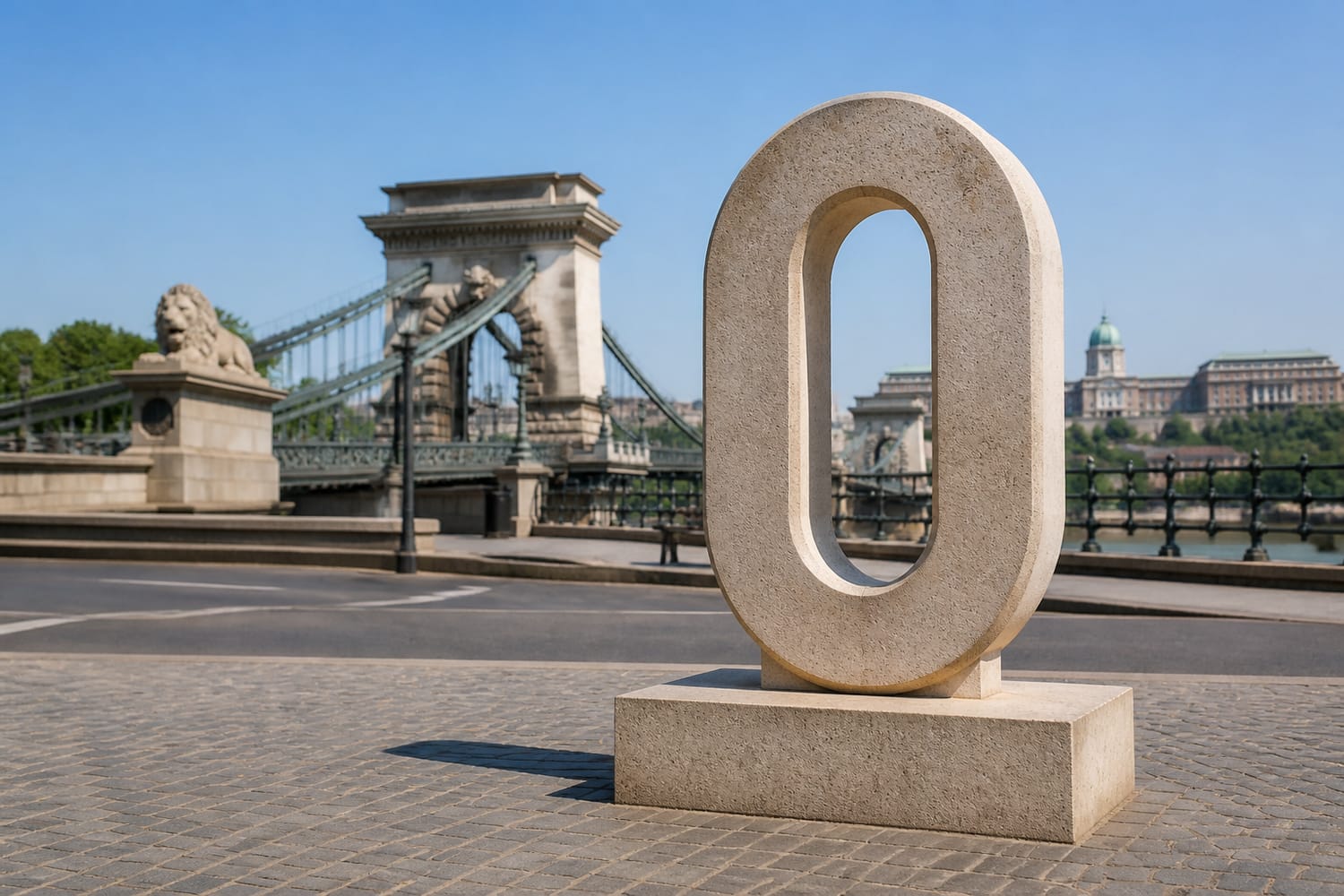
At Clark Ádám Square near the Buda end of the Chain Bridge stands a limestone sculpture shaped like a giant zero. Its simple inscription, “KM,” reveals its purpose: it represents the reference point for distances along Hungary’s principal roads from Budapest.
The present sculpture dates from 1975, but the square received its first zero-kilometer monument in 1932. Its position beside the Chain Bridge is fitting because the crossing helped transform Budapest into the central hub of Hungary’s transportation network. Some individual roads use different technical starting points.
Nihonbashi, Tokyo, Japan
Japan’s national road origin is located at Nihonbashi, a historic bridge in central Tokyo. A metal plaque in the center of the bridge identifies the starting point used by several important national highways.
The tradition predates automobiles. During the Edo period, Nihonbashi was the origin of five major routes connecting the shogun’s capital with other parts of Japan. Modern travelers who see a sign showing the distance to Tokyo may therefore be seeing the distance to this particular bridge—not simply Tokyo’s municipal boundary.
Kilometer Zero, Manila, Philippines
Manila’s primary Kilometer Zero marker stands in Rizal Park, opposite the Independence Flagpole and close to the monument honoring national hero José Rizal. It provides a major reference for measuring road distances from Manila to cities and provinces across the Philippines.
An executive order issued in 1977 confirmed the Rizal Monument as kilometer station 0+000 for routes extending through Luzon and along the Pan-Philippine Highway. Other islands and provinces may have their own local zero points, but Manila’s marker retains its national significance.
Kilómetro Cero, Buenos Aires, Argentina
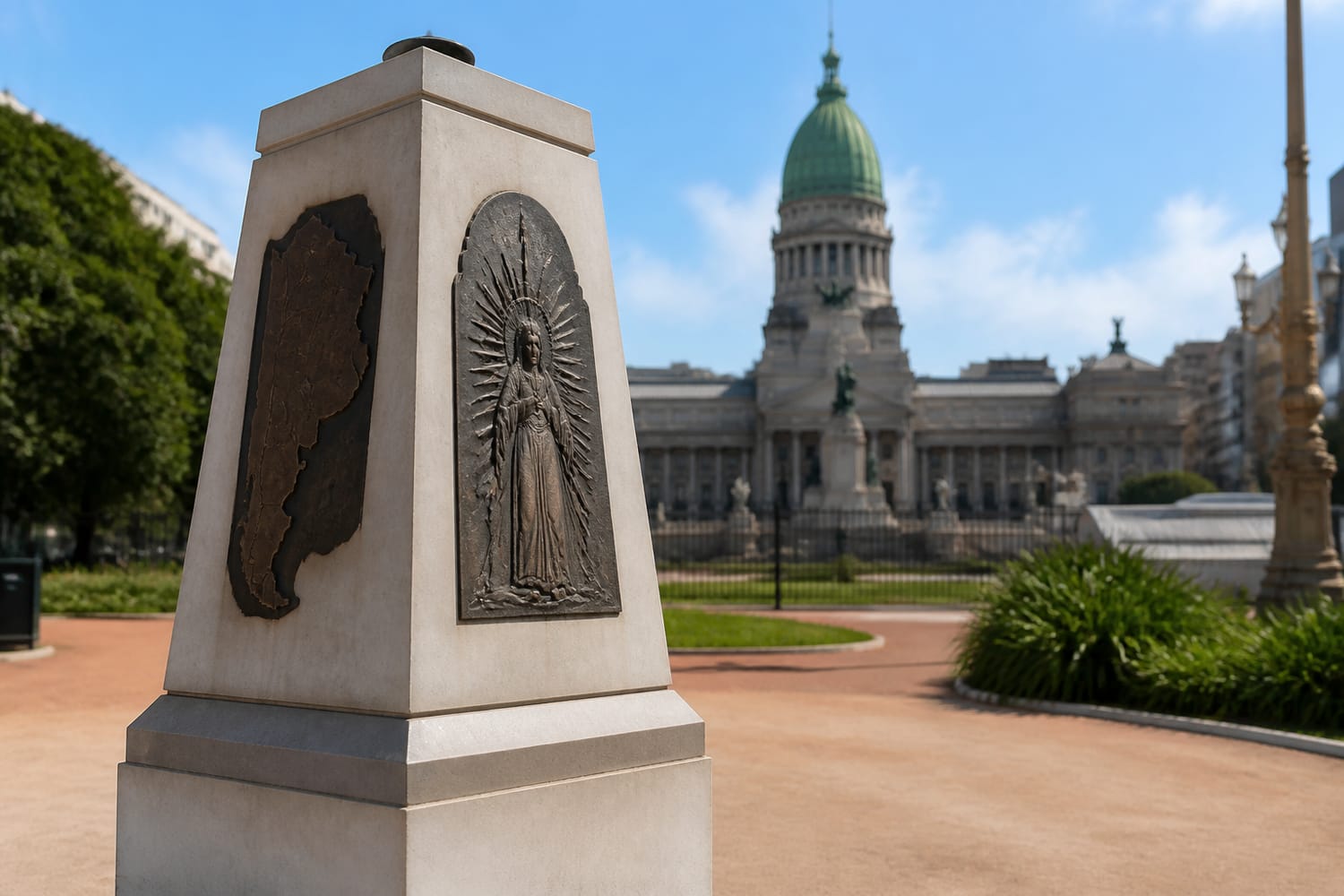
Argentina’s kilometer-zero monolith stands in Plaza Mariano Moreno, within the larger complex commonly associated with Plaza del Congreso. Installed in 1935, it indicates the point from which the country’s national highway distances begin.
The monument contains details that turn it into more than a functional marker. Its faces feature a map of Argentina and an image of Our Lady of Luján, recognized as the patroness of Argentina’s roads. Its location near the National Congress also reinforces the idea of Buenos Aires as the nation’s political and geographic starting point.
Zero Point of Highways, Beijing, China
Near Zhengyangmen at the southern end of Tiananmen Square, a bronze marker identifies the Zero Point of Highways, China. Unveiled in 2006, it presents kilometer zero as both transportation infrastructure and public art.
The design resembles a wheel, with lines radiating outward from its center. Four traditional celestial guardians—the Azure Dragon, White Tiger, Vermilion Bird, and Black Tortoise—represent the cardinal directions. The imagery makes the plaque a miniature symbolic map of highways spreading from Beijing across the country.
The Diamond of El Capitolio, Havana, Cuba

Cuba’s kilometer zero may be the world’s most glamorous road marker. Inside Havana’s El Capitolio, a diamond was placed beneath the building’s dome to mark the starting point of the Central Highway.
The original 25-carat stone was stolen in March 1946 and recovered the following year under mysterious circumstances. It was eventually replaced by a replica, while the original was reportedly secured elsewhere. The combination of transportation history, architecture, jewels, and an unsolved theft gives Havana’s marker an unusually cinematic story.
Kilómetro Cero, Santiago, Chile
Santiago’s Plaza de Armas is both the historic heart of the capital and the location of Chile’s Kilometer Zero. Distances between the country’s cities traditionally begin from a plaque within this lively public square.
The location links modern transportation with Santiago’s colonial origins. Laid out during the city’s foundation, the plaza became the center of religious, administrative, and commercial life. Visitors can find the Metropolitan Cathedral, Central Post Office, National History Museum, and city government buildings around it.
Kilometre Pole, Warsaw, Poland
Warsaw’s Kilometre Pole is a polished stone monument near the intersection of Marszałkowska Street and Jerusalem Avenue. It represents Poland’s national kilometer zero and displays distances to Polish destinations and major European capitals.
Unlike the subtle plaques of Paris or Madrid, Warsaw’s marker rises prominently above the pavement. Its inscriptions make it resemble an oversized historic road sign, emphasizing Poland’s position at the crossroads of European routes. It is both a navigational reference and a compact geography lesson in the middle of the capital.
Small Markers With Country-Sized Stories
Kilometer-zero landmarks reveal how nations once turned capitals, cathedrals, bridges, and civic squares into anchors for understanding space. Their practical importance may have changed with digital mapping, but their symbolism remains powerful.
Finding one also offers a satisfying travel moment: standing at the place where every displayed kilometer theoretically begins. For more geographic curiosities, explore these border landmarks where visitors can stand in two countries at once.