
A Gate Is Never Just an Entrance
City gates were built to decide who could come in. Yet the world’s most famous gates tell stories that reach far beyond their walls: a Roman entrance survived by becoming a church, a Babylonian gateway turned a procession into a spectacle, and a Berlin landmark came to symbolize both division and reunion. Look closely, and each gate reveals what its city wanted to protect, celebrate—or remember.
Babylon’s Ishtar Gate: A Parade Route for the Gods
Imagine approaching Babylon around 2,600 years ago. Instead of a plain defensive opening, you would have encountered a monumental gateway decorated with glazed-brick bulls and dragon-like creatures. The Ishtar Gate formed part of a processional route leading into the ancient city in what is now Iraq.
Commissioned during the reign of Nebuchadnezzar II, the gate was as much a statement of sacred power as royal wealth. Its creatures were associated with deities, while processions passed through the gateway during New Year celebrations. According to the Institute for the Study of the Ancient World’s account of its construction, creating the animals required teams of craftspeople to mold, bake, glaze, and assemble individual bricks. The finished entrance was designed to inspire awe—but the work behind that effect was a feat in its own right.
That makes the Ishtar Gate more than an ancient photo opportunity. It reminds us that a city could use its front door to tell visitors, before they had even stepped inside, what its people revered.
Trier’s Porta Nigra: Saved by an Unexpected Second Life
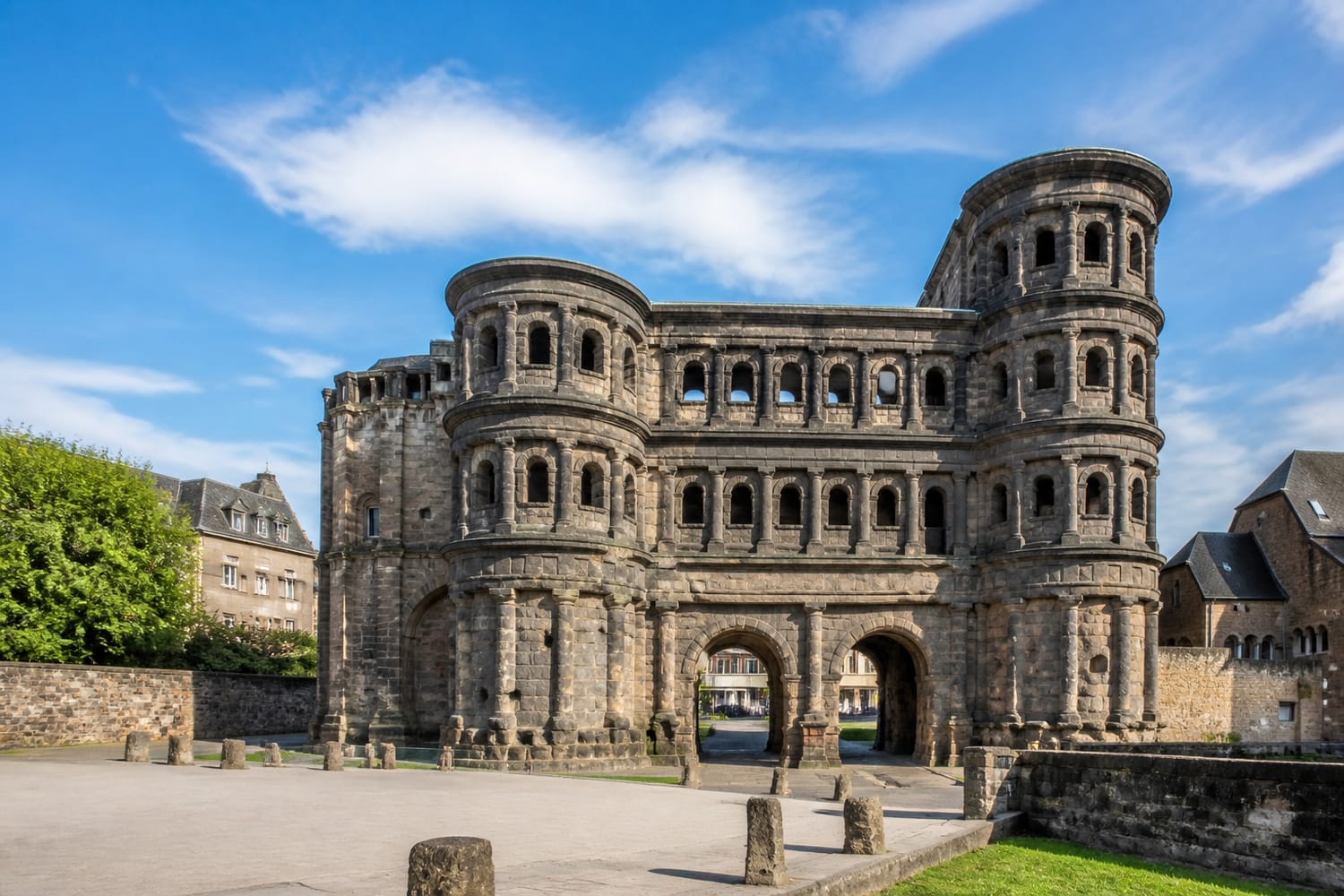
Germany’s Porta Nigra looks every inch a Roman fortress gate. Built in the second century, its huge stone towers guarded an entrance to Trier. But its remarkable survival owes much to something its Roman builders never planned: in the Middle Ages, the gate became a church.
That change helped preserve a structure that might otherwise have disappeared with the city’s other Roman gates. Centuries later, additions were removed to emphasize its ancient form, although traces of its religious life remain. As UNESCO’s history of Trier’s Roman monuments shows, the building’s story is not simply “Roman gate survives.” It is a story of people repeatedly finding new uses—and new meanings—for old stone.
The name Porta Nigra, or “Black Gate,” suits its darkened appearance. The more surprising detail is that an entrance built to defend a city endured partly because later generations chose to worship inside it.
Jerusalem’s Golden Gate: Famous for Being Closed
Most gates become famous because people pass through them. Jerusalem’s Golden Gate is memorable for the opposite reason: its two arches are sealed. Set into the Old City’s eastern wall, it faces toward the Mount of Olives.
The gate has attracted layers of religious interpretation over centuries. Jewish, Christian, and Muslim traditions have all connected it with sacred history, while medieval visitors wrote about its closed entrances. That long fascination makes it tempting to treat every story attached to the gate as a literal account of its construction. The Metropolitan Museum of Art’s study distinguishes those traditions from the building’s complicated architectural history.
Its mystery is not only why it is closed. It is how a blocked passage remained such a powerful place to contemplate journeys—past, future, and spiritual.
Fez’s Bab Bou Jeloud: An Old City’s New Front Door
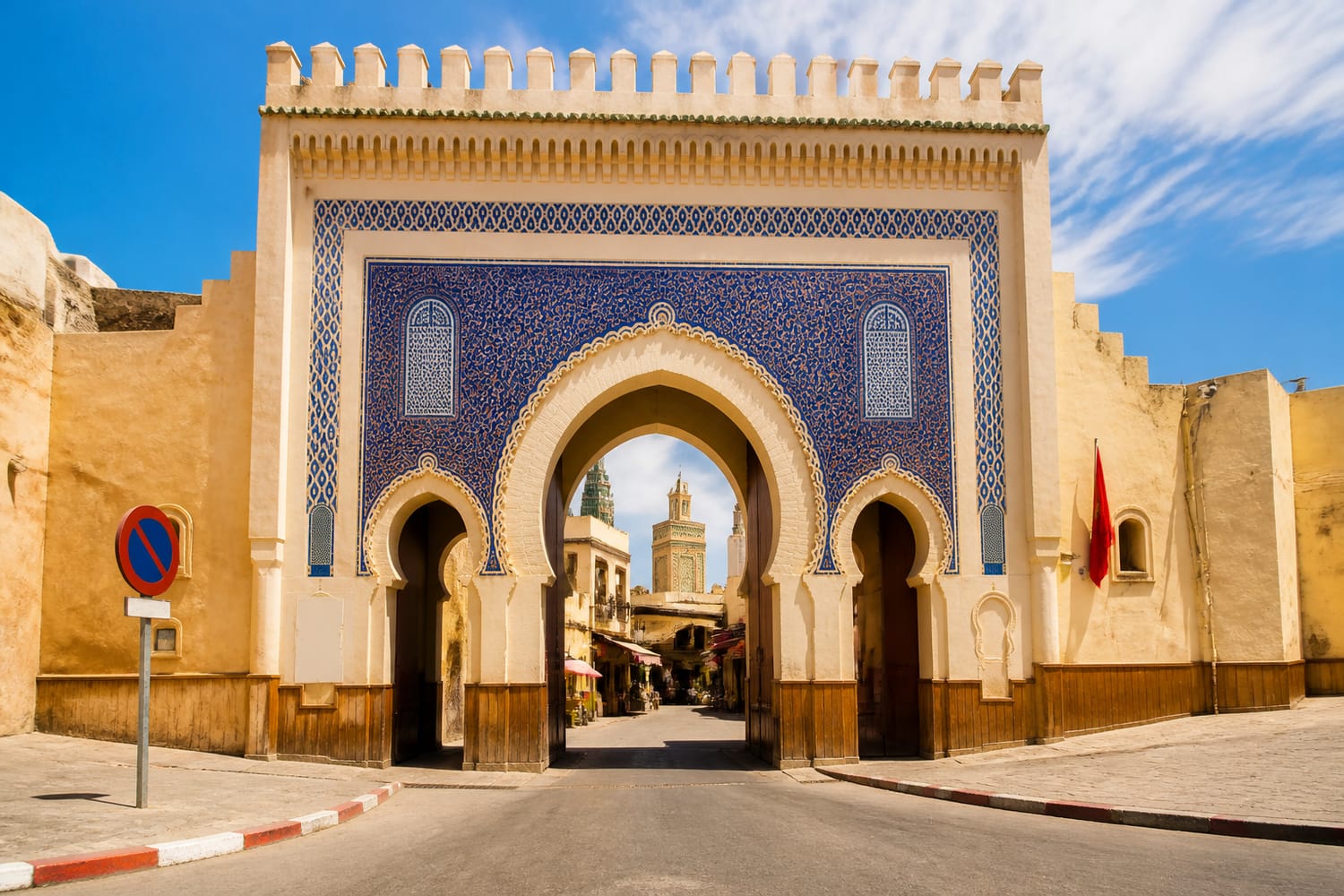
With blue tilework framing three arches, Bab Bou Jeloud seems like an entrance that has welcomed people into Fez for countless centuries. The medina behind it is old; the famous gateway’s present appearance is not. It dates to the early twentieth century, during the French Protectorate.
That distinction matters. The gate’s traditional-looking design can make its colonial-era origins easy to miss. Today it is a recognizable threshold into the medina, where the tiled façade gives way to narrow streets and everyday city life. Morocco’s national tourism office highlights its blue and green decoration, while accounts of its history explain how the grand entrance took shape in 1913.
Bab Bou Jeloud poses a good Tour Trivia question: when a gateway looks ancient and leads into an ancient neighborhood, how old do you assume the gateway itself must be?
Beijing’s Zhengyangmen: The Gate That Outlived Its Walls
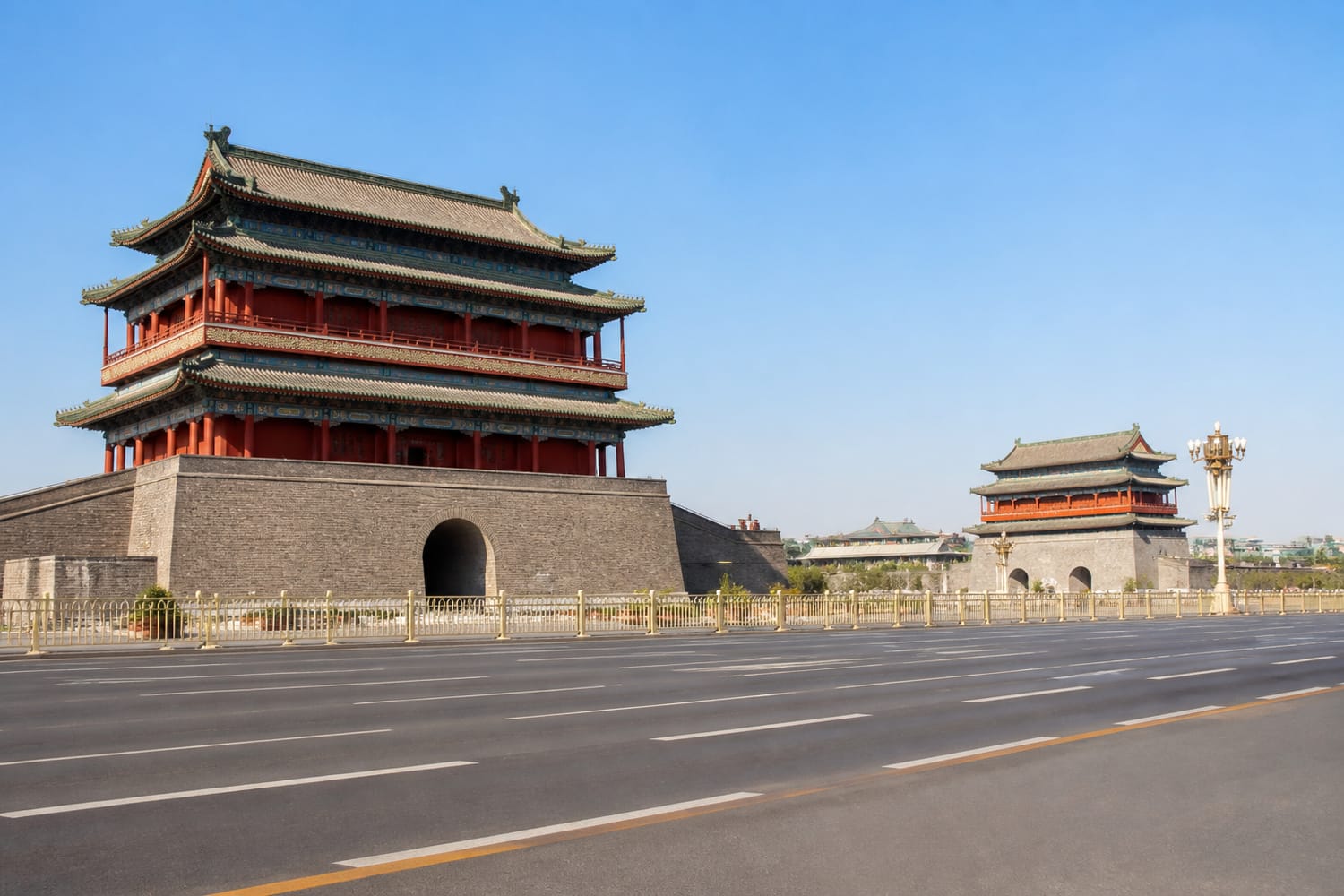
Zhengyangmen, often called Qianmen, once guarded the southern approach to Beijing’s Inner City. First built during the Ming dynasty, the complex included a gatehouse and an archery tower connected by defensive walls. It was not just a handsome landmark; it was part of a system meant to control entry.
Its surroundings changed dramatically. The gate suffered damage during the fighting of 1900, was reconstructed in the early twentieth century, and later stood beside a railway station. Much of Beijing’s old city wall disappeared, but Zhengyangmen remained. Today, a road runs between its gatehouse and archery tower, making the former defensive enclosure harder to picture. The Beijing tourism bureau’s history of Zhengyangmen helps fill in what the modern streetscape leaves out.
It is a striking reminder that a surviving monument can look permanent even when the city around it has been remade.
Berlin’s Brandenburg Gate: From War Trophy to Meeting Place
The Brandenburg Gate has played more than one role in Berlin’s history. After Prussia’s defeat in 1806, Napoleon had the four-horse Quadriga sculpture on its roof taken to Paris. It returned in 1814—a particularly visible reversal of fortune.
In the twentieth century, the gate acquired a different meaning. Following the construction of the Berlin Wall in 1961, it stood in a restricted area, inaccessible to ordinary visitors from either side. On December 22, 1989, weeks after the Wall opened, people gathered as the gate reopened. A landmark once associated with separation became a place to celebrate connection.
Its history is visible in less triumphant details, too. Tour Trivia’s look at the scars on famous landmarks explores the damage and repairs left by war. And if this story has sharpened your landmark knowledge, try its Brandenburg Gate trivia question.
The Stories Waiting at the Threshold
A gate can be a defense, a stage, a sacred symbol, or a political statement—and sometimes it becomes all four at different times. The next time you encounter one, look beyond the arch. Ask what once stood on either side, who was allowed through, and why the entrance still matters after its original purpose has gone.