
First, Find the Right Islands
The white-house-and-blue-dome image belongs especially to the Cyclades, the Aegean island group that includes Santorini, Mykonos, Paros, and Naxos. It is not a nationwide architectural uniform. Even within this group, settlements vary considerably in their buildings, materials, and colors.
Santorini supplies some of the most recognizable versions of the scene. Elsewhere, the picture changes: Syros has grand neoclassical architecture, while other Cycladic islands feature tower houses, tiled roofs, fortified settlements, or distinctive cave dwellings. The postcard captures something real, but only part of a much larger architectural story.
That distinction matters when asking “why.” Explaining a practical coating used across many villages is one question; explaining the exterior color of an individual church is another.
Whitewash Was a Practical Choice
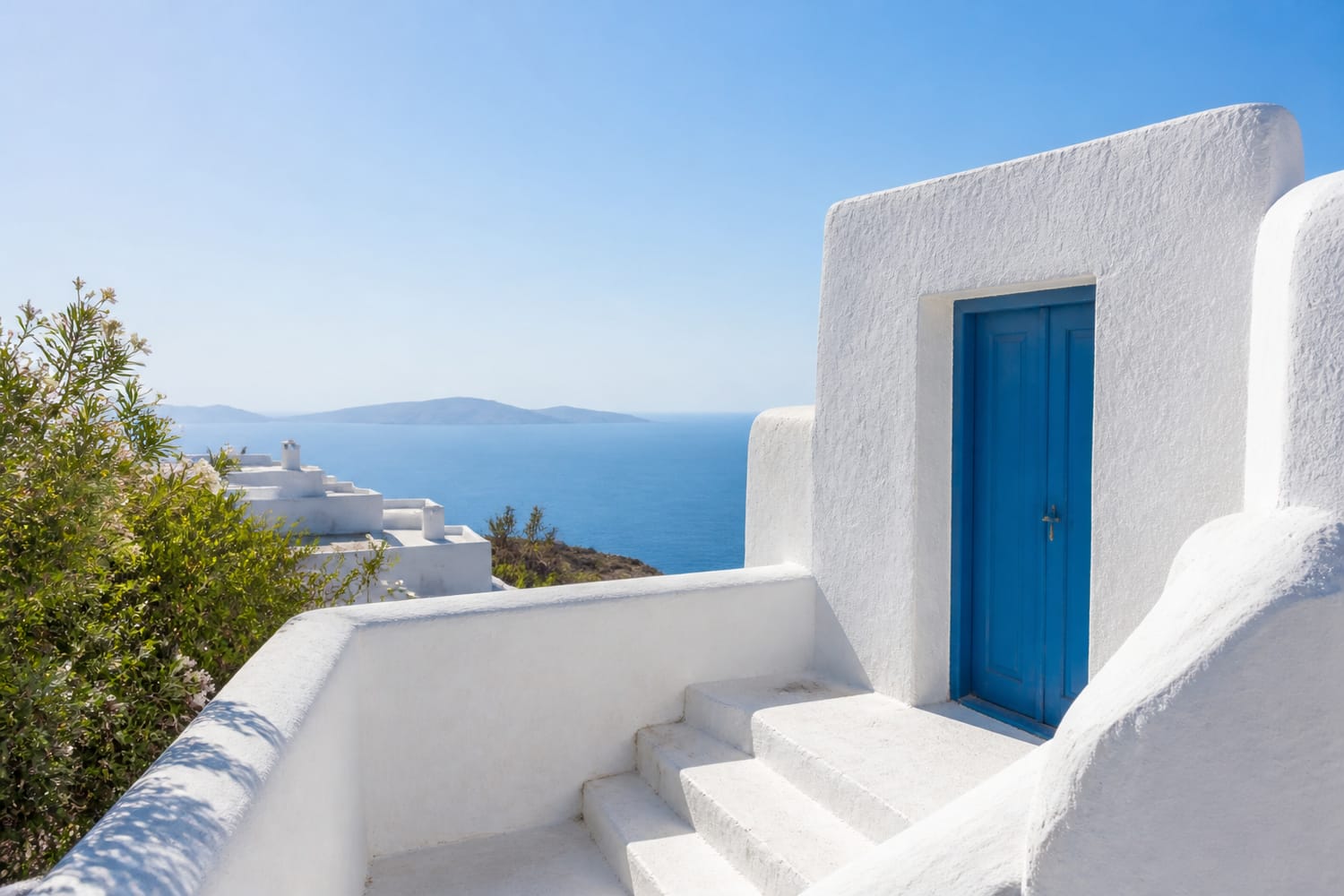
Before white walls became a holiday fantasy, they were a useful response to island conditions. Traditional Cycladic homes were commonly built from local stone and finished with limewash, an inexpensive coating that could be renewed regularly. Its pale surface reflected strong sunlight, helping reduce the heat absorbed by the building.
Whitewash was not simply an early version of a decorative paint scheme. Lime was also valued for its disinfecting properties, giving the practice an association with cleanliness as well as comfort. The familiar appearance emerged from work that served a household purpose.
The buildings themselves were practical, too. Cycladic architecture worked with difficult terrain, incorporating rock faces, sheltered recesses, storage spaces, and cisterns. What looks wonderfully sculptural to visitors often reflects the challenge of making a usable home in an exposed island landscape.
It is a useful way to read old buildings: start with the problem their builders faced. Tour Trivia’s exploration of why medieval houses overhang the street takes a similar approach to another distinctive streetscape.
Governments Helped Standardize the Look
Practical advantages explain why whitewash made sense. They do not fully explain why whole settlements came to look so consistently white.
A study of Greek heritage identity published in Heritage describes compulsory limewashing under the dictatorship of Ioannis Metaxas, who ruled from 1936 to 1941. It also documents renewed pressure during the military dictatorship of 1967–1974, when instructions requiring white-painted houses passed through local authorities in the Cyclades.
The important distinction is between an existing practice and its later enforcement. Authorities did not invent limewash. They helped make a varied architectural landscape more uniform, strengthening an appearance that later visitors would often assume had remained unchanged for centuries.
This is why a single-origin explanation falls short. Household needs, public policy, and changing ideas about what an island village should look like all contributed.
Why Are the Church Domes Blue?
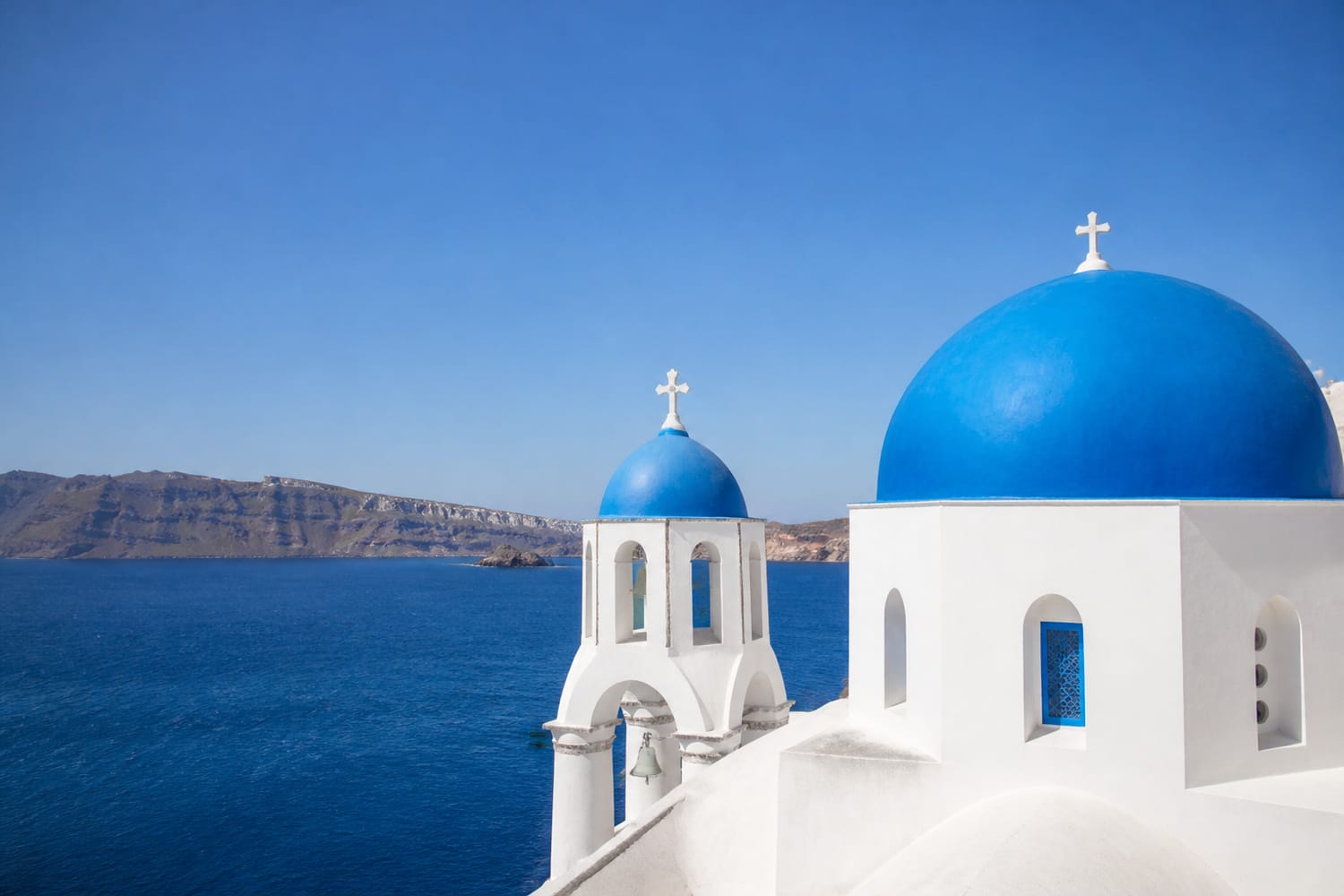
The blue domes deserve a more cautious answer than the white walls. There is no single, securely established origin story that explains every blue-painted church across the islands. Nor does a Greek church have to have a blue dome: Cycladic churches also have white domes.
Blue creates an obvious visual relationship with the sea and sky, and it carries religious and cultural associations. But an appealing interpretation is not necessarily proof of why a particular parish first chose that color. Road Scholar’s account of Greece’s blue-and-white palette treats it as a layered tradition rather than a single symbolic code.
Affordable pigments belong to the broader story, too. Accounts of island paint traditions describe loulaki, a household laundry-bluing product, being mixed into whitewash to create blue. That helps explain how blue finishes could be accessible; it does not establish the history of every church dome.
The safest answer is therefore less dramatic than the legend: local painting traditions developed into a recognizable regional look, while symbolic meanings accumulated around them.
Was It All About the Greek Flag?
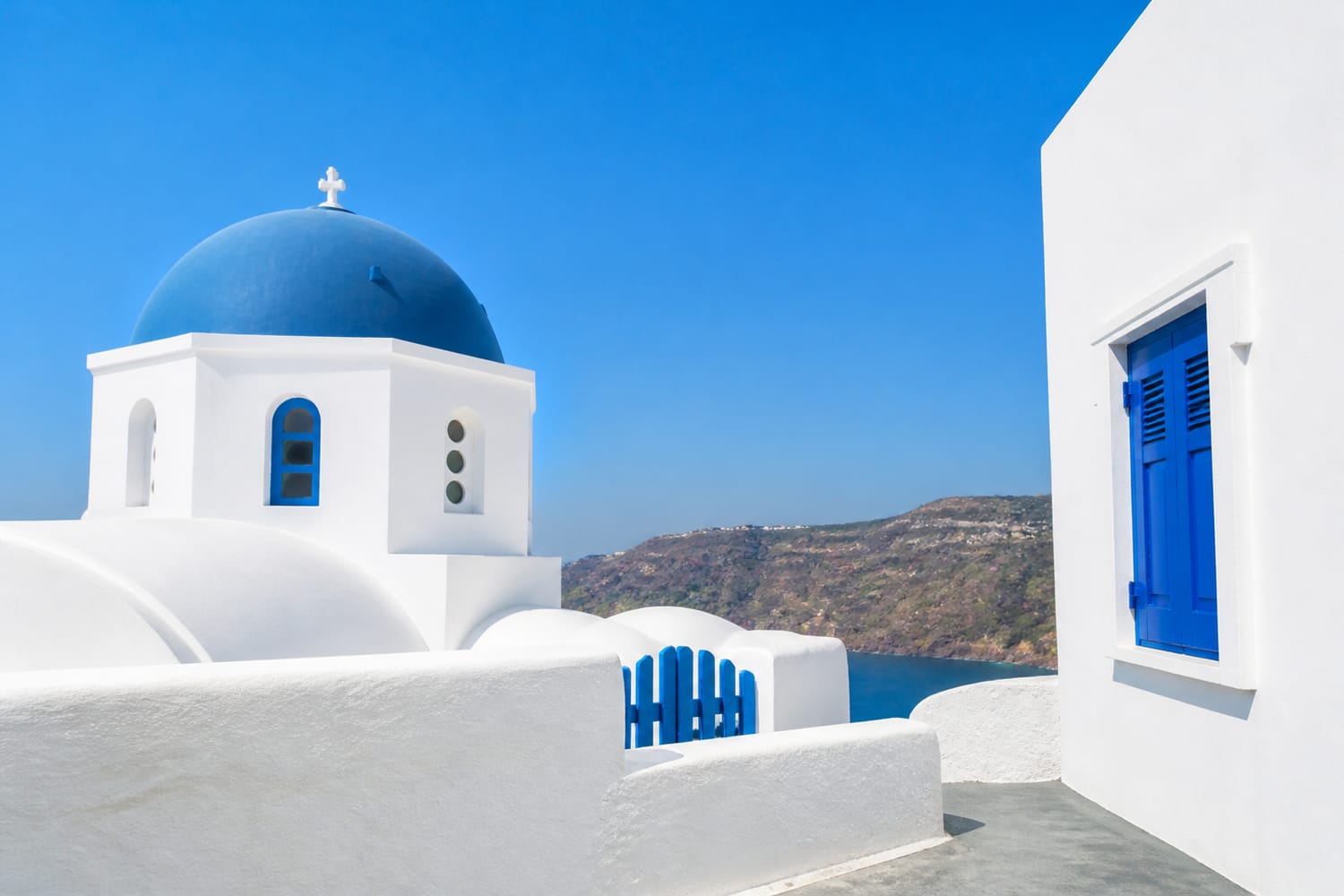
Blue and white are Greece’s national colors, so the connection is understandable. Official Greek flags featuring blue, white, and the cross were established in 1822, during the War of Independence. Over time, national identity and island imagery reinforced each other.
But saying that every white house and blue dome was originally painted to imitate the flag reverses a complicated history. Practical whitewashing, local decoration, government standardization, and patriotic associations overlap; none alone explains the entire landscape.
Color rarely carries just one meaning. As Tour Trivia’s guide to color symbolism across cultures explores, the same shade can communicate different things depending on its setting. A blue shutter, a church dome, and a national flag need not share one origin.
How Tourism Turned Tradition Into a Trademark
Photography and tourism promotion helped make the Cycladic palette stand for the whole country. White buildings, blue accents, and open sea offered a memorable visual combination that could travel easily through posters, magazines, and postcards.
Repetition made that image feel universal. Yet Cycladic village life on Sifnos, with its white houses, churches, and winding lanes, offers another expression of the tradition beyond Santorini’s famous views.
On your next island walk, look for the details the postcard leaves out: different shutter colors, an unpainted stone wall, or a church whose dome is white rather than blue. Treat churches as places of worship, not photographic props, and stay off private roofs.
The postcard is not wrong. It simply leaves out the maintenance, adaptation, and history that made the view possible.