
When a Pineapple Was a Luxury Object
For Indigenous peoples in the Americas, pineapples were cultivated food long before Europeans encountered them. From South America, cultivation spread into Central America, Mexico, and the Caribbean. Christopher Columbus encountered the fruit on Guadeloupe in November 1493, bringing it to European attention rather than “discovering” an unknown plant.
Getting a pineapple across the Atlantic in edible condition was another matter. The fruit could rot during lengthy voyages, making a fresh specimen an unusual possession in Europe. Its scarcity, striking appearance, and celebrated flavor helped turn it into an object of fascination.
A painting in the Royal Collection captures that prestige. Dating to around 1675–1680, it shows Charles II being presented with a pineapple by a kneeling man, possibly gardener John Rose. Although often described as England’s first homegrown pineapple, the Royal Collection Trust cautions that the fruit was more likely imported. Either way, it was important enough to feature in a royal portrait.
Growing One Was a Way to Show Off
Importing a pineapple demonstrated access to distant markets. Growing one in a chilly European garden demonstrated something else: money, equipment, and considerable gardening skill. Pineapple cultivation became a competitive pursuit among wealthy landowners, especially during the 18th century.
Gardeners needed to create tropical conditions without modern heating systems. Specialized structures called pineries used techniques including furnace-heated flues and beds of fermenting tanners’ bark to provide warmth. Maintaining suitable temperatures required careful management; some early heating arrangements damaged plants or created fire hazards.
The pineapple therefore represented more than an expensive dessert. It could advertise an estate’s resources and the accomplishments of its gardeners. Seen in that context, a carved pineapple on a garden building reads rather like a permanent trophy: proof that its owner participated in an impressive horticultural fashion.
How the Fruit Moved Into Architecture
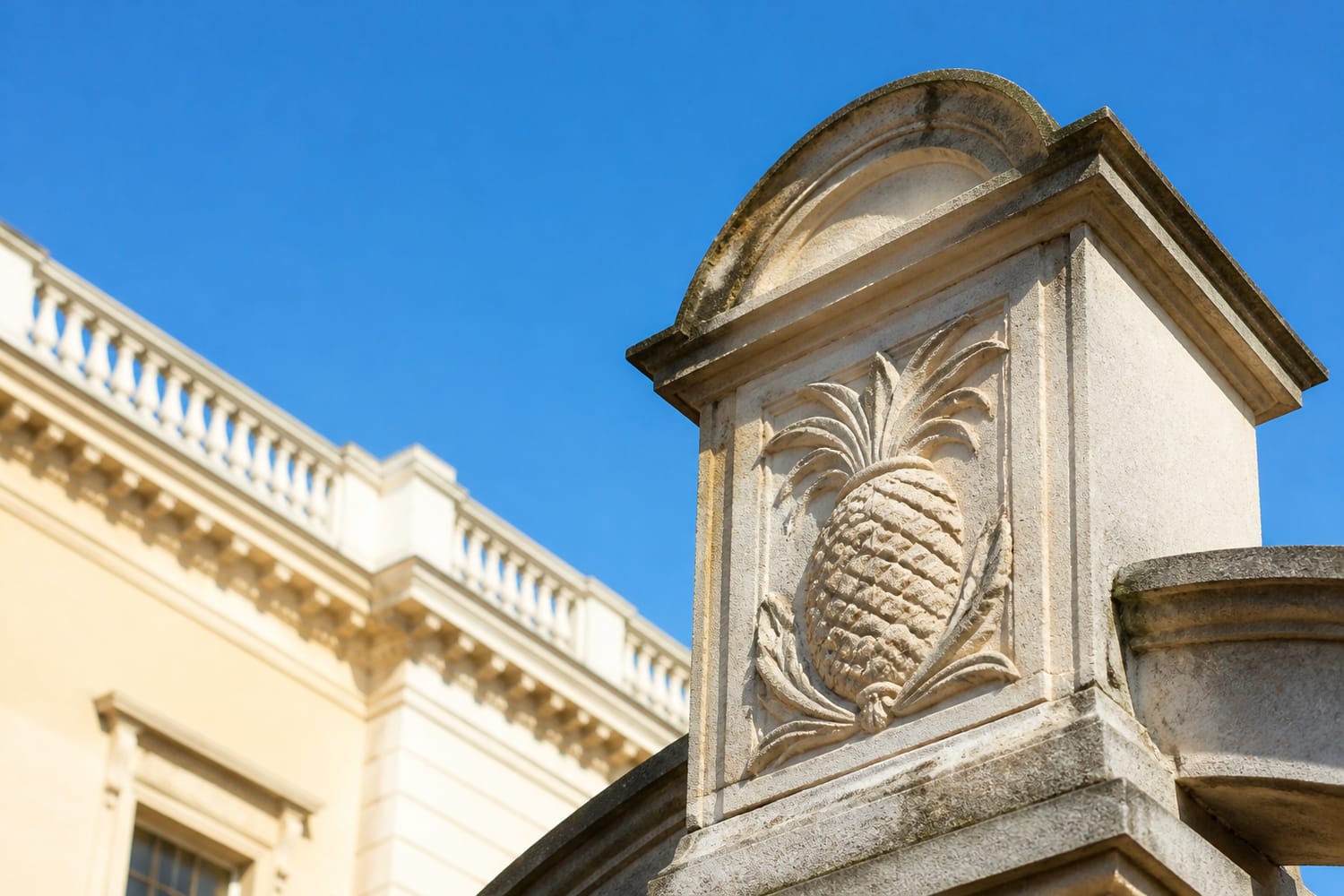
Pineapple imagery spread beyond the dining table into decorative arts and architecture. Its likeness appeared on ceramics, silverware, gateposts, doorways, and finials—the ornamental features crowning posts or architectural elements. The Smithsonian’s history of pineapple symbolism traces these overlapping associations with taste, status, and hospitality.
There are documented American examples, too. Colonial Williamsburg notes that a pineapple decorated the doorway at William Byrd’s James River plantation. Such details placed fashionable fruit imagery where visitors could see it, rather than keeping it confined to a dinner service.
Visually, the fruit makes a memorable ornament: a textured oval body topped by a dramatic spray of leaves. That distinctive outline offers a useful starting point when examining hidden symbols in famous landmarks. The smallest detail may invite a bigger question about the people who commissioned a building.
Was It Always a Symbol of Hospitality?
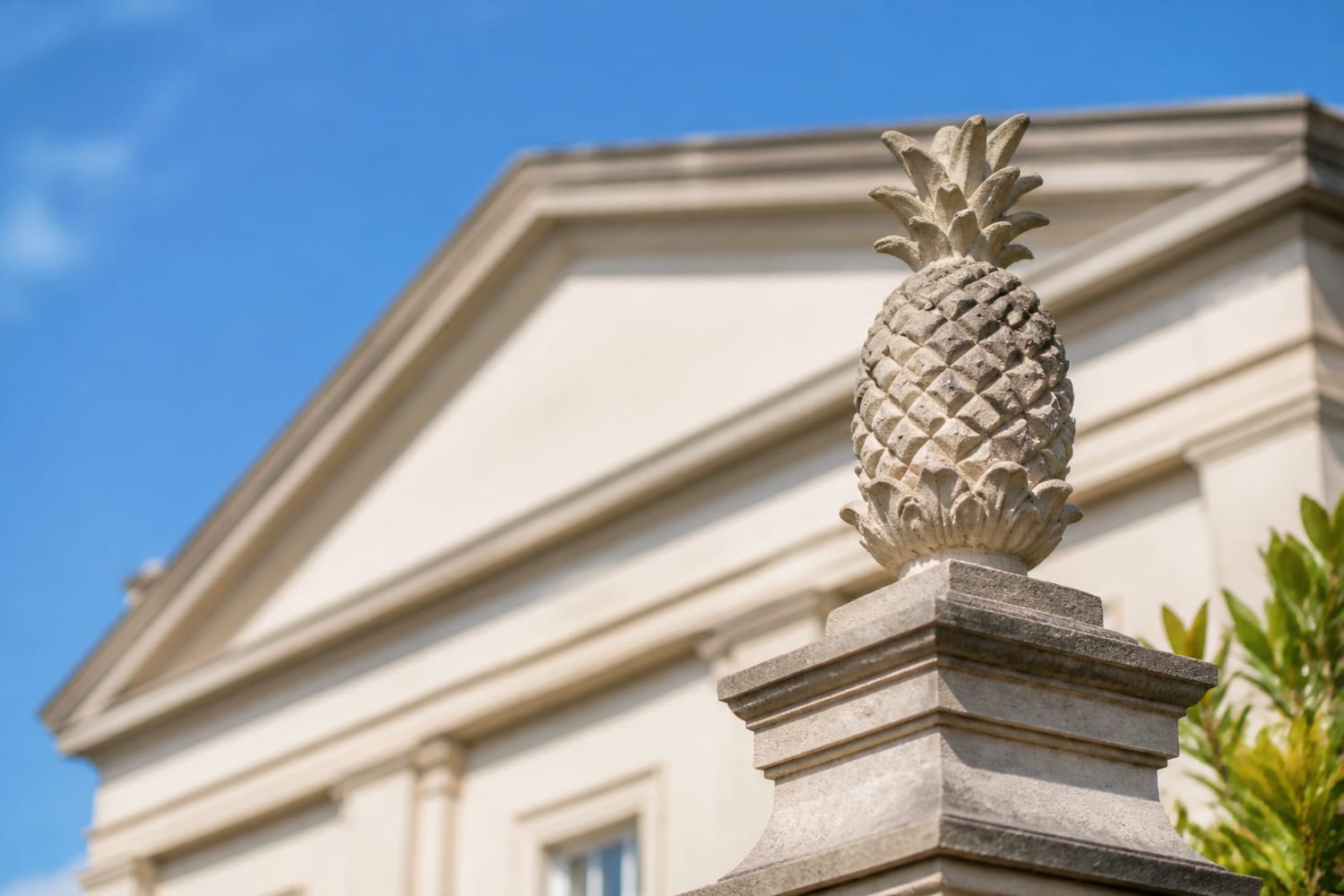
The familiar explanation is that serving such a desirable fruit honored guests, eventually making the pineapple a shorthand for generous hospitality. The Smithsonian presents hospitality as an established 18th-century association. However, not every historical interpretation agrees about how early or widespread that meaning was.
In “Stuff and Nonsense,” Colonial Williamsburg questions the traditional account, arguing that evidence is lacking that colonial Americans understood the pineapple as a hospitality symbol. It also highlights possible confusion between pineapples and older pinecone motifs, which carried classical associations with fertility and regeneration.
The safest conclusion is that pineapples unquestionably signaled rarity, fashionable taste, and wealth, while their precise historical meanings depended on context. Hospitality is an important part of the story, but it should not automatically explain every carving.
That distinction makes a historic building more interesting, not less. Rather than treating its decoration as a universal code, ask what evidence survives about that particular owner, architect, or estate.
Scotland Took Pineapple Architecture to Another Level
For an unforgettable example, consider the Dunmore Pineapple in Scotland. Commissioned by John Murray, the fourth Earl of Dunmore, this garden pavilion wears an enormous stone pineapple above its roof. It turns a fashionable decorative motif into the building’s defining feature.
Its chronology requires care. The pavilion bears the date 1761, but the pineapple above it is thought to be a later addition. The Landmark Trust suggests it probably appeared after Dunmore returned from his troubled governorship of Virginia in 1777; the exact construction date remains uncertain.
The setting matters as much as the spectacle. The structure stood within a productive walled garden, once flanked by glasshouses. This was not simply a random tropical joke in the Scottish countryside: it belonged to an estate landscape where cultivating unusual fruit was a serious undertaking.
The Less Comfortable History Behind the Ornament

The pineapple’s fashionable reputation also developed within colonial systems. Caribbean plantation gardens supplied fruit to white households, while wealthy consumers obtained tropical produce through trading networks entangled with slavery. The Smithsonian emphasizes these connections alongside the fruit’s more cheerful decorative meanings.
That does not mean every pineapple carving has one identical political message. It does mean that interpreting the fruit only as friendliness leaves out part of its history. Luxury depended on access, labor, and unequal power as well as admiration for an unusual plant.
What to Look for on Your Next Walk
Start with the carving itself: does it have a leafy crown, or could it be a pinecone? Then check the building’s date, the ornament’s location, and any information about later alterations. Colonial Williamsburg’s discussion shows why identification matters before interpretation.
Ask a guide whether the decoration is original and whether records explain its meaning. As with the purpose behind cathedral gargoyles, the best architectural trivia begins with looking closely.
A stone pineapple may suggest welcome, wealth, gardening ambition—or several at once. The real discovery is recognizing how much history can hide above a doorway.