
The Monsters With a Maintenance Job
Why do cathedrals have gargoyles? The short answer is rain. A true gargoyle is a carved waterspout that sends water away from a building’s walls. Its teeth, claws, and frightening face may grab your attention, but its most important feature is a channel that helps protect the stonework below.
That is the delightful trick of a gargoyle: it turns a practical piece of drainage into a creature you might cross a street to see. On a dry day, it poses against the sky. In a downpour, it gets to work.
How Does a Gargoyle Work?
Imagine rain falling across a cathedral’s broad roof. Gutters and channels collect some of that water and guide it toward an outlet at the edge. If the water simply ran down the walls, it could gradually wear away vulnerable surfaces and mortar. A projecting spout gives it a route out and away instead.
The carving makes this bit of plumbing memorable. Water travels along the gargoyle and exits through an opening, often its mouth. At Notre-Dame de Paris, the cathedral describes a drainage system whose long gargoyles project rainwater clear of the walls. Some of those open mouths were designed to do far more than snarl.
This is why the creature’s position matters as much as its expression. Look for gargoyles jutting outward from rooflines or other points where water needs to leave the building. Their dramatic silhouettes are part of their appeal, but that extra reach also serves a practical purpose.
Why Make a Drainpipe Look Like a Monster?
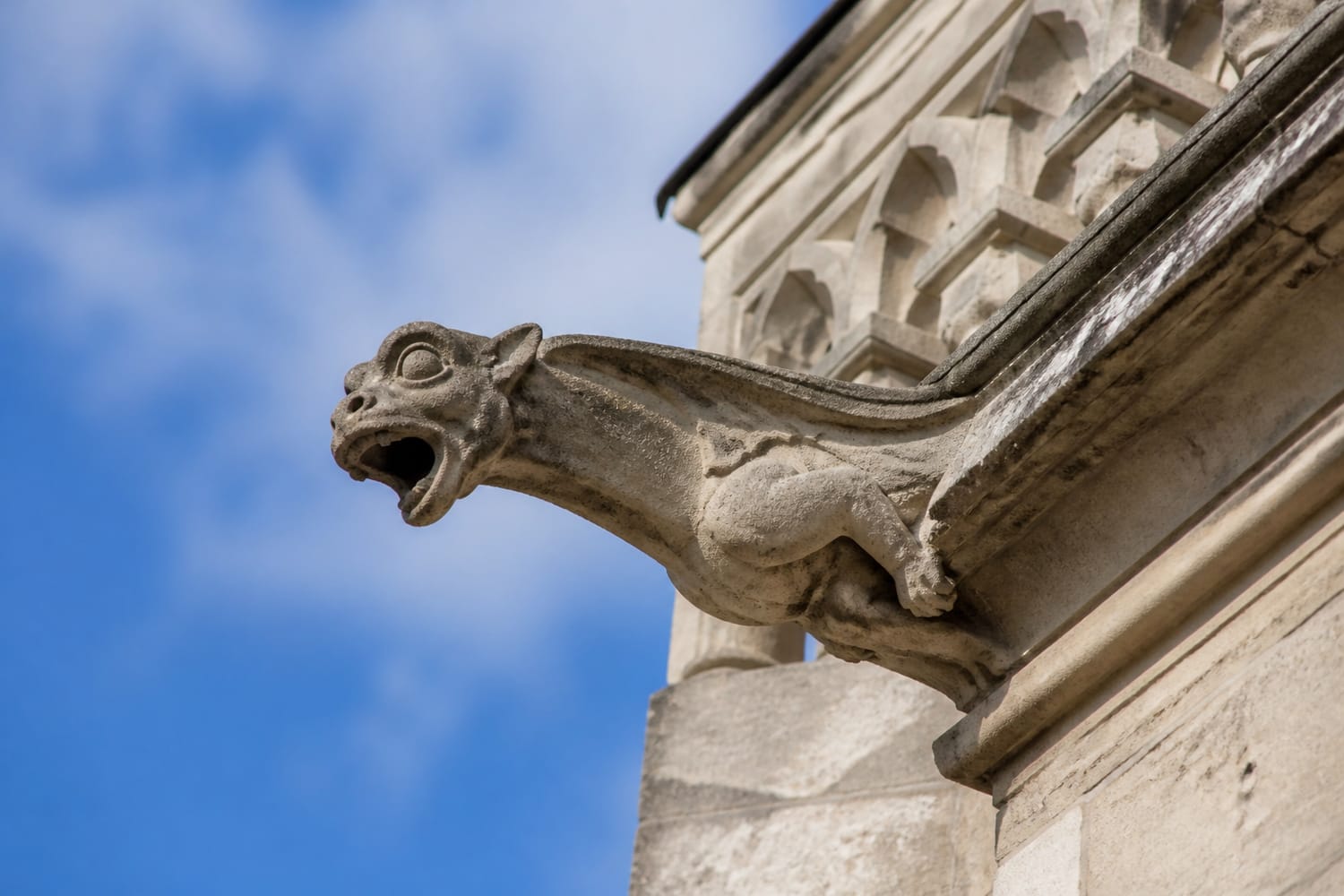
A plain stone spout could have moved water. Cathedral builders and sculptors had another opportunity, though: to make a necessary feature part of the building’s visual world. Across Gothic architecture, carved creatures could be strange, funny, fierce, or difficult to identify at all.
Their meanings are less straightforward than their plumbing. Frightening figures on churches have been interpreted as warnings about evil, images of danger left outside a sacred space, or simply products of an inventive sculptor’s imagination. It is tempting to say every gargoyle was meant to scare away demons, but no single explanation accounts for every face on every cathedral. Even a cathedral with a serious purpose could make room for visual surprise.
For a visitor, that mix of purpose and personality is the fun of it. One carving might suggest a dragon; another looks more like an animal pulling an unexpectedly human expression. The drainage problem stayed much the same, while the sculptural possibilities seemed nearly endless.
The Name Offers a Clue
“Gargoyle” sounds rather like water bubbling in a throat, and the connection is fitting. The word comes through Old French gargouille, meaning “throat” as well as “gargoyle,” according to the Oxford Learner’s Dictionary definition. Water passing through the carved creature and out of its mouth is built into the word’s history.
It is an unusually useful piece of travel trivia. Forget the wings or the fangs for a moment and ask what happens at the mouth. If rainwater can pass through it, you are probably looking at a gargoyle in the architectural sense.
Not Every Scary Cathedral Creature Is a Gargoyle
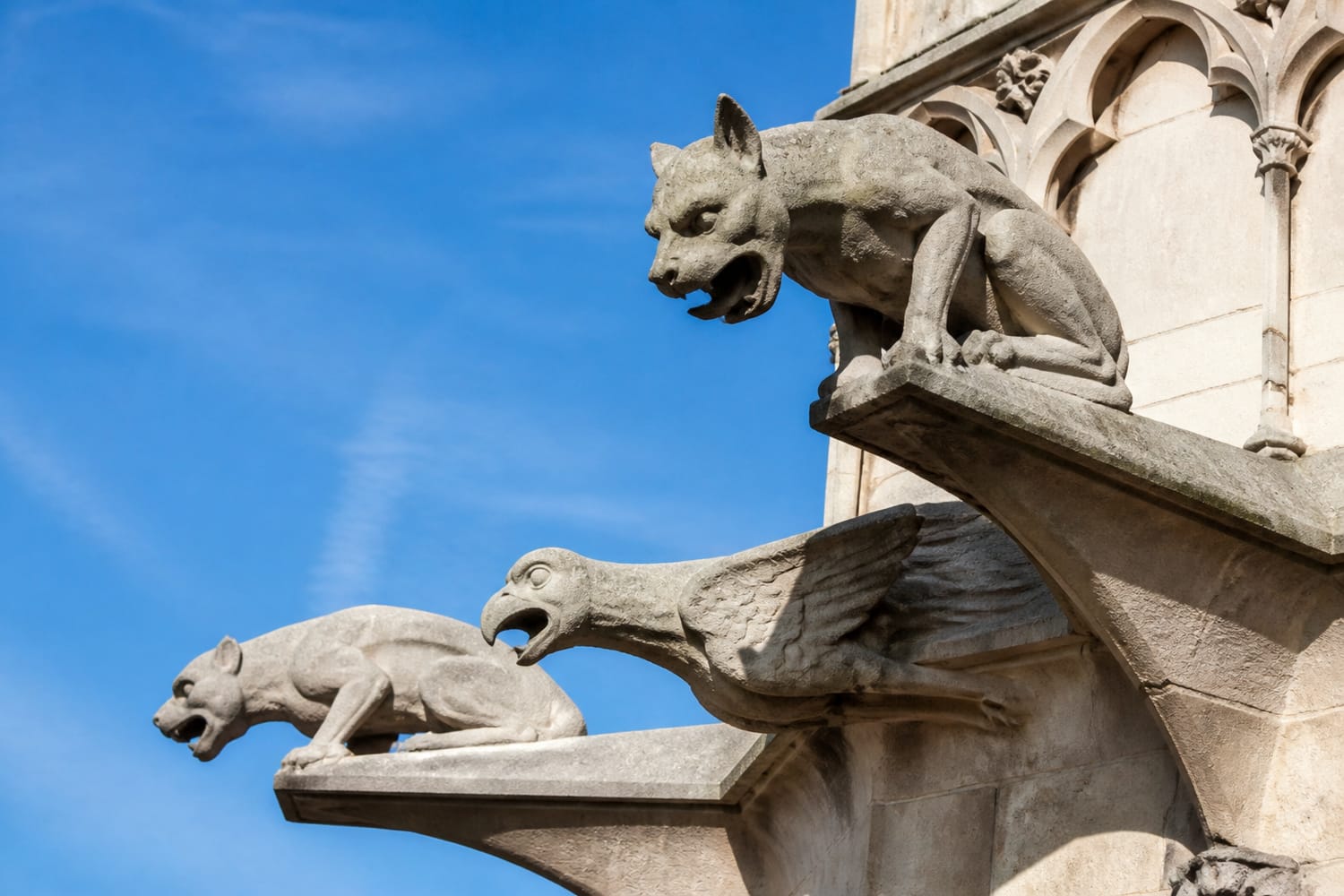
Here is the distinction that changes how you look at a cathedral: a gargoyle drains water; a grotesque does not. “Grotesque” is a broad term for an unusual carved figure, while “chimera” is often used for a fantastical creature. The words may be used loosely in conversation, but the water outlet is the useful test.
Notre-Dame supplies a famous example. Many of the creatures perched around its towers are decorative chimeras, not waterspouts. They were created during the cathedral’s 19th-century restoration, so the memorable monster in a photograph is not necessarily a medieval gargoyle. The cathedral also has functional gargoyles: similar atmosphere, very different assignments.
That distinction makes an already fascinating building more interesting. Rather than treating every creature as interchangeable, you can ask two questions: When was it added, and what does it do? A small detail can reveal both engineering and a later chapter in a landmark’s history.
Notre-Dame’s Creatures Have More Than One Story
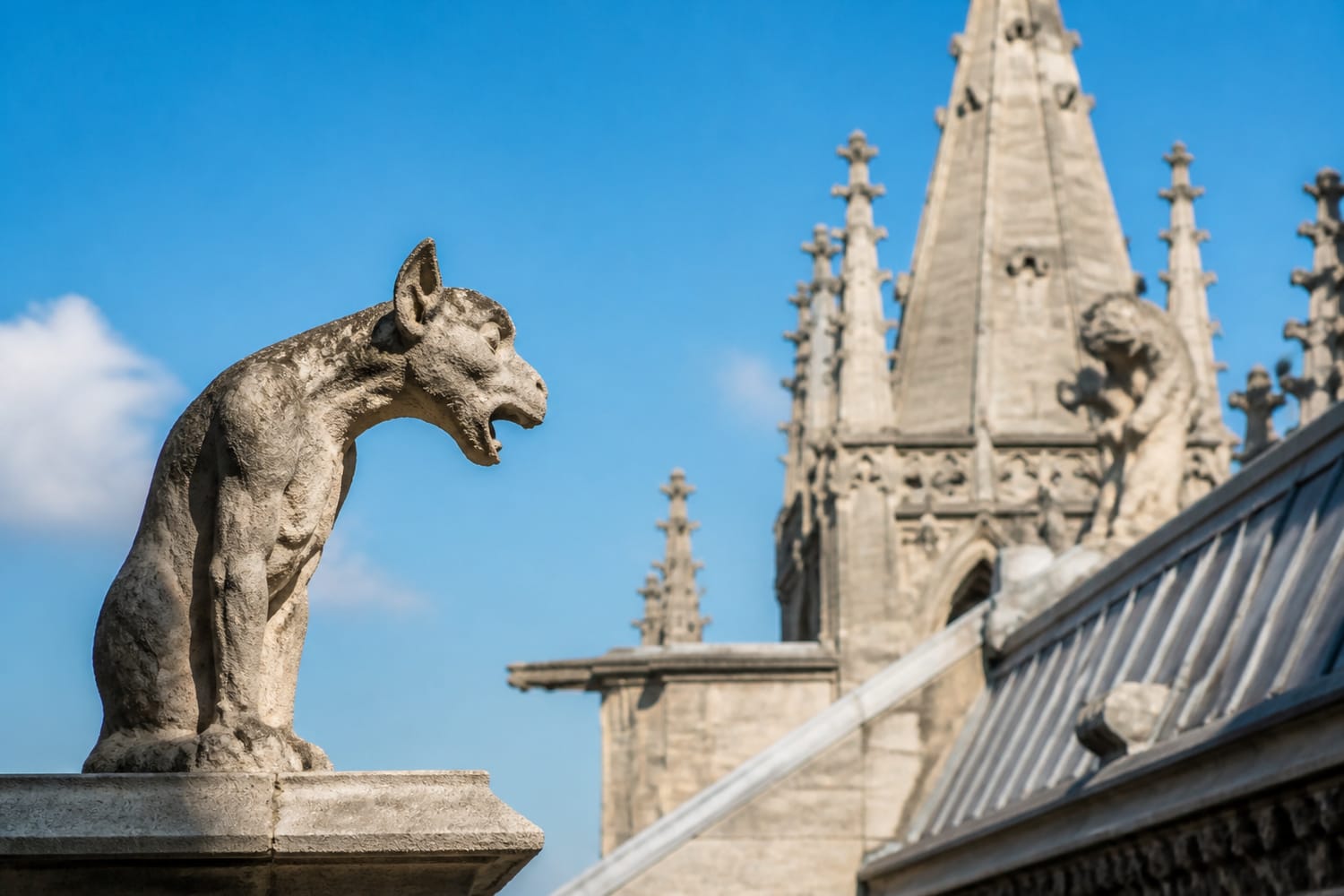
The chimeras of Notre-Dame show how cathedrals can carry the ideas of several eras at once. During the 19th-century restoration associated with Eugène Viollet-le-Duc and Jean-Baptiste Lassus, sculptors created fantastic creatures for the towers. They drew on the spirit of medieval imagery, but the statues themselves belong to that later restoration.
The distinction is not a reason to find them less impressive. It is a reason to look closer. A cathedral is rarely a snapshot of a single day of construction; repairs and additions can become part of what visitors love most about it. Tour Trivia’s look at hidden symbols in famous landmarks explores other details that are easy to pass without noticing.
A Modern Cathedral Keeps the Joke Going
The tradition of expressive carvings did not end in the Middle Ages. Washington National Cathedral has functional gargoyles among its many architectural details. It also has a carving of Darth Vader on a northwest tower—but, as the cathedral points out in its guide to surprising cathedral details, Vader is technically a grotesque, not a gargoyle. He has the intimidating face, but not the waterspout job.
That example captures the distinction neatly. Whether a carving depicts a mysterious beast or a familiar movie villain, its appearance alone does not tell you what it does.
What to Look for on Your Next Cathedral Visit
Start at the roofline and follow the likely path of rainwater. Look for creatures projecting away from the wall, then check whether you can make out a channel or an opening. Decorative figures may perch nearby without any obvious route for water to pass through them.
You do not need to wait for a storm to enjoy the search—though rain makes the answer spectacularly clear. Keep your distance from falling water, and look up from somewhere safe: those mouths are designed to throw a shower away from the wall, not to keep a sightseer dry.
Gargoyles belong to a larger family of beautiful solutions to ordinary problems. As with other famous landmarks built to solve everyday problems, understanding the job makes the design more impressive, not less. The next time a stone monster seems to glare down at you, remember that it may be quietly waiting for its next shift in the rain.