
The Short Answer
Ancient statues are missing their noses for more than one reason. A nose projects from the face, making it especially vulnerable when a sculpture falls, erodes, or is moved. But some noses were deliberately chiseled away. In ancient Egypt, damaging a statue’s face could be a way to strip an image of its spiritual or political power.
The clue is in the rest of the statue. Is the face worn all over, or is the nose the only damaged feature? Are there tool marks? Has a name been erased? Each detail can turn a familiar museum sight into a much more interesting story.
Noses Are Easy to Break
Picture a stone head tipping forward. Its nose may strike the ground before the cheeks or forehead do. Even without a dramatic fall, a projecting feature has less surrounding stone to protect it than a broad, flat surface. Hands, fingers, and other projecting details are vulnerable for the same reason.
Ancient sculptures have endured centuries of exposure, burial, excavation, transport, and reuse. Some were made from stone that weathers more readily than others; some were damaged when buildings collapsed or statues were moved. A missing nose, by itself, cannot tell us exactly when or how the break happened.
That physical explanation makes the next clue especially surprising: noses are also missing from some nearly flat carved reliefs. Those faces did not need to fall forward for their noses to disappear. In such cases, the damage may point to a person with a chisel rather than an accident.
Why Would Anyone Target a Statue’s Nose?
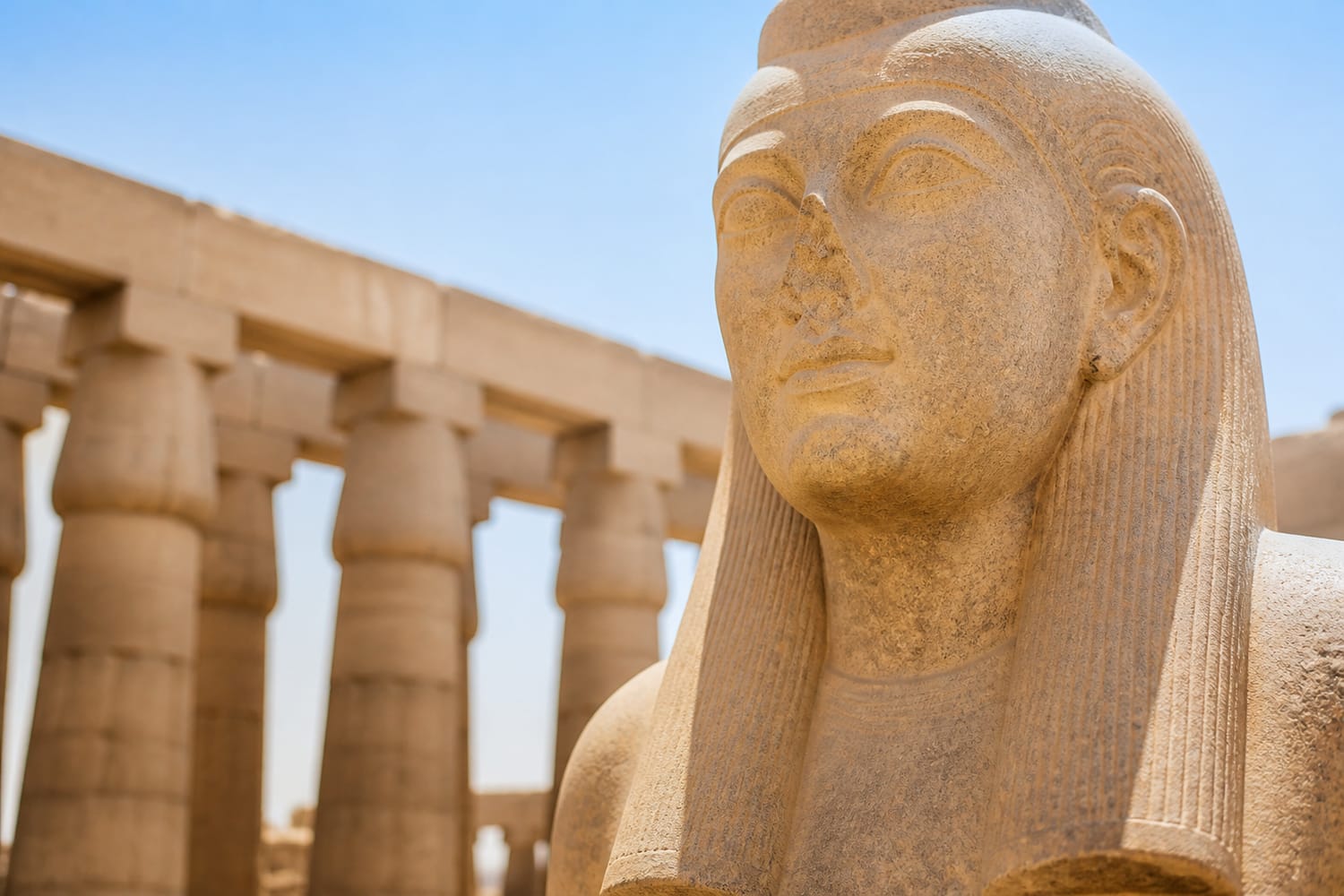
For many ancient Egyptians, a statue was more than a likeness. Images of gods, rulers, and deceased people could have a role in religious life, particularly when placed in a temple or tomb. Damaging an image could therefore be understood as interfering with what it was meant to do.
The nose had a specific significance: it was associated with breathing and the breath of life. Removing it offered a direct way to “disable” a figure. Egyptologist Edward Bleiberg describes examples in which a statue’s nose was carefully removed while nearby, smaller figures were left untouched. That pattern is difficult to explain as random wear.
This does not mean every noseless Egyptian statue was attacked for the same reason. The person wielding the chisel might have feared a tomb owner, opposed a religious image, or wanted to diminish a ruler’s legacy. Scholars look beyond the nose to work out which explanation best fits a particular object.
Broken Faces, Broken Reputations
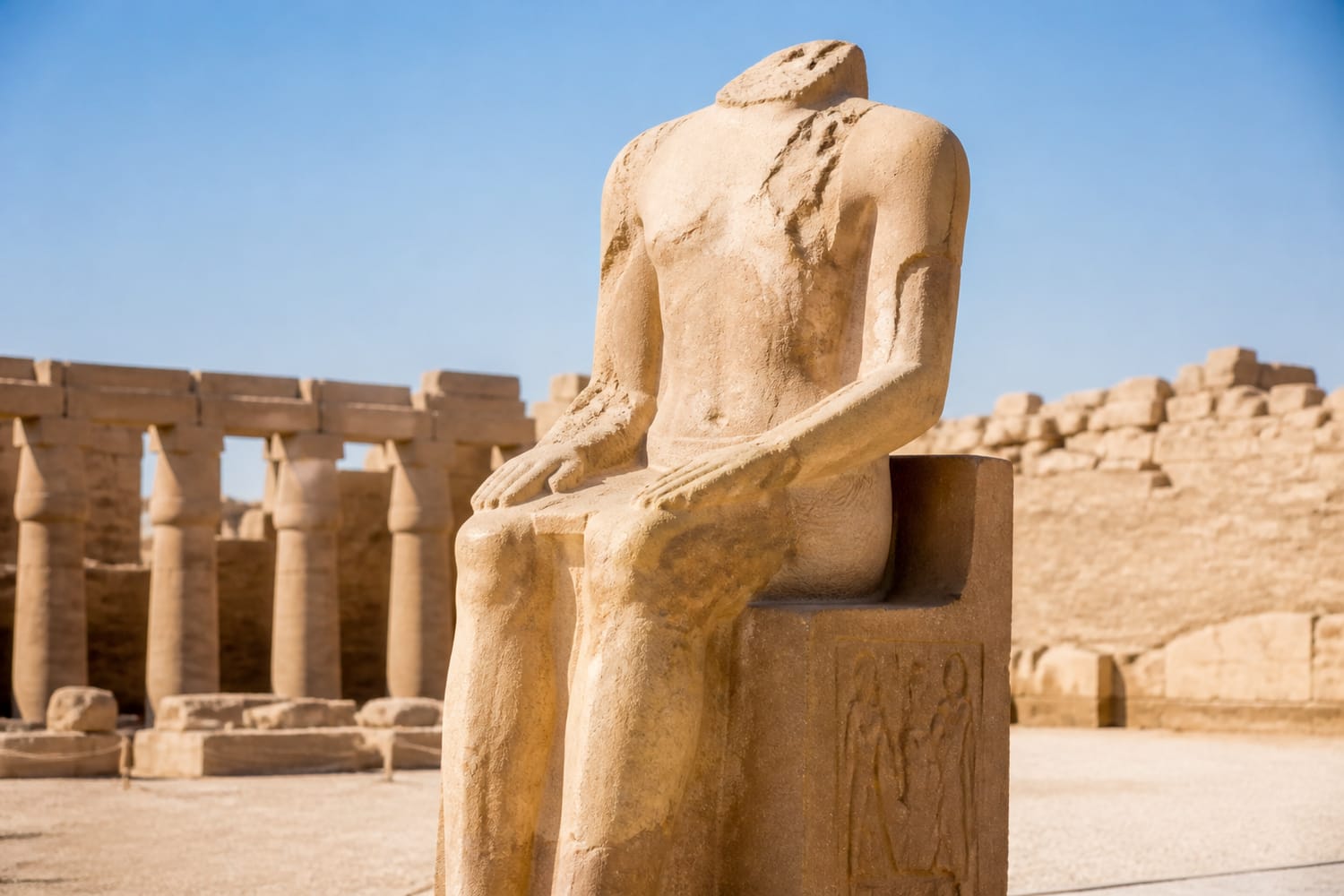
A ruler’s statue could make their presence felt long after their reign. That also made it a target when political priorities changed.
Consider Hatshepsut, who ruled Egypt as a pharaoh. After her death, her successor Thutmose III ordered the destruction of her statues and depictions. The Metropolitan Museum of Art holds a large seated statue that was broken into pieces; its facial features were systematically damaged. The Met notes that the reasons behind the wider campaign are not entirely clear, so it is safer to see the destruction as an attack on her public memory than to assume a simple personal grudge.
Religious change could leave similar marks. The Pulitzer Arts Foundation’s exhibition Striking Power: Iconoclasm in Ancient Egypt examined targeted damage to sculptures and inscriptions associated with shifting political and religious power. The same exhibition showed why an intact neighboring feature can matter as much as a broken one: it helps reveal what the attacker chose to leave alone.
The Great Sphinx and the Napoleon Story
No missing nose attracts more attention than the Great Sphinx’s. One popular tale says Napoleon’s soldiers shot it off with a cannon. But the Sphinx was depicted without its nose before Napoleon arrived in Egypt in 1798, so that story cannot explain the loss.
A medieval account attributed the damage to a man angered by offerings made at the monument. Whether that account identifies the culprit with certainty is another matter. The sound conclusion is narrower, and more intriguing: the Napoleon tale is false, while the precise circumstances of the Sphinx’s damaged face remain debated. Tour Trivia takes a closer look at the evidence in its guide to strange holes and scars on famous landmarks.
The Sphinx is also a useful reminder that a monument can suffer different kinds of damage across many centuries. Its missing nose is one question; the weathering visible elsewhere on its enormous body is another.
How Can You Tell Accident From Attack?
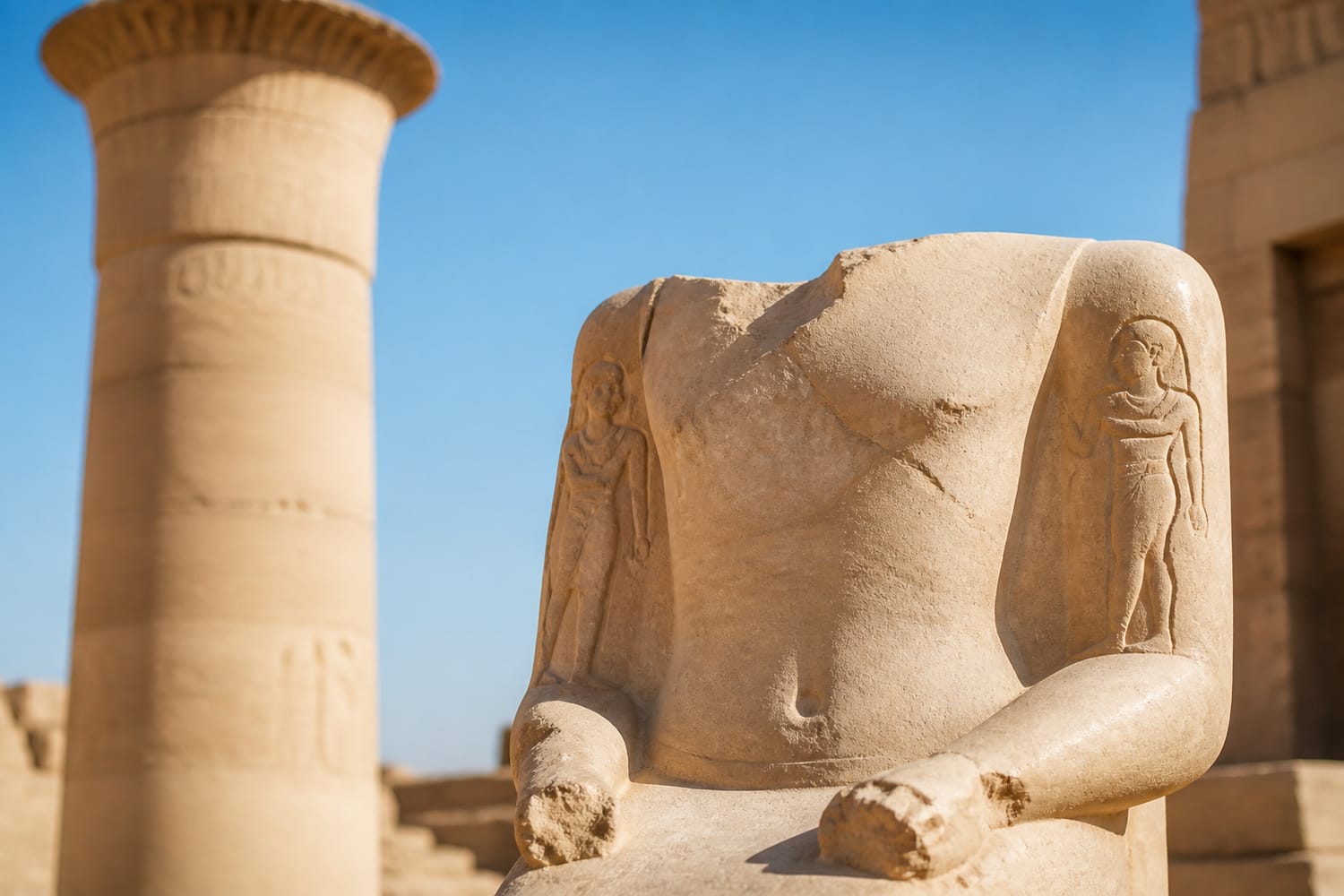
You do not need to identify a statue’s attacker to notice the evidence they may have left. On your next museum visit, look for a pattern:
- A rough break on a projecting nose could be consistent with an accident, though appearance alone is not proof.
- Chisel marks concentrated on the face make deliberate damage more plausible.
- Missing hands or arms may matter if the figure once used them to pray or present an offering.
- Erased names or symbols can suggest that someone targeted the figure’s identity or authority.
Context matters as much as the marks. A damaged figure from a tomb raises different questions from one made for a temple. In his account of Egyptian sculpture, Bleiberg emphasizes an object’s inscription, original setting, and other broken features when weighing what happened to it.
Museums can offer another surprise: what looks complete may have been reconstructed from fragments. Conservators at The Met explain how they restored one of Hatshepsut’s shattered seated statues, balancing a clearer view of the original sculpture with visible evidence of its history. Their account of restoring Hatshepsut’s statue is a reminder that both a missing piece and a repaired one deserve a closer look.
What a Missing Nose Can Tell Us
There is no single answer hiding behind every ancient statue’s face. Some noses succumbed to the ordinary hazards of time; others were removed by people who believed an image could act in the world—or who wanted future generations to remember someone differently.
That is why the most revealing question is not simply, “Where did the nose go?” It is, “What else happened to this statue?” Follow the marks, the setting, and the surviving details, and a broken face becomes evidence of the lives lived around it.