
The Short Answer: A Moat Bought Time
Castles had moats to make an attack harder before it reached the walls. A wide ditch—filled with water or left dry—kept ladders, battering rams, and siege towers at a distance. It could also prevent attackers from digging beneath the walls. The moat was not an impassable barrier; its real value was forcing enemies to spend time and effort crossing it while defenders watched from above.
That practical purpose is easy to miss when a castle’s reflection shimmers in the water. Storybooks make the moat look like a finishing touch. For the people planning a siege, it was a problem to solve.
What Counts as a Moat?
A moat is a defensive ditch around all or part of a fortification. Some held water; others were deliberately dry. Both created a gap between attackers and the castle, though a water-filled moat could make that gap especially difficult to work in.
Nor did every castle need a complete ring of water. Builders could take advantage of cliffs, steep slopes, or other obstacles and dig a ditch where the approach was easier. At Goodrich Castle in England, for example, a substantial dry moat protected two sides of the castle, while its position on a promontory helped shape the rest of its defenses. A castle’s landscape mattered as much as the storybook blueprint.
Keeping Attackers Away From the Walls
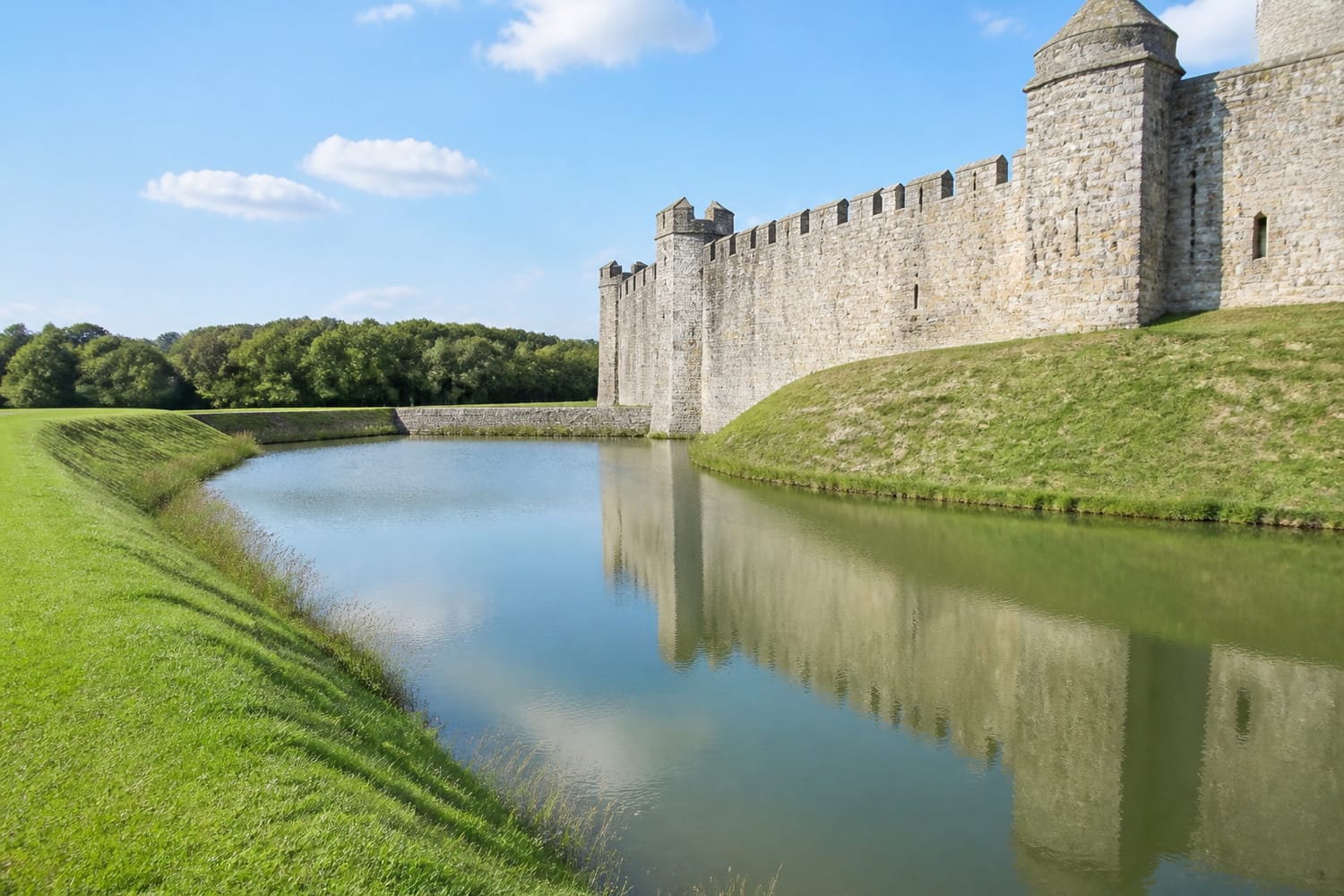
Imagine trying to place a ladder against a high wall. Now put a broad ditch between you and that wall. Before you can climb, you must find a way down one bank and up the other—carrying the ladder with you.
The same problem applied to heavier equipment. A battering ram needed to reach a gate or wall; a siege tower had to be brought close enough for soldiers to cross from it. A moat made either move more difficult. Attackers might try to bridge the ditch or fill part of it, but that meant bringing people and materials into view of defenders on the walls. The obstacle did not have to stop an army forever to be useful.
Water added complications, but it was not magic. Attackers could look for a crossing, bring boats, or concentrate on an entrance. The moat’s job was to make those options slower, riskier, and more predictable.
Stopping an Attack From Below
Not every threat came over a wall. Siege miners could dig beneath masonry, support the excavated space with timber, and then bring down part of the structure by destroying those supports. A well-placed water defense made it much harder to reach and undermine a wall’s foundations.
Kenilworth Castle offers a striking example. During its siege in 1266, the castle’s water defenses prevented royal forces from undermining its walls. King Henry III’s forces even brought barges overland for an assault across the water, but the defenders repelled them. The episode shows both sides of moat defense: water could frustrate one tactic, yet determined attackers would search for another.
Making the Entrance the Main Event
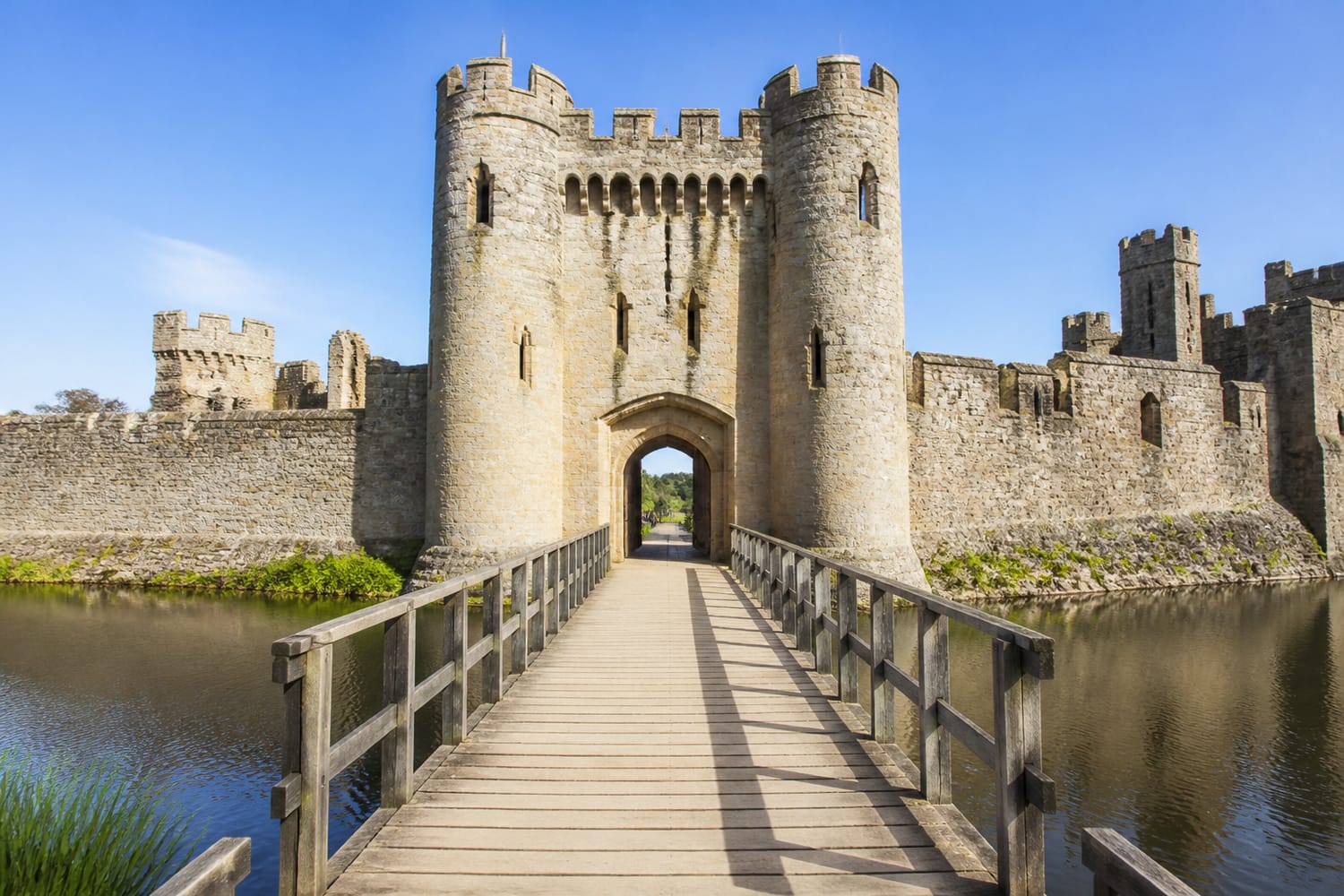
A castle still needed an entrance. Bridges and causeways let residents, supplies, and visitors cross the ditch, but they also gave attackers an obvious route to consider. That made the gatehouse especially important: defenders could strengthen it and watch the approach.
A drawbridge is the detail everyone remembers, yet it was only one possible part of an entrance. At Goodrich, the moat, drawbridge, gatehouse, and an outer defense called a barbican worked together. Rather than relying on one dramatic moving bridge, castle builders layered obstacles so that getting across the ditch was merely the beginning of an assault.
That is a useful way to read castle architecture generally. As Tour Trivia’s look at the myth of castle spiral staircases shows, a memorable explanation for one feature rarely tells the whole story of how a castle worked.
Were Moats Always Full of Water?
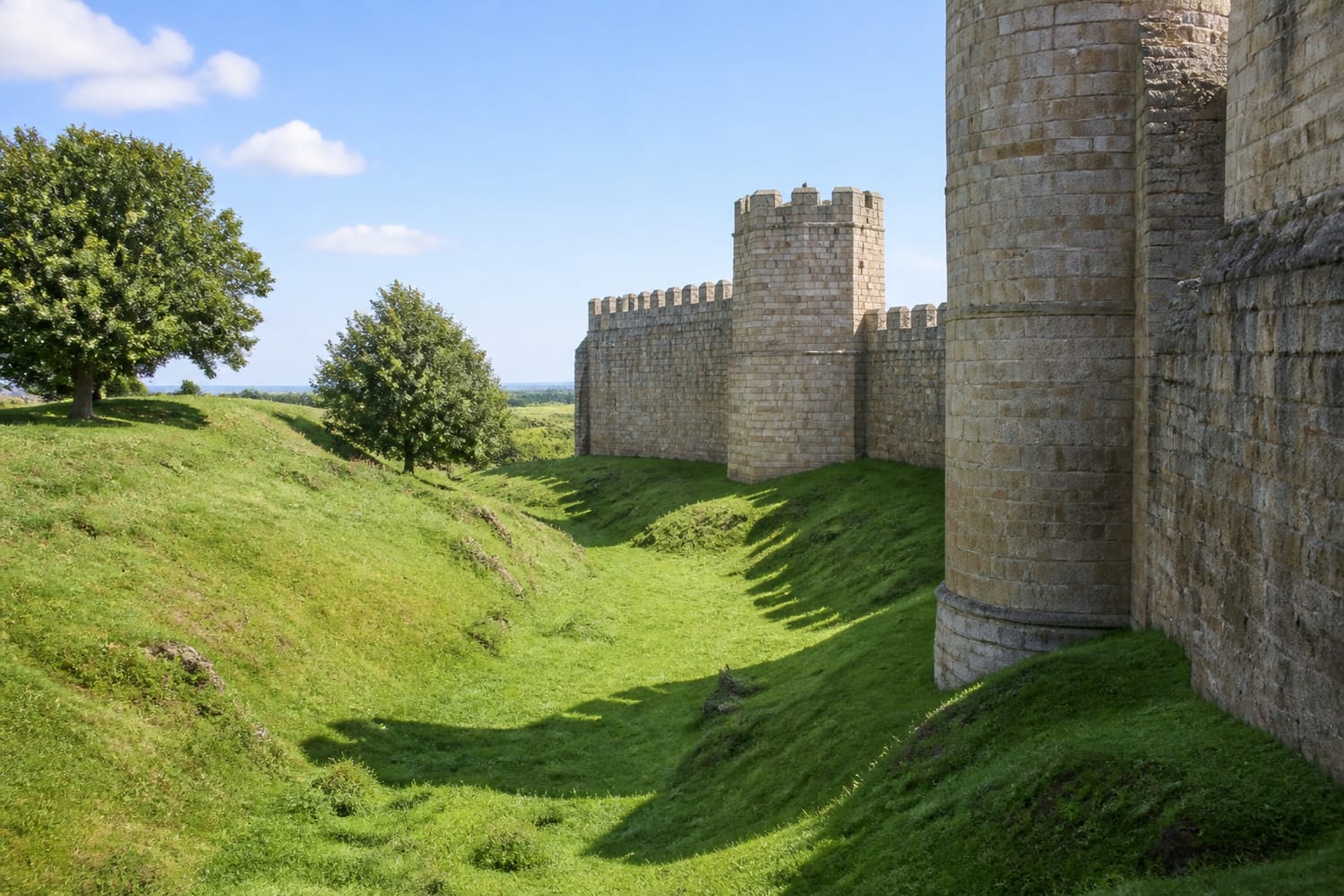
No—and this is where many imaginary castles part company with real ones. A steep, dry ditch could still force attackers to descend, cross exposed ground, and climb before reaching the wall. At Goodrich, the surviving moat is dry rather than a lake encircling the entire fortress.
A wet moat also required a workable water supply and a way to manage it. Bodiam Castle’s moat, for instance, was part of a wider landscape of ponds and water features. Seeing water at a castle today does not mean that every castle moat looked like Bodiam’s, or that every stretch of ditch was meant to hold water.
Defense Wasn’t the Only Reason
Castles were strongholds, but they could also be homes and displays of authority. A broad, gleaming moat made an imposing first impression on guests as well as enemies.
Bodiam Castle in East Sussex captures that double purpose. The National Trust describes its moat as partly defensive and partly intended to impress, reflecting the castle’s towers in the water. Its approach crossed an L-shaped bridge in the medieval period, turning arrival into a carefully staged experience. The sight that delights visitors now also helped announce the standing of the person who lived there.
Moated sites could serve other needs, too, including drainage and, in some cases, fishkeeping. Those possibilities are a reminder not to assume that every ditch around an old building was designed solely for battle.
What to Look for on Your Next Castle Visit
Start with the ground rather than the towers. Is there a wet moat, a dry ditch, or no obvious ditch at all? Where would an attacker have had the easiest approach, and how did the builders respond? Follow the route to the gate and notice how many obstacles stood between the outside world and the courtyard.
Then look beyond the water. A bridge, slope, gatehouse, and surrounding terrain may explain more than the moat alone. Castles differed because their sites and owners’ needs differed—a point worth keeping in mind while exploring Tour Trivia’s collection of overlooked castles.
The best moat trivia answer is not “to keep enemies from swimming across.” It is that a moat helped control the approach: keeping siege equipment back, frustrating mining, and buying defenders precious time. Sometimes it also made a castle look magnificent. That blend of hard-nosed defense and theatrical effect is exactly why the feature has lasted so long in our imaginations.