
When Streets Followed You Indoors
Forget the polished version of history in which everyone steps neatly from a carriage onto a spotless doorstep. In nineteenth-century communities, walking could mean negotiating unpaved roads, sticky mud, and the manure left by horses pulling vehicles. That mixture readily traveled indoors on shoes and boots.
As The Henry Ford’s explanation of boot scrapers makes clear, these devices helped protect floors and carpets in homes, offices, and other buildings. Their placement also offered a practical reminder: deal with your dirty footwear before entering.
Conditions varied by place, but even towns with some paving weren’t necessarily clean underfoot. Village Preservation describes early New York streets containing household rubbish, food waste, and animal remains, alongside the dirt of the roadway itself. A short walk could leave someone carrying considerably more than mud.
Against that background, a small piece of iron beside the entrance begins to look less quaint and more indispensable.
How a Boot Scraper Worked
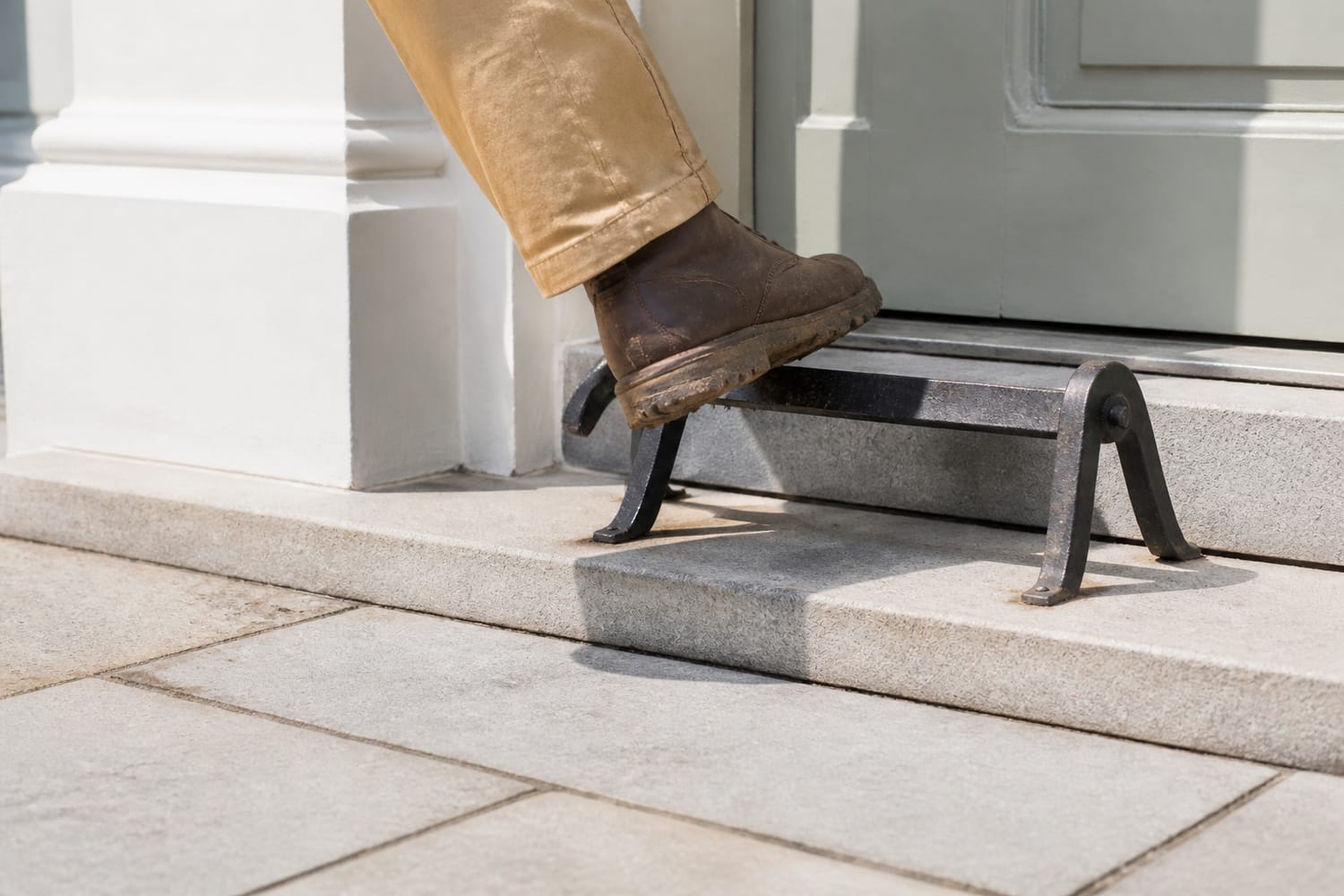
The simplest boot scraper consisted of a horizontal metal plate supported by a small frame near the entrance. A visitor drew the sole of a shoe or boot across its edge, dislodging caked-on dirt before crossing the threshold. No moving parts or complicated instructions were required.
The blade did the heavy cleaning rather than polishing the shoe. Think of the difference between brushing loose dust from footwear and removing a stubborn lump of dried mud: the scraper tackled the latter. Some designs combined scraping surfaces with brushes for more thorough cleaning.
Not every scraper was permanently attached to a doorstep. Portable models could be moved wherever they were needed. Boylston Historical Society and Museum, for example, documents a cleaner with a long wooden handle, a metal scraping base, and a brush—an unusually elaborate solution to a thoroughly ordinary problem.
The Different Shapes Beside the Door
Once you know what to look for, boot scrapers become easier to recognize. The Wiltshire and Swindon History Centre identifies three broad arrangements: freestanding scrapers fixed into the ground, portable examples, and scrapers incorporated into the building itself.
Useful clues include:
- A low horizontal edge: positioned where someone could comfortably draw a sole across it.
- A frame beside the steps: sometimes plain, sometimes decorative.
- A small wall recess: providing room for a foot behind the scraping bar.
- A blade incorporated into entrance railings: making the cleaner part of the surrounding ironwork.
An empty recess can be especially intriguing. At Teddington House in Warminster, England, the history centre records two arched openings beside the doorway that once contained iron bands. The metal can disappear while the architectural space remains, preserving the outline of a forgotten routine.
As with the practical thinking behind medieval houses that overhang the street, an unfamiliar feature makes more sense when you consider the everyday problems its builders faced.
When Useful Ironwork Became Decorative
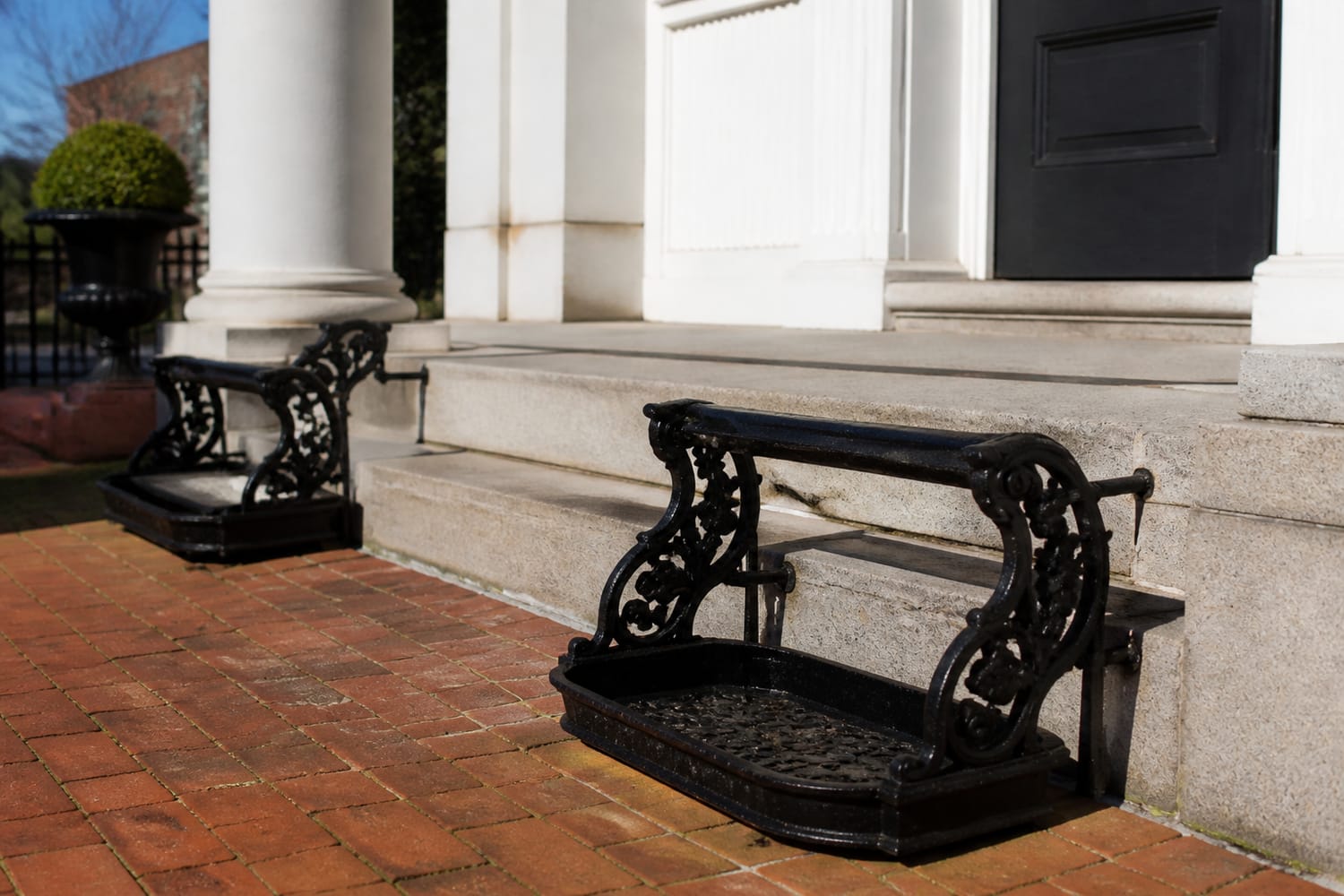
A boot scraper didn’t have to look purely functional. Decorative versions turned a housekeeping necessity into a small piece of doorstep ornament.
The Delaware Division of Historical and Cultural Affairs’ guide to boot scrapers illustrates the variety: musical lyres, a phoenix, and even a dachshund. It also identifies a scraper outside Wilmington Friends Meeting House at Fourth and West streets.
A surviving example associated with Castle Tucker in Wiscasset, Maine, offers another approach. Historic New England dates the cast-iron scraper to 1850–1870 and describes a flat blade supported by scrolled brackets above an octagonal tray with raised edges. Here, even the receptacle beneath the blade received decorative attention.
These details are worth examining without assuming that every ornate scraper belonged to an exceptionally wealthy household. The object’s design tells you about its manufacture and appearance; establishing what it meant to a particular owner requires more evidence.
Where to Look for Surviving Examples
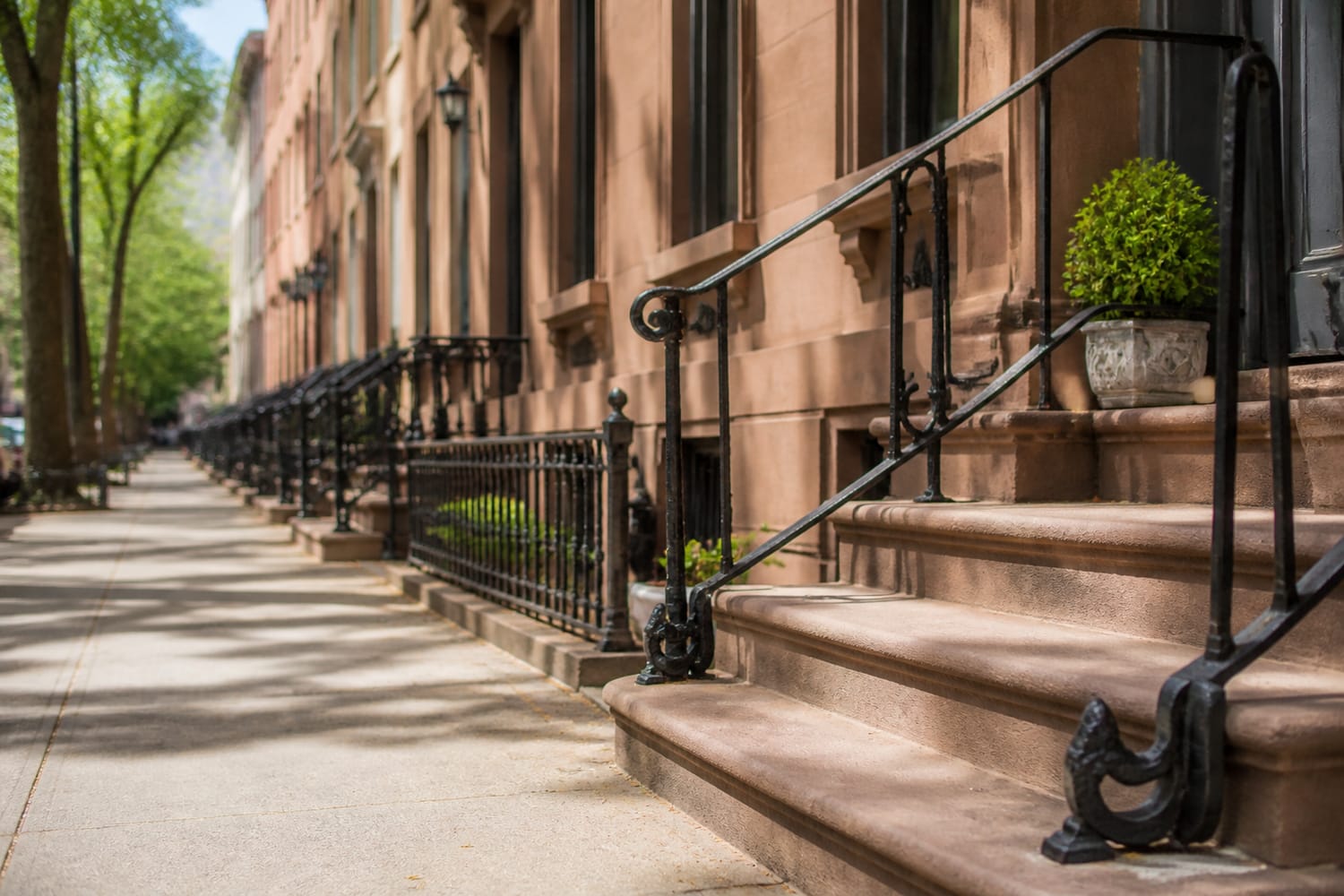
Historic doorsteps, stoops, and entrance railings are good places to begin your search. In New York City, preservation accounts highlight boot scrapers integrated into older residential ironwork, particularly around Greenwich Village. Untapped New York identifies numbers 3–17 St. Luke’s Place as a block with matching examples.
Try comparing neighboring entrances rather than examining only one. Repeated designs can reveal how a scraper belonged to a coordinated streetscape rather than being an isolated accessory. Village Preservation also notes that surviving scrapers can provide evidence of original railings.
Make it an observation exercise, not a hands-on demonstration. Stay on public paths, respect private entrances, and avoid testing old fittings with your boots.
Why Boot Scrapers Faded From Everyday Life
Better street surfaces helped reduce the conditions that made doorstep scrapers necessary. The change was gradual and uneven, however—not a single moment when every town suddenly stopped being muddy.
The Smithsonian’s account of American road improvements provides useful context: only one-sixth of rural public roads had any surfacing in 1904. By 1935, more than a third were surfaced, with concrete and asphalt increasingly accommodating motor traffic. Those figures concern rural roads, but they illustrate how slowly cleaner, more reliable surfaces spread.
Boot scrapers never vanished entirely. Portable versions remain useful wherever muddy footwear is a recurring problem. Their historic counterparts, meanwhile, invite a different kind of attention: not for what they clean today, but for what they reveal about yesterday.
Next time you approach an old doorway, look down before looking up. The smallest fitting may offer the most immediate connection to the people who once crossed its threshold.