
A Street With a River Beneath It
Some historic bridges have houses on them because a busy crossing was valuable real estate. Merchants could sell to travelers who had to pass their doors, while a bridge could provide room for shops and homes in a crowded city. The result was more than a way across water: it was a street, with another life unfolding beneath it.
That can be easy to miss today. Walk down a narrow lane between buildings, and the first clue that you are on a bridge may be a glimpse of water through a gap in the shops. These unusual crossings reveal how cities once made every bit of space work harder.
Why Build on a Bridge?
A bridge brought people together at a predictable point. Before a city had many crossings, anyone moving goods from one bank to the other might take the same route. For a merchant, a shop on that route offered something a side street could not: a steady stream of potential customers.
Building over water also extended a crowded city’s usable space. Some bridges accommodated homes alongside shops; others included religious buildings. The mix varied from place to place, but the underlying idea was simple. Why treat a bridge as empty roadway when it could function as part of the neighborhood?
That arrangement came with trade-offs. Buildings made crossings feel like lively streets, but they also left less room for traffic and added to the demands of maintaining a structure above a river. The history of Old London Bridge shows both the appeal and the difficulty particularly well.
Old London Bridge: A Neighborhood on the Thames
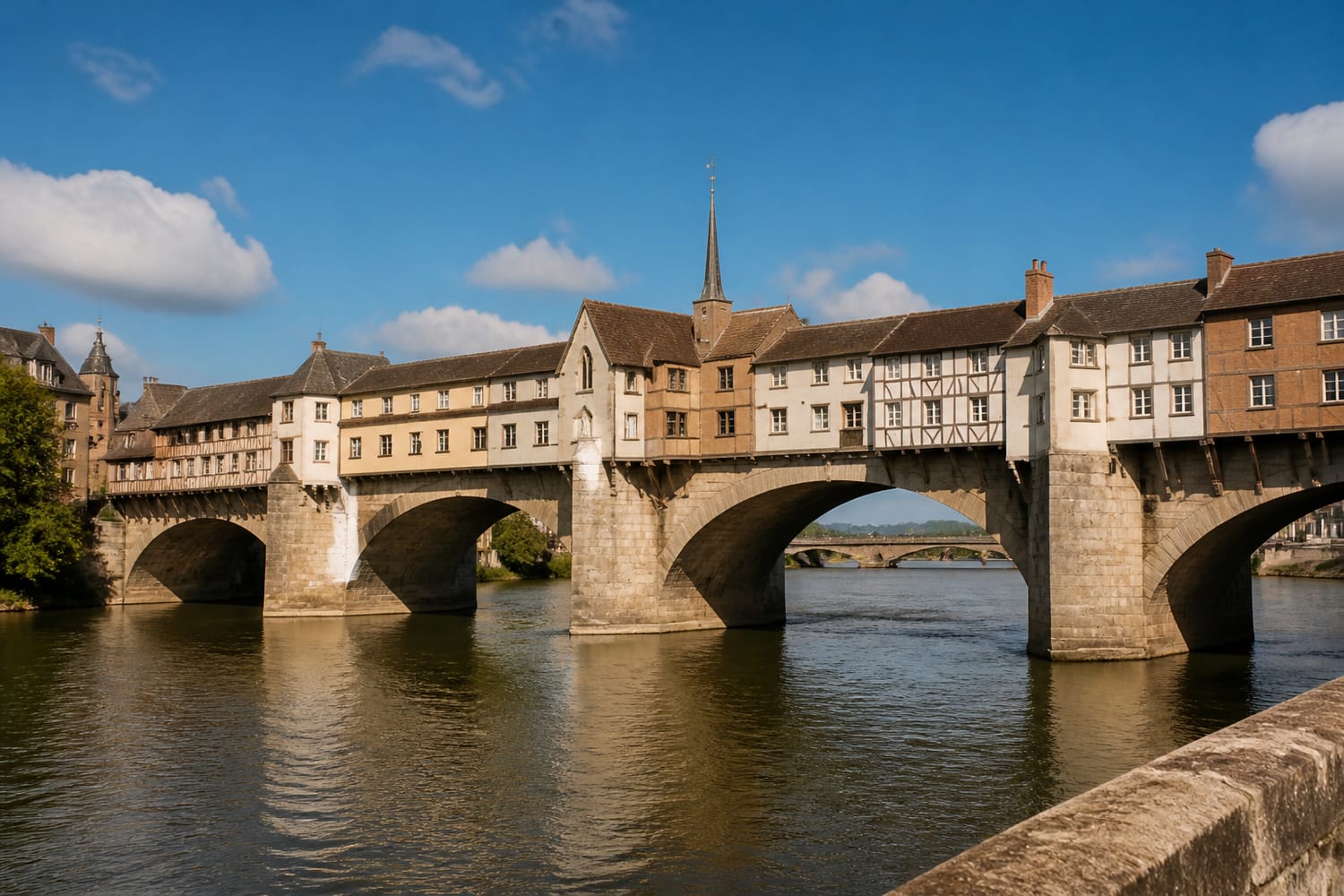
For centuries, London Bridge was the city’s only crossing of the Thames. Its medieval stone version was completed in 1209, and people lived, worked, shopped, and worshipped on it. From the roadway, a visitor might have seen houses, businesses, inns, and a chapel rather than an open view of the river.
The bridge’s buildings were no minor addition. English Heritage describes it as one of London’s principal shopping streets; at a high point in the 14th century, bridge wardens collected rent from around 140 properties. Over time, some buildings grew taller and others were combined, changing the street’s appearance without changing its essential character as a place of commerce.
Eventually, that crowded character became a problem for travelers trying to cross. The houses were removed, and the roadway was widened, but the old bridge remained congested and expensive to maintain. A replacement opened in 1831; the inhabited medieval bridge was demolished by 1832. The London Bridge standing in the city today is a later crossing, not the one that carried houses.
There is another twist to the story: the London Bridge now in Arizona is also not the medieval, house-lined bridge. It is a subsequent 19th-century bridge relocated to Lake Havasu City. Tour Trivia explores that surprising journey in its story of landmarks moved piece by piece.
Ponte Vecchio: Florence’s Changing Shopfronts
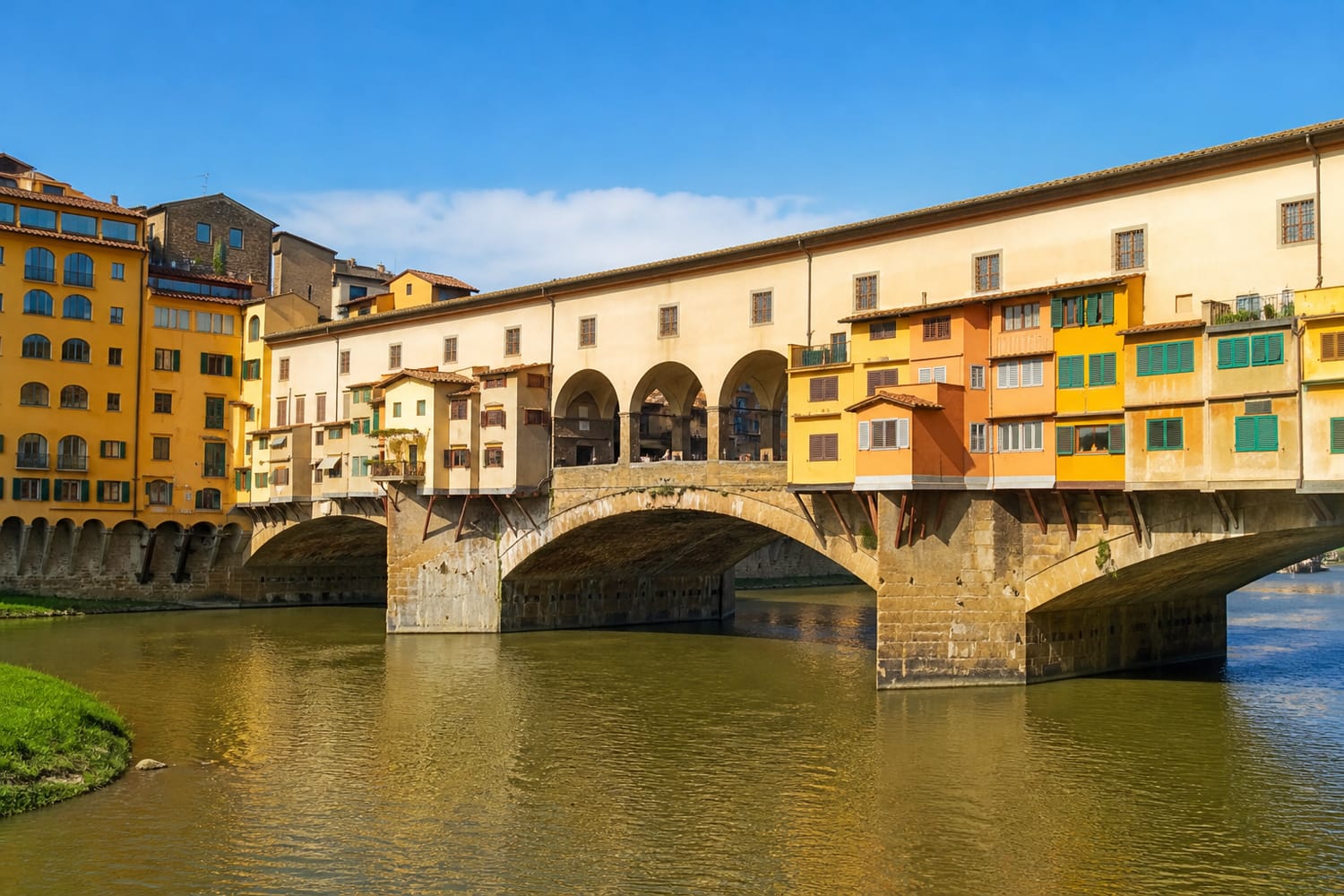
Florence’s Ponte Vecchio offers a bridge street you can still walk. The current structure was built in 1345 after a flood had damaged its predecessor. Shops stand on both sides, making the crossing feel enclosed in places, while openings reveal the Arno below.
Its businesses tell a story about changing ideas of what belonged on a prominent street. Butchers and fishmongers once worked on the bridge; goldsmiths replaced them in 1593. Above the shops runs the Vasari Corridor, built in 1565 to connect the Medici rulers’ government offices with their residence across the river. At Ponte Vecchio, one crossing served shoppers at street level and the ruling family overhead.
That layered view is worth keeping in mind elsewhere, too. A bridge can be an engineering structure, a shopping street, and a symbol of a city all at once. For more crossings with distinctive stories, explore Tour Trivia’s guide to iconic bridges around the world.
Krämerbrücke: Where People Still Live Above the River
In Erfurt, Germany, the Krämerbrücke—often called the Merchants’ Bridge—makes the phrase “inhabited bridge” wonderfully literal. Rebuilt in stone in 1325, it once carried 62 narrow houses, later combined into 32. Galleries and small shops occupy the bridge today, while people still live in its buildings. Erfurt’s tourism office describes it as Europe’s longest bridge continuously lined with inhabited houses.
The best way to understand it is to look twice. From the street, it resembles a compact row of old buildings. From beside the water, the arches make clear that the whole neighborhood is suspended over a crossing. That change of perspective is the bridge’s best piece of travel trivia: you can be standing over a river without feeling as though you have left the street.
Pulteney Bridge: A Georgian Shopping Street
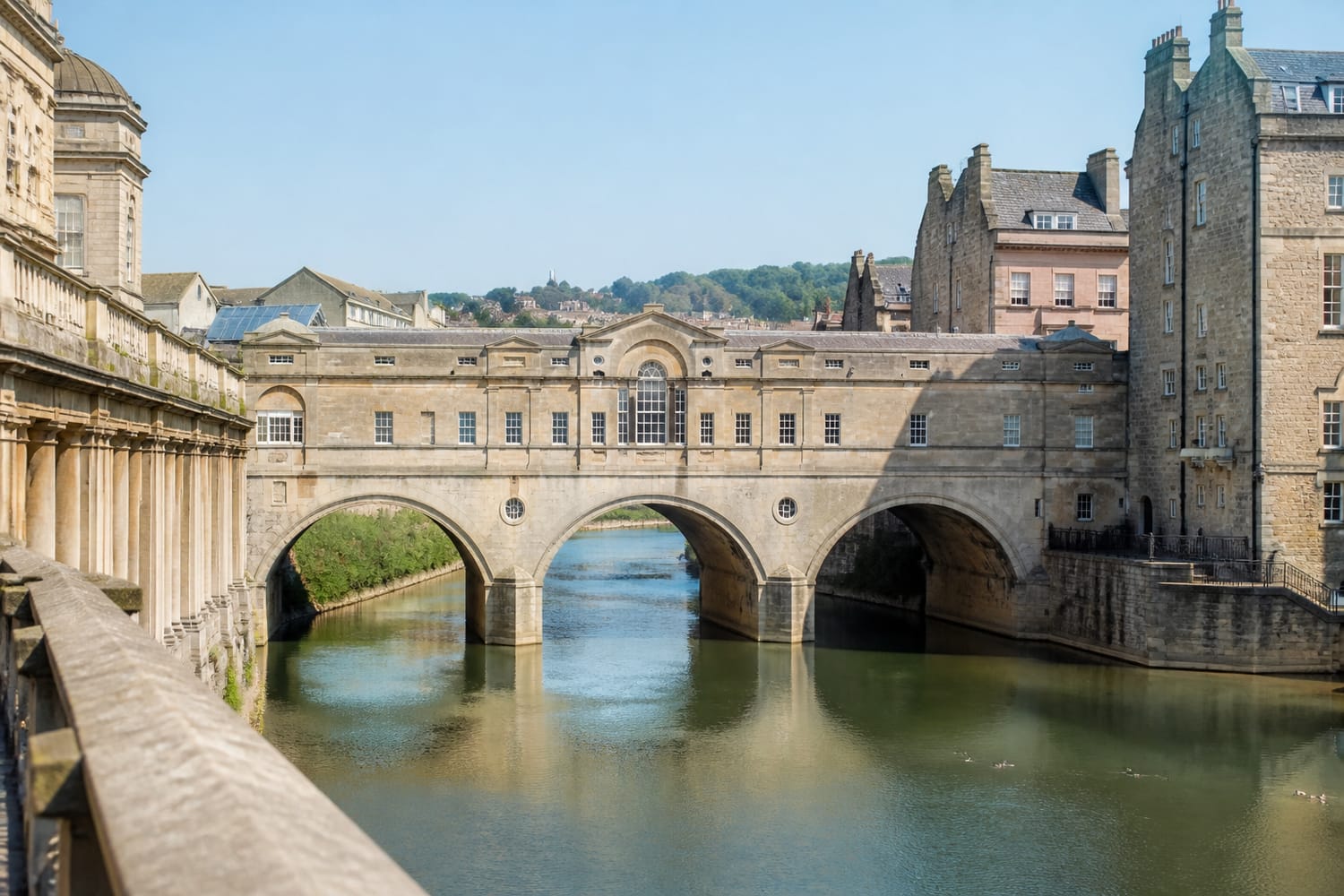
Not every bridge lined with buildings began as a medieval improvisation. Bath’s Pulteney Bridge was designed by Robert Adam and completed in 1774 as part of plans to connect the city with development on the river’s east side. Shops line both sides of its span, giving the crossing the shape of a street as well as the appearance of a grand Georgian landmark.
It offers two quite different experiences. On the bridge, you can browse shopfronts and cross the River Avon almost without noticing. From the riverside, you can see the buildings resting above the arches. Visit Bath notes that Ponte Vecchio helped inspire its design—a reminder that the idea of a bridge as a commercial street traveled between cities, too.
Why Are Inhabited Bridges So Unusual Now?
The surviving examples stand out partly because many others changed or disappeared. As cities grew, a narrow passage between buildings could frustrate movement across an important crossing. Old London Bridge lost its houses and was ultimately replaced; other bridges faced their own pressures to make more room for traffic and simplify the work of keeping a crossing sound.
That is why the remaining bridge streets feel so striking. They preserve an older way of thinking about urban space, when a route across water could also be an address, a workplace, and a place to linger.
Next time you cross a historic bridge, glance at the shopfronts before looking over the parapet. Then find a view from the riverbank. You may discover that what seemed like an ordinary street has a whole second story beneath it.