
Nature’s Other Great Architects
Humans may dominate skylines, but animals have been transforming Earth for millions of years. Tiny coral polyps raise underwater barriers, rodents redirect rivers, and insects move enough soil to alter entire ecosystems. These structures are more than shelters: they change water flow, enrich soil, create habitats, and sometimes redraw the landscape itself.
Coral Reefs That Become Living Coastlines
Coral reefs begin with animals often no larger than a fingernail. Stony coral polyps secrete calcium carbonate skeletons, and new generations grow upon the remains of older colonies. Over centuries, these accumulated layers become immense ridges, islands, and barrier reefs.
The Great Barrier Reef is the most famous example, but reefs worldwide influence coastal geography by weakening waves and reducing erosion. They also create complex habitats where countless marine organisms can feed, reproduce, and hide. Tour Trivia’s guide to the world’s most stunning coral reefs reveals how varied these living monuments can be.
Oyster Reefs That Hold Shorelines Together
Oysters do not deliberately design reefs, yet their habit of attaching to one another produces sturdy, layered structures. As generations grow and die, their shells form raised underwater ridges across bays and estuaries.
These reefs slow waves, trap sediment, and help protect marshy shorelines from erosion. Their crevices become nurseries for fish, crabs, and other small creatures, while living oysters filter suspended material from the water. NOAA now uses restored oyster reef habitat as part of some shoreline-stabilization projects, treating the animals as natural coastal engineers.
Beaver Dams That Turn Forests Into Wetlands
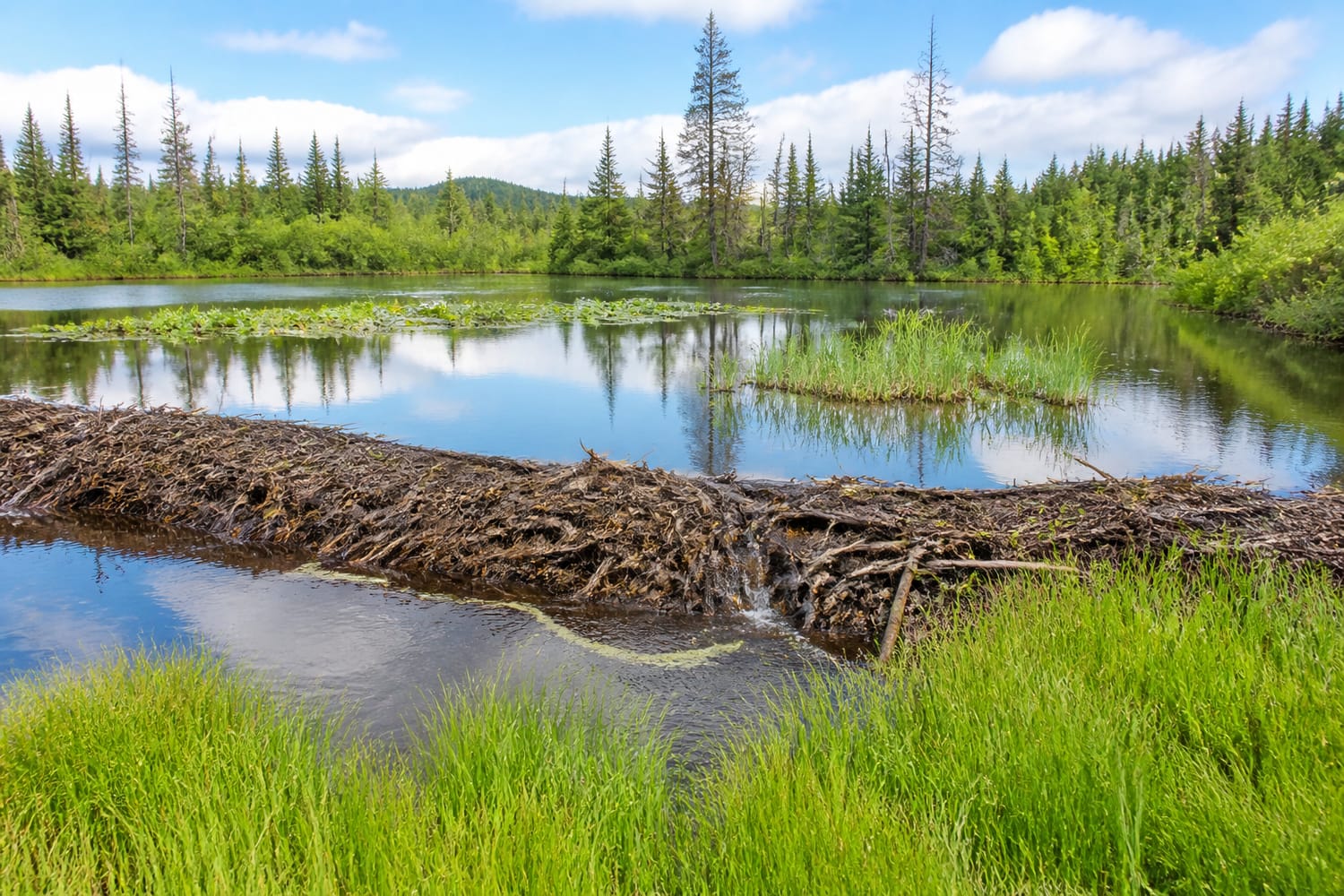
Few animal constructions transform a landscape as quickly as a beaver dam. Using branches, mud, stones, and vegetation, beavers slow streams until water spreads across the surrounding ground.
The resulting ponds can drown some trees, recharge nearby soils, capture sediment, and create habitat for amphibians, fish, waterfowl, insects, and aquatic plants. Over time, an abandoned pond may fill with organic material and become a meadow. The National Park Service explains how beaver dams create ponds and valuable wetland habitats, showing why beavers are considered a keystone species.
Termite Mounds That Fertilize Savannas
Across parts of Africa, Australia, Asia, and South America, termite mounds rise like earthen towers. Workers assemble them grain by grain using soil, saliva, and organic material, producing walls wrapped around chambers and ventilation passages.
Their influence extends beyond the colony. Termites bring minerals upward, concentrate nutrients, and create channels that help water enter the ground. Vegetation growing around some mounds differs noticeably from the surrounding grassland, creating scattered islands of fertility. These patches can attract grazing animals and increase ecological variety across otherwise uniform savannas.
Prairie Dog Towns Beneath the Grasslands
A prairie dog town is an underground settlement containing tunnels, nesting chambers, escape routes, and raised entrances. Large colonies can cover extensive areas, turning seemingly open grassland into a busy subterranean landscape.
While excavating, prairie dogs mix topsoil with deeper earth and influence how moisture penetrates the ground. Their grazing keeps vegetation short, creating open habitat favored by species such as burrowing owls and mountain plovers. Vacant burrows also offer shelter to other animals. These towns are essential destinations within the broader wildlife landscapes of North America.
Leafcutter Ant Cities Under the Rainforest
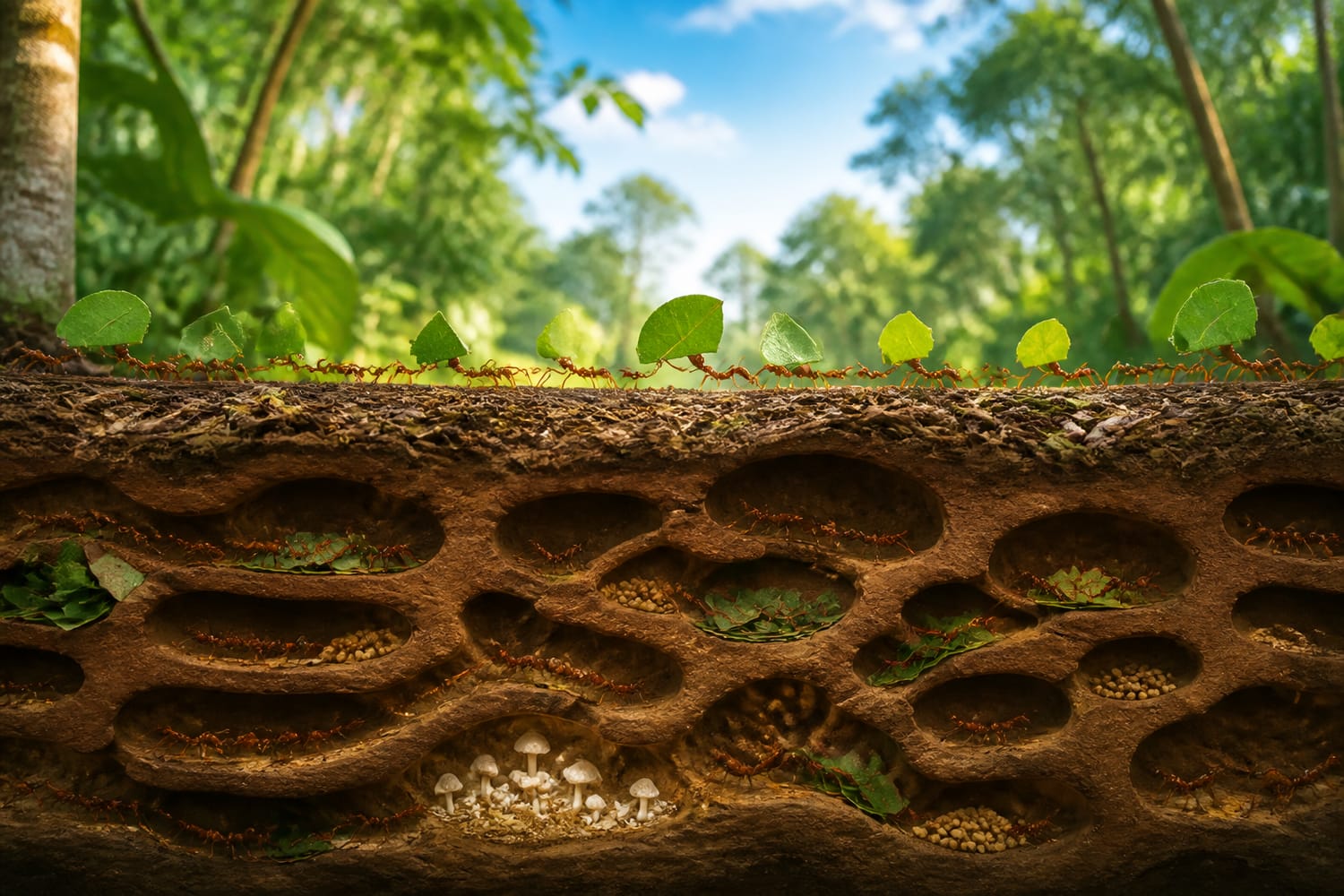
Above ground, leafcutter ants are famous for carrying pieces of foliage along miniature highways. Below ground lies their true wonder: an enormous network of chambers, ventilation shafts, waste rooms, and fungus gardens.
Some colonies contain millions of ants and extend deep beneath the surface. Excavation redistributes soil, changes aeration, and affects how water moves through the ground. The ants also clear vegetation around their nests and transport vast quantities of plant matter underground. In doing so, they create distinctive patches within tropical forests and alter local nutrient cycles.
Wombat Warrens That Shelter Entire Communities
Common wombats dig extensive warrens that may include multiple entrances, deep tunnels, and branching chambers. The displaced earth forms mounds around the openings, while the digging mixes soil layers and can encourage plant growth in nutrient-enriched patches.
The burrows also outlast their original purpose. Other animals investigate, rest in, or take refuge near these durable underground spaces. Research following Australia’s severe 2019–2020 bushfires found greater native mammal diversity around wombat burrows, suggesting that these structures can become valuable shelters in fire-affected landscapes.
Salmon Nests That Move Riverbeds
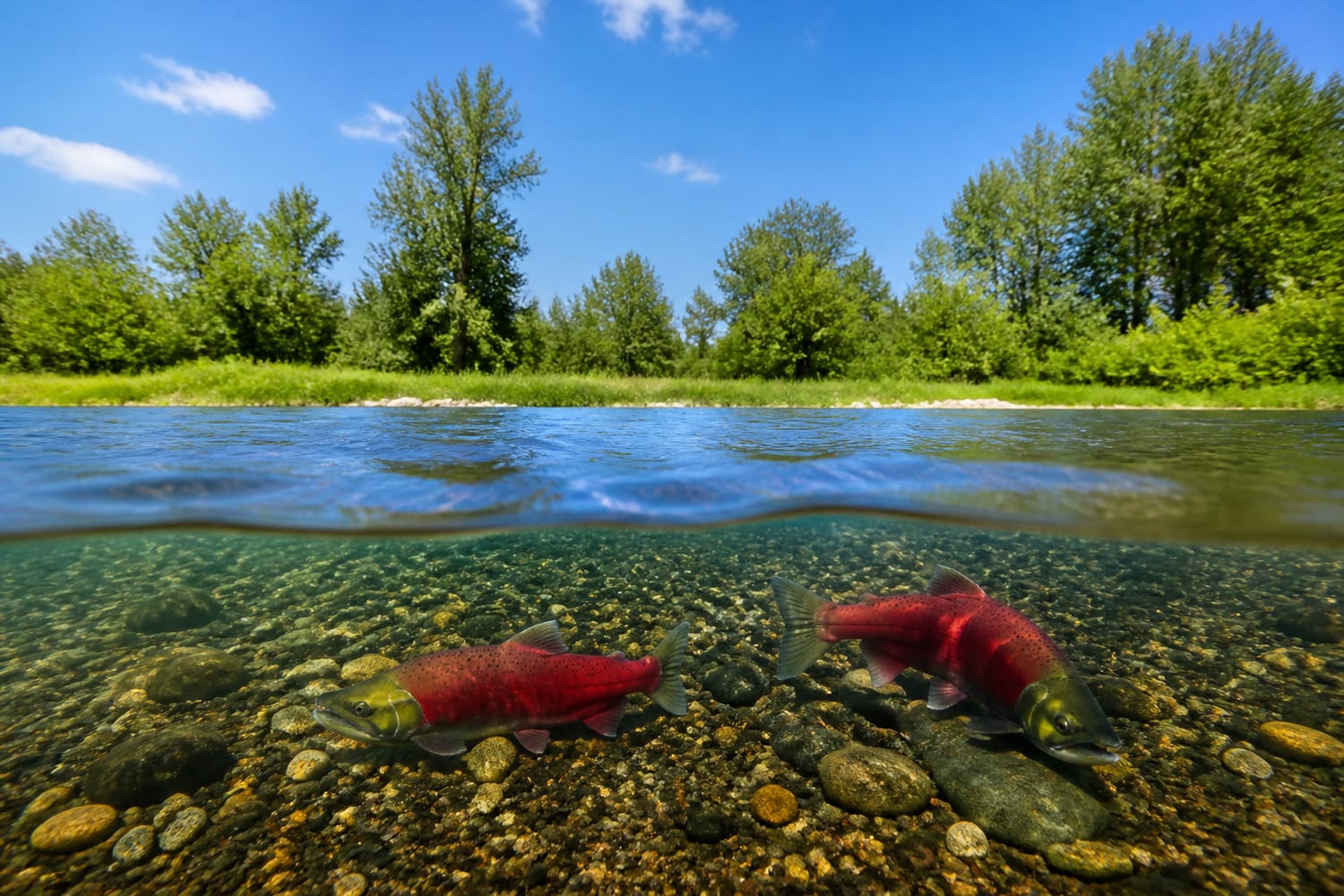
A salmon redd may appear to be a simple patch of disturbed gravel, but thousands of spawning fish can collectively become a geomorphological force. A female salmon creates the nest by beating her tail against the riverbed, excavating a depression and moving sediment downstream.
This process loosens compacted gravel, removes some fine material, and changes the streambed’s surface. In waterways with dense salmon runs, repeated redd construction can move substantial amounts of sediment. Rivers may appear permanent, but animal activity contributes to the restless geography explored in Tour Trivia’s look at landscapes that move.
Malleefowl Mounds That Create Fertile Patches
Australia’s malleefowl does not sit on its eggs. Instead, it builds a giant incubation mound using soil, sand, and decomposing vegetation. Heat released by the rotting organic material warms the buried eggs.
Constructing and maintaining the mound requires the bird to move considerable quantities of earth and leaf litter. This transfers nutrients from beneath trees into more open areas, creating resource-rich patches in dry woodland. Studies suggest that abandoned mounds may retain altered soil characteristics and microbial communities for decades, leaving a surprisingly persistent mark on the landscape.
Sociable Weaver Nests That Transform Desert Trees
Sociable weavers of southern Africa build enormous communal nests from dry grass. Resembling haystacks suspended in trees, these structures contain separate chambers occupied by many families.
The nests create shelter for other birds and animals, making host trees centers of activity within arid environments. Droppings add nutrients to the soil, while the immense weight can break branches and reduce foliage. A particularly large nest may eventually bring down its supporting tree. Through construction, habitation, and nutrient deposits, these birds transform isolated trees into localized biodiversity hotspots.
A Planet Under Constant Construction
Animal architecture proves that landscapes are not shaped by geology and weather alone. Reefs become breakwaters, dams become wetlands, burrows mix soils, and nests create new habitats above and below ground.
These wonders also reveal how deeply species are connected. When an animal engineer disappears, the ponds, fertile patches, shelters, and shorelines it maintained may change as well. Protecting these builders therefore means preserving not just individual species, but the remarkable landscapes they continuously create.