
A Beach Built by Sea Life
At Acadia National Park’s Sand Beach, much of the “sand” began as living sea creatures. Barnacles, mussels, sea urchins, and snails produced hard shells or skeletons that broke into tiny pieces. Waves carried those fragments into a sheltered cove, creating a sandy shore along a coastline better known for granite cliffs and cobbles.
That makes Sand Beach more than a place to spread out a towel. It is a meeting point between marine life and coastal geology: animals supply much of the material, while waves and rock formations determine where it settles. Look closely at the grains beneath your feet, and the beach starts to resemble a record of the Gulf of Maine.
What Is the Sand Actually Made Of?
Ordinary beach sand often comes from rock worn down by weather and water. Sand Beach has some rock grains too, but its defining ingredient is biological. The National Park Service estimates that shell-producing organisms contribute roughly 70–80% of the beach material. These fragments are made largely of calcium carbonate, the substance found in many marine shells and hard parts.
The contributors are not all alike. Mussels leave curved shells; barnacles leave hard plates; sea urchins contribute pieces of their rigid outer bodies and spines. Snails add their own shells to the mix. By the time surf has broken and tumbled those remains into sand-sized grains, their origins may be hard to recognize without a close look.
“Made of shells” does not mean the beach is covered entirely in intact seashells. Its familiar-looking surface is mostly a mixture of very small fragments. Nor does the statistic mean every grain on every part of the shore has the same composition: beaches shift, and the material underfoot can vary.
How Do Sea Creatures Become a Beach?
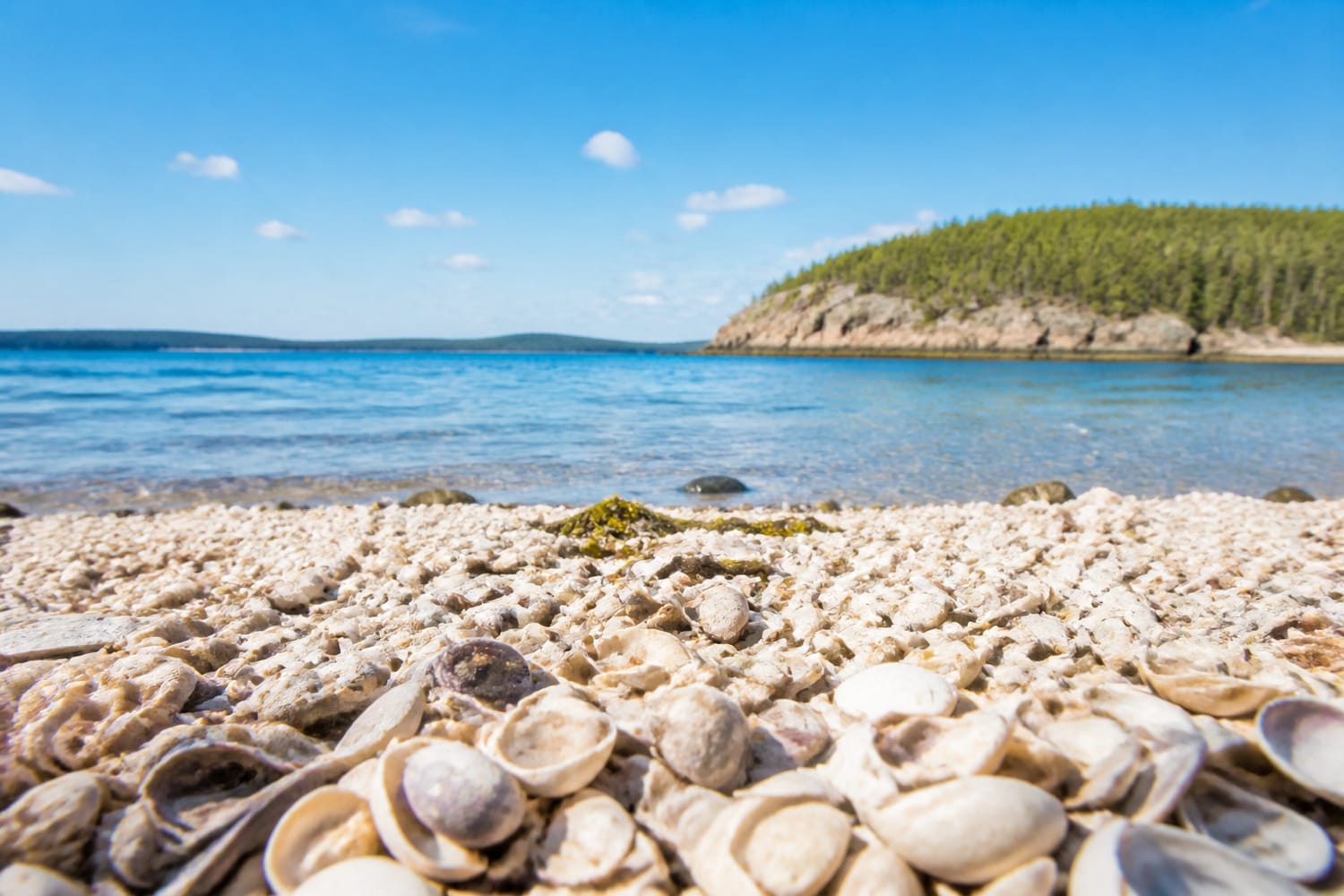
No mussel sets out to build a swimming spot. The process begins when generations of animals live along the shore, producing protective shells and other hard structures. After those animals die, their remains become part of the coastal sediment. Moving water breaks the material apart, rounds some edges, and sorts fragments by size.
Waves then move the smaller pieces toward shore. Some wash back out; others remain, accumulating with material from countless earlier generations. It is a slow collaboration between biology and physics. Sea life provides the ingredients, but the ocean does the grinding, transporting, and arranging.
Acadia offers a contrast nearby: its exposed shores often hold pebbles, cobbles, or boulders rather than fine sediment. Stronger wave action can carry smaller particles away, leaving larger stones behind. Sand Beach works differently because its setting gives fine material a chance to stay.
It is a quieter example of the idea explored in Tour Trivia’s natural wonders built by animals: creatures can shape a landscape without intending to construct one.
Why Does the Shell Sand Stay Here?
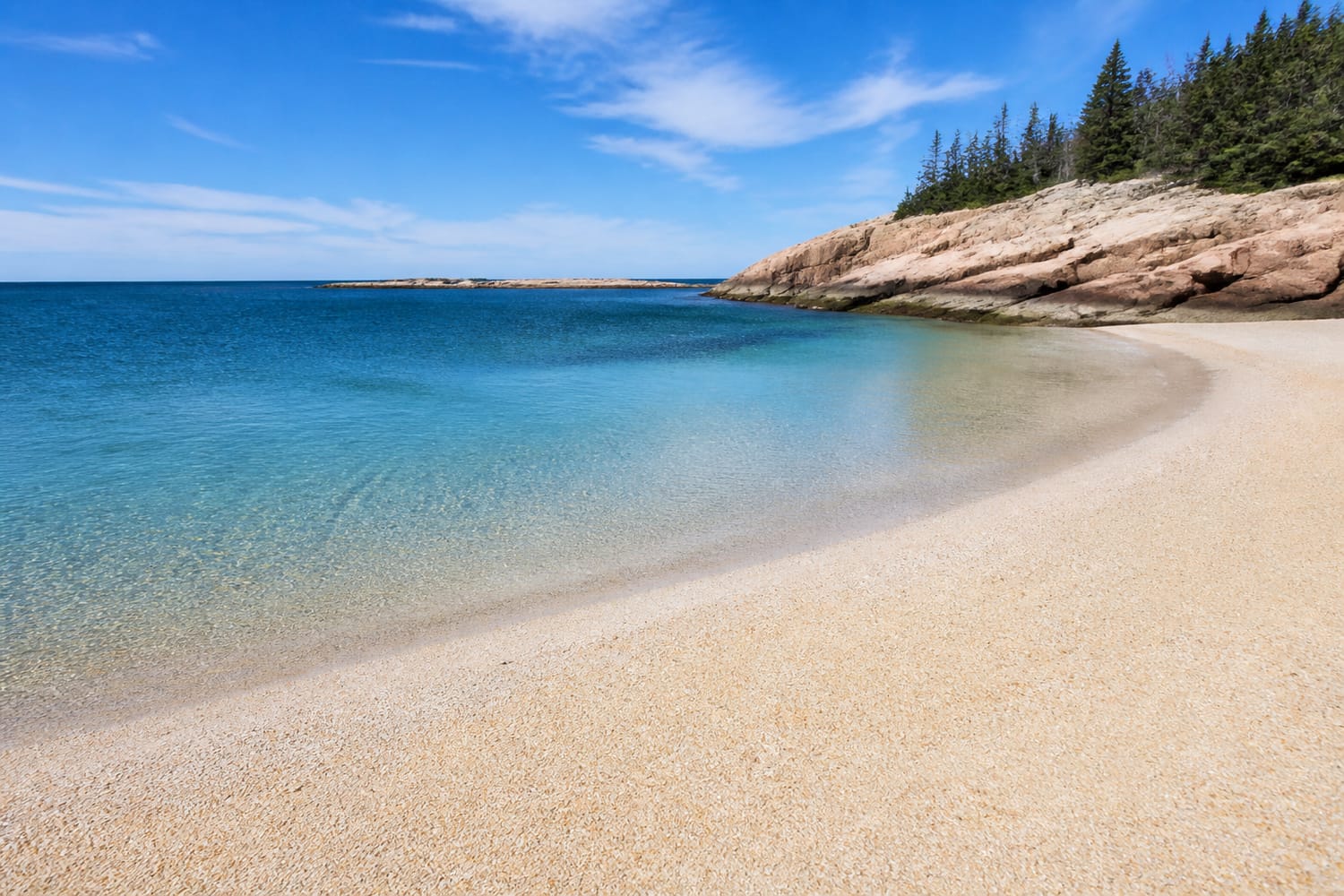
Sand Beach sits in Newport Cove on Mount Desert Island. Great Head borders the cove to the east, cliffs rise to the west, and an offshore rocky ledge called Old Soaker helps interrupt incoming surf. Together, these features create a more sheltered place for fine fragments to collect than the open, wave-battered coast nearby.
The cove faces south, allowing summertime waves approaching from the south and southwest to carry shell material toward shore. Meanwhile, relatively little land-based sediment enters the beach from the island. If large amounts of eroded granite were washing in, the shell fragments would be less dominant in the mix. The beach owes its character not just to what arrives, but also to what largely does not.
These ingredients—abundant marine life, a well-positioned cove, shelter from some wave energy, and limited land-derived sediment—make Sand Beach unusual. The Park Service identifies it as one of only two Atlantic beaches north of Cape Hatteras composed almost entirely of calcium-carbonate sand.
A Shoreline That Changes With the Seasons
Sand Beach may look permanent on a map, but its surface is always moving. Winter storms can pull fine material away from the visible beach and into the cove, exposing coarser grains or creating a steep edge in the sand. Gentler summer conditions can push sediment back toward shore.
One striking example came during an April 2007 nor’easter. According to the Park Service’s account of Sand Beach in winter, the storm stripped away so much sand that boulders and remnants of an old shipwreck were exposed. Much of the displaced material remained within the cove, and the beach gradually rebuilt over the following years.
That does not mean every storm leaves the shore unchanged in the long run. It means a single visit captures only one version of a dynamic place. The smooth beach of a summer afternoon and the rougher beach after a winter storm are chapters of the same story.
How to See the Story for Yourself
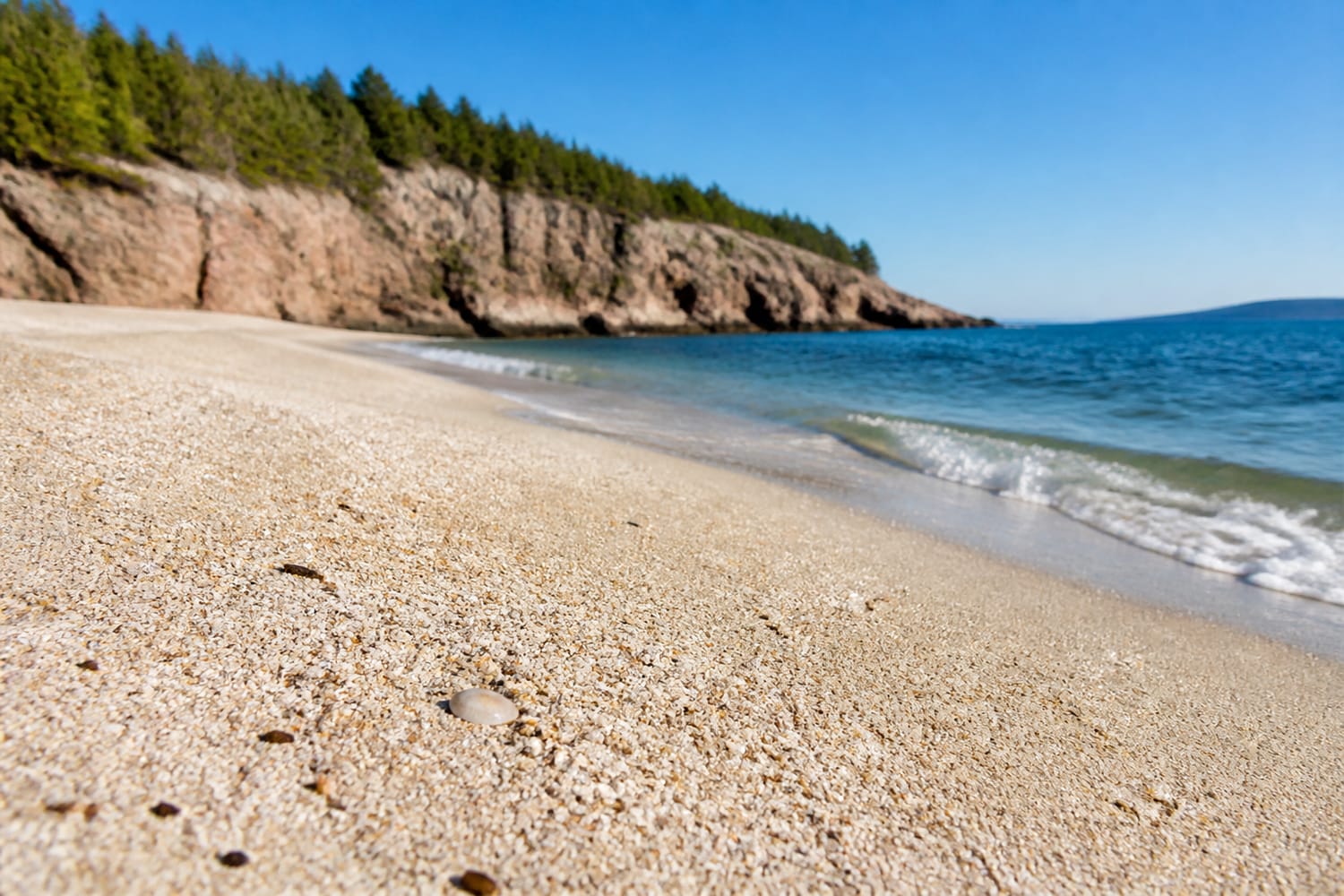
The simplest way to appreciate Sand Beach is to pause and examine a small patch of its surface without taking any home. Look for variations in color and texture, then compare the fine grains with the larger stones elsewhere along Acadia’s coast. What appears to be a uniform stretch of sand becomes more interesting at close range.
For another view, walk a nearby trail and look back toward the cove. From above, the surrounding headlands make it easier to understand why sediment can settle here. Sand Beach also connects to Ocean Path and the Great Head Trail, so the landscape that protects the beach can become part of the visit.
If the creatures behind the sand intrigue you, explore Acadia’s rocky shore at low tide with care. The park’s tidepooling guidance asks visitors to stay out of pools, watch their footing, and leave animals and natural materials where they find them. The dunes behind Sand Beach are protected too; admire them from outside the fenced area.
More Than a Place to Put Your Towel
The name “Sand Beach” sounds ordinary until you ask where the sand came from. Here, the answer leads from mussels and barnacles to breaking waves, an offshore ledge, and a cove shaped to hold what the sea delivers.
That is the pleasure of looking twice at a familiar landscape. A beach can be scenery, but it can also be evidence—of life in the water, movement along the coast, and change still underway. For more shorelines with surprising stories, explore Tour Trivia’s look at bioluminescent beaches. At Acadia, the wonder is visible even in daylight, one tiny shell fragment at a time.