
A Waterfall Can Freeze on the Outside and Flow Within
A frozen waterfall is not always frozen through. Ice can build along its edges and across its face while water continues to descend behind it. The secret is that the falling water, the surrounding air, and the ice do not all have the same temperature—or respond to winter cold in the same way.
From a distance, an ice-covered fall can look like a sculpture: white columns, blue-green ridges, and icicles suspended from a cliff. Stand at a safe viewing point, though, and you may hear a faint rush. The scene is still; the waterfall may not be.
How Does a Waterfall Grow an Ice Shell?
A waterfall sends water into the air as spray and mist. Tiny droplets can freeze on nearby rock, branches, and ice that has already formed. Water flowing more slowly along the margins can freeze too. Over time, those deposits build outward, sometimes hiding the main flow from view.
The result is less like an enormous ice cube and more like an icy curtain with an uncertain space behind it. Its shape depends on where water splashes, where droplets land, and how long the cold lasts. New ice can cover old ice while liquid water keeps finding a route downhill.
That contrast is especially striking at Niagara Falls. Niagara Parks explains that its winter ice can make the falls appear stopped, even as water continues beneath the ice. It is a reminder that seeing ice on a waterfall tells you little, by itself, about what is happening inside. For a warmer-season view of Niagara and other cascades, Tour Trivia’s guide to breathtaking waterfalls around the world offers a contrast.
Why Doesn’t All the Water Freeze?
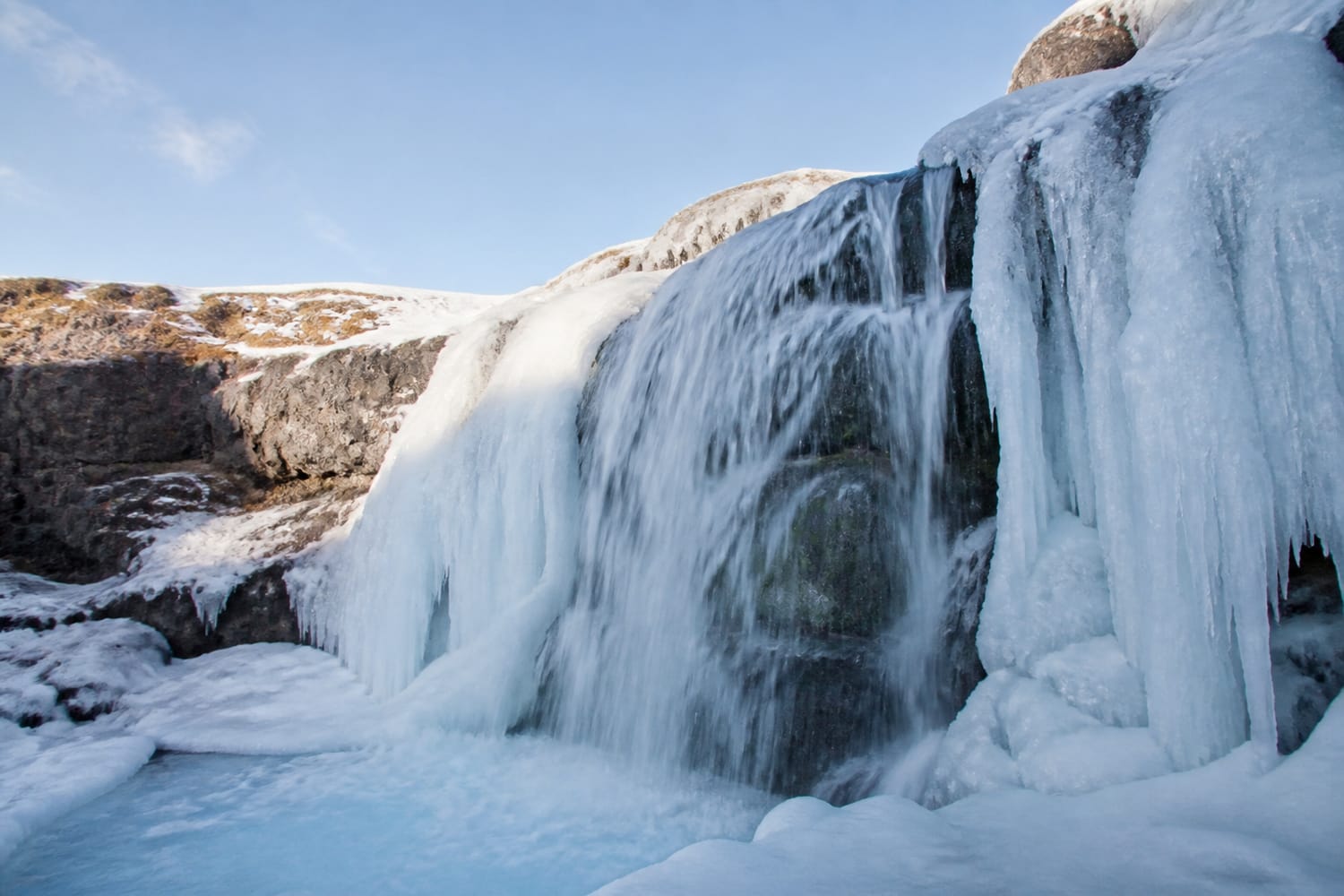
Water must lose enough heat to turn into ice. The spray and thin films at a waterfall’s exposed edges have plenty of contact with freezing air. A deeper, continuing flow has less exposure, particularly once an ice layer separates it from the air. Ice does not make the water warm or guarantee that it will stay liquid; it can simply slow further heat loss.
The water arriving from upstream matters as well. A stream does not necessarily stop supplying water just because its surface is icy. The U.S. Geological Survey measures flow beneath river and stream ice, and notes that winter ice can change how water moves through a channel. Groundwater entering a stream can also influence where ice forms.
One familiar property helps explain ice-covered streams: ice is less dense than liquid water, so it floats. But a waterfall is more complicated than a lake with a flat frozen top. Its ice can cling to a cliff, hang in columns, or collect below the drop while water passes through another part of the scene.
Does Fast-Moving Water Resist Freezing?
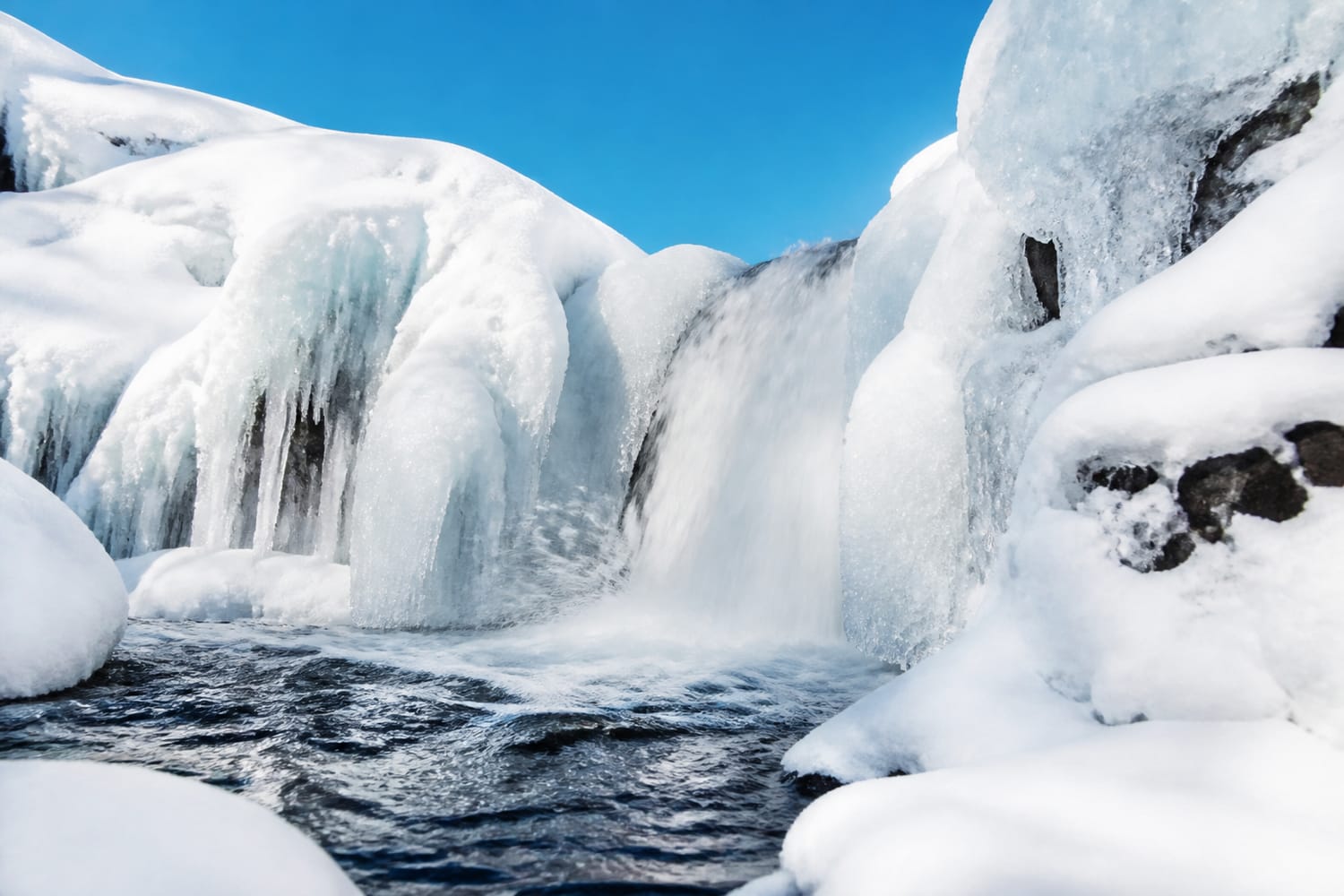
Motion is part of the story, but “moving water can’t freeze” is a myth. A fast current can make it harder for ice to establish a continuous cover in some places, while turbulence throws droplets into cold air where they may freeze readily. The same waterfall can therefore have an open, flowing center and thick ice along its sides.
How much water arrives is important too. A small cascade with little winter flow has less water to keep a passage open than a large, steadily supplied fall. Severe, prolonged cold can narrow channels or freeze a small fall more completely. There is no rule that every ice-covered waterfall hides running water; conditions differ from one site—and one cold spell—to another.
The Ice Keeps Changing After It Forms
A frozen-looking waterfall is rarely a finished object. Spray can add fresh layers; a brief thaw can send water over the outside; returning cold can freeze that water in a new position. The visible surface may change even while the main flow stays out of sight.
Winter can also produce ice that travels with the water. In Yosemite, the National Park Service describes frazil ice: slushy ice associated with cold waterfall mist that floats down creeks when flow is relatively high and temperatures are below freezing. Instead of a fixed curtain, picture a creek carrying a moving mixture of ice and water.
Yosemite Falls offers another variation. An ice cone can accumulate at the base of Upper Yosemite Fall in winter. That feature is ice built where the water lands, not proof that the entire drop has turned solid. A single waterfall can hold several different winter processes in view at once.
How Can You Tell Whether Water Is Still Flowing?
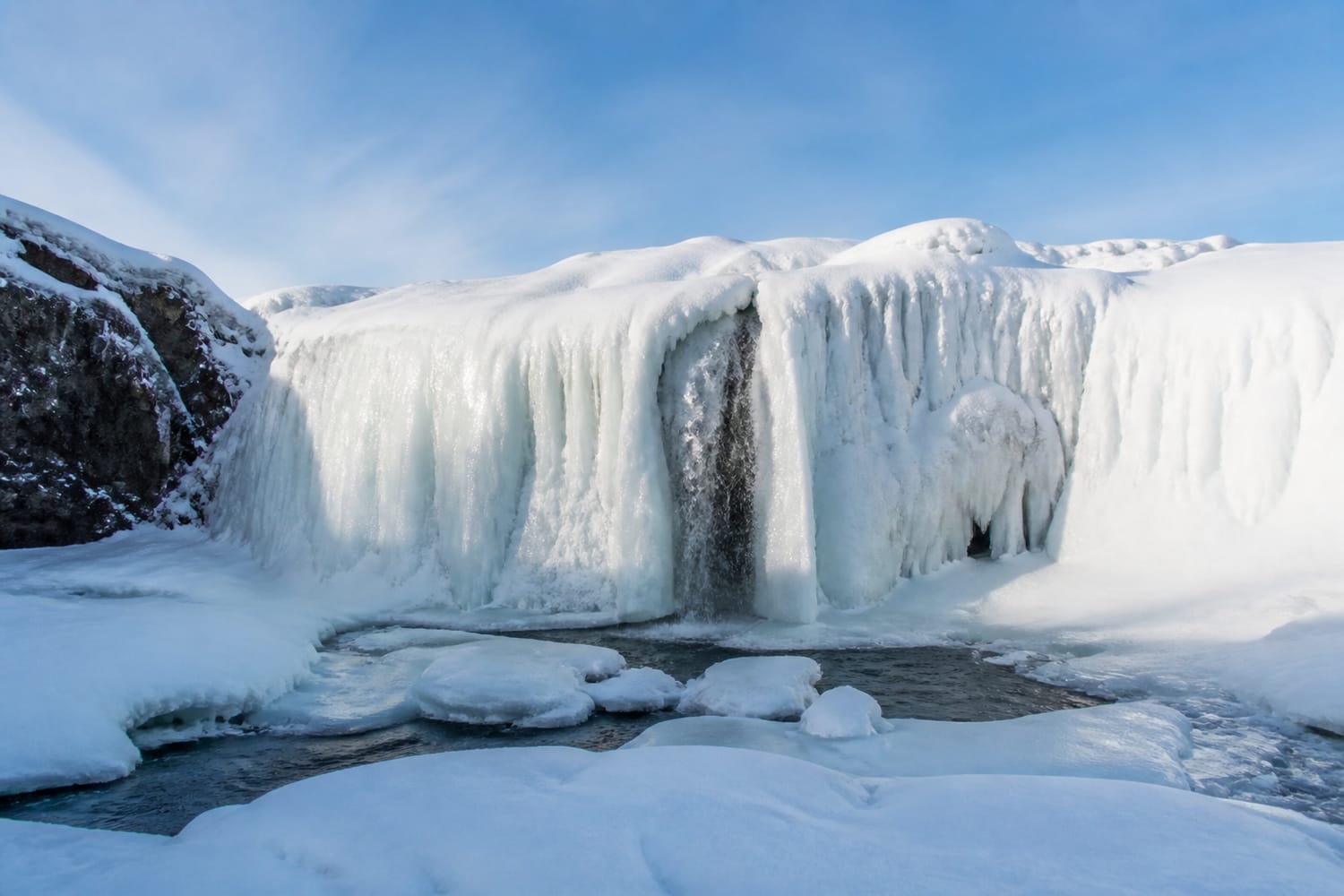
Sometimes the answer is visible: look for a dark gap in the ice or water emerging at the bottom. At other falls, sound is the clue. The National Park Service describes a waterfall at Pipestone National Monument that becomes encased in ice while a slow trickle remains audible underneath.
Neither silence nor a solid-looking face proves the flow has stopped. Distance, wind, and thick ice can conceal it, and conditions can change during a visit. The safest way to solve the puzzle is to observe from an established viewpoint—not to approach the ice to inspect it.
Admire the Ice, but Give It Space
Ice formations can be beautiful and unstable at the same time. They may conceal moving water, and the ground around a fall may be slippery. At Munising Falls in Michigan, the National Park Service advises winter visitors to stay on the trail and notes that the walk can be icy. Follow the guidance at the particular site you visit rather than assuming a frozen appearance means safe footing.
The best winter waterfall question is not simply, “Is it frozen?” It is, “Which part is frozen?” The spray may be ice, the edges may be ice, and the basin may hold an icy mound—while the waterfall’s hidden heart keeps moving. Like the seemingly still landscapes that are actually in motion, a frozen waterfall rewards a second look.