
Snow in a Desert Isn’t a Contradiction
A desert is defined by how little precipitation it receives, not by how hot it gets. That means a desert can have freezing winters, snowy mountains, or even an ice-covered surface. Snow falls when a storm brings moisture into air cold enough to make snowflakes—and those conditions can occur in the driest landscapes on Earth.
The surprise comes from the picture many of us carry in our heads: endless sand under a blazing sun. Some deserts fit that image, but others have sagebrush, rocky plains, or polar ice. To understand desert snow, forget the scenery for a moment and follow the weather.
What Makes a Place a Desert?
The defining feature is a long-term shortage of precipitation. One widely used classification describes arid lands as receiving less than 250 millimeters—about 10 inches—of precipitation in a year. That precipitation might arrive as rain, snow, or a mixture of both. A place can therefore be cold and still be a desert, provided it remains dry enough.
“Dry” also describes a climate, not a promise that every day will be cloudless. An occasional storm can leave a striking layer of snow without changing the region’s overall character. Much as rare rainfall can trigger the sudden desert super blooms, a brief snowfall can reveal how dramatically an arid landscape responds to a little moisture.
The Two Ingredients Snow Needs
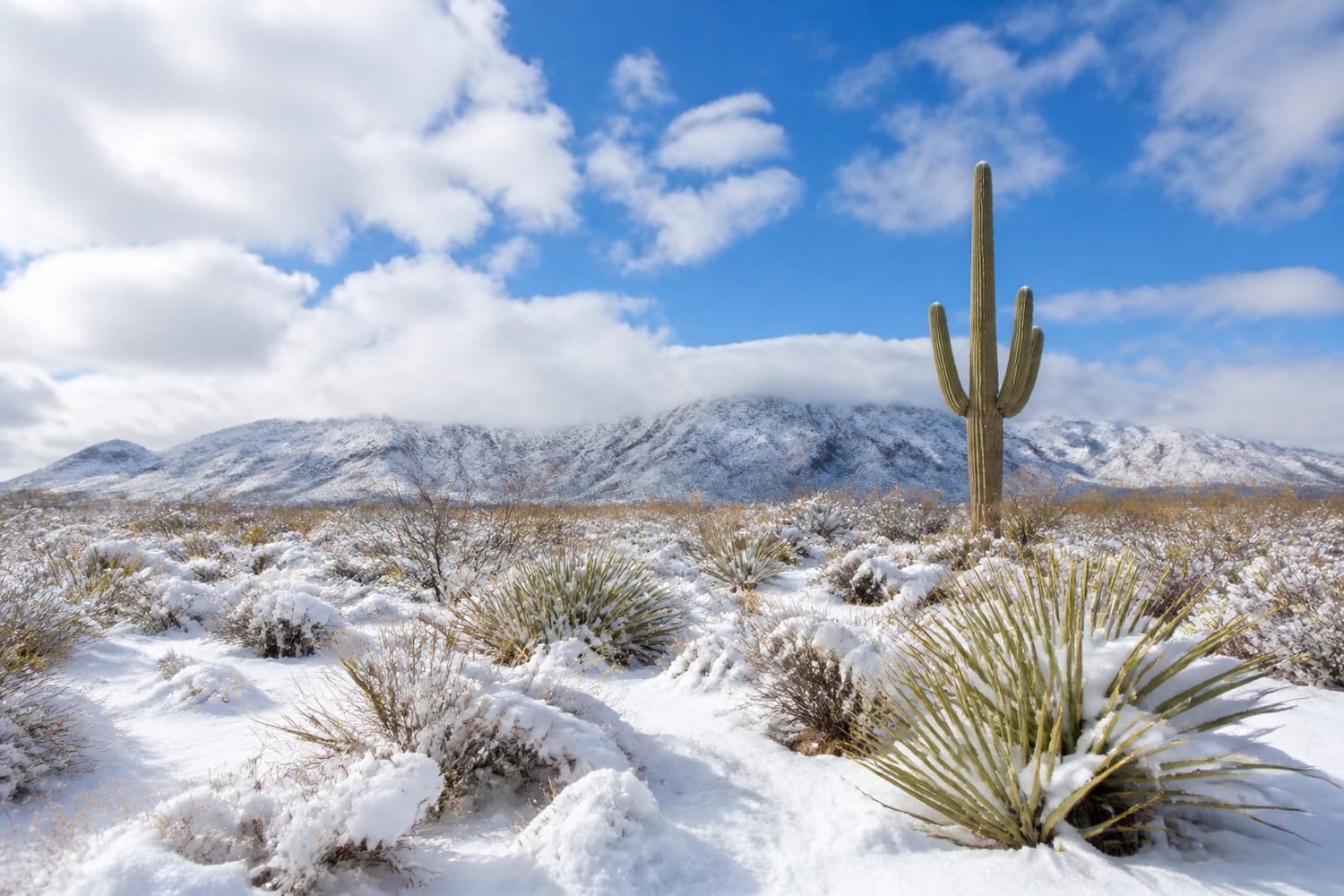
Cold alone cannot produce a snowstorm. Snow crystals need water vapor in the atmosphere, as well as temperatures that allow ice to form. Then the flakes must survive the trip from cloud to ground. A warm layer along the way may melt them into rain; very dry air below the cloud can prevent precipitation from reaching the surface at all.
That explains why a bitterly cold desert day may bring no snow, while a somewhat milder day brings a flurry. The difference is often an incoming storm carrying moisture. Desert snow is less about reaching an extraordinary low temperature than about cold air and available moisture meeting at the right time.
Why Deserts Get Cold Enough
Desert air is often dry, and many arid regions have little cloud cover. Under those conditions, daytime warmth can escape readily after sunset, producing a sharp drop in temperature. A freezing night, however, is only part of the story: for snow to reach the ground, the air above it must also have a suitable temperature profile.
Elevation helps. Air temperatures are generally lower in high terrain, so a storm may dust desert mountains while leaving a nearby valley bare. Latitude matters too: deserts farther from the equator experience colder winters. These differences can create an astonishing view—snow on a ridge, dry ground below, and both belonging to the same arid region.
The Great Basin: A Desert Built for Winter Snow
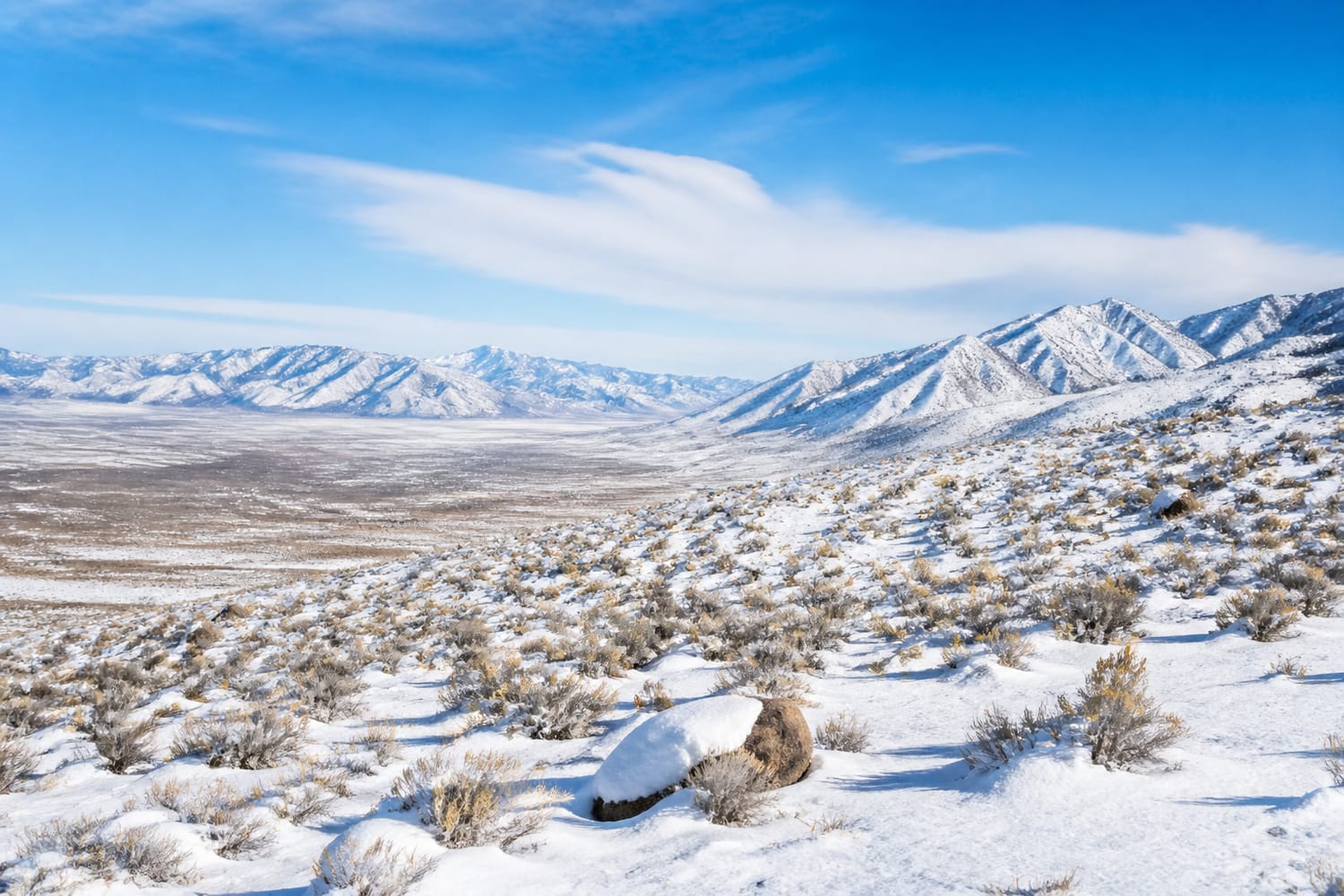
The Great Basin of the western United States shows that snow need not be a freak desert event. It has hot, dry summers and snowy winters. Much of its dryness comes from the Sierra Nevada: moisture-bearing Pacific air rises over the mountains, loses much of its moisture, and reaches the land beyond in a drier state. This is called a rain shadow.
Winter storms can still cross that rain shadow. When they do, the combination of cold temperatures and remaining moisture may bring snow. The result is not a desert briefly turning into something else; it is a desert experiencing one of its normal seasonal weather patterns. Higher slopes and lower valleys may look very different during the same storm.
For travelers, that distinction matters. A landscape that looks dry on a map can still have icy roads or snow-covered trails in winter. Conditions also change with elevation, so a sunny valley is no guarantee of clear ground farther uphill.
How Snow Reaches the Sahara
The Sahara’s snowy moments are rarer—and especially photogenic. In January 2018, snow covered higher desert terrain near Aïn Séfra in Algeria, between the Sahara and the Atlas Mountains. NASA’s satellite images showed white across mountaintops and some dune crests; warming temperatures melted much of it within a day.
That example is worth locating carefully. Snow near the Sahara’s northern edge and its elevated terrain does not mean the vast desert regularly becomes a winter wonderland. It means a cold, moisture-bearing weather system briefly reached a place where snow could form and settle. The mountains and elevation helped make the unusual sight possible.
Even the Atacama Can Turn White
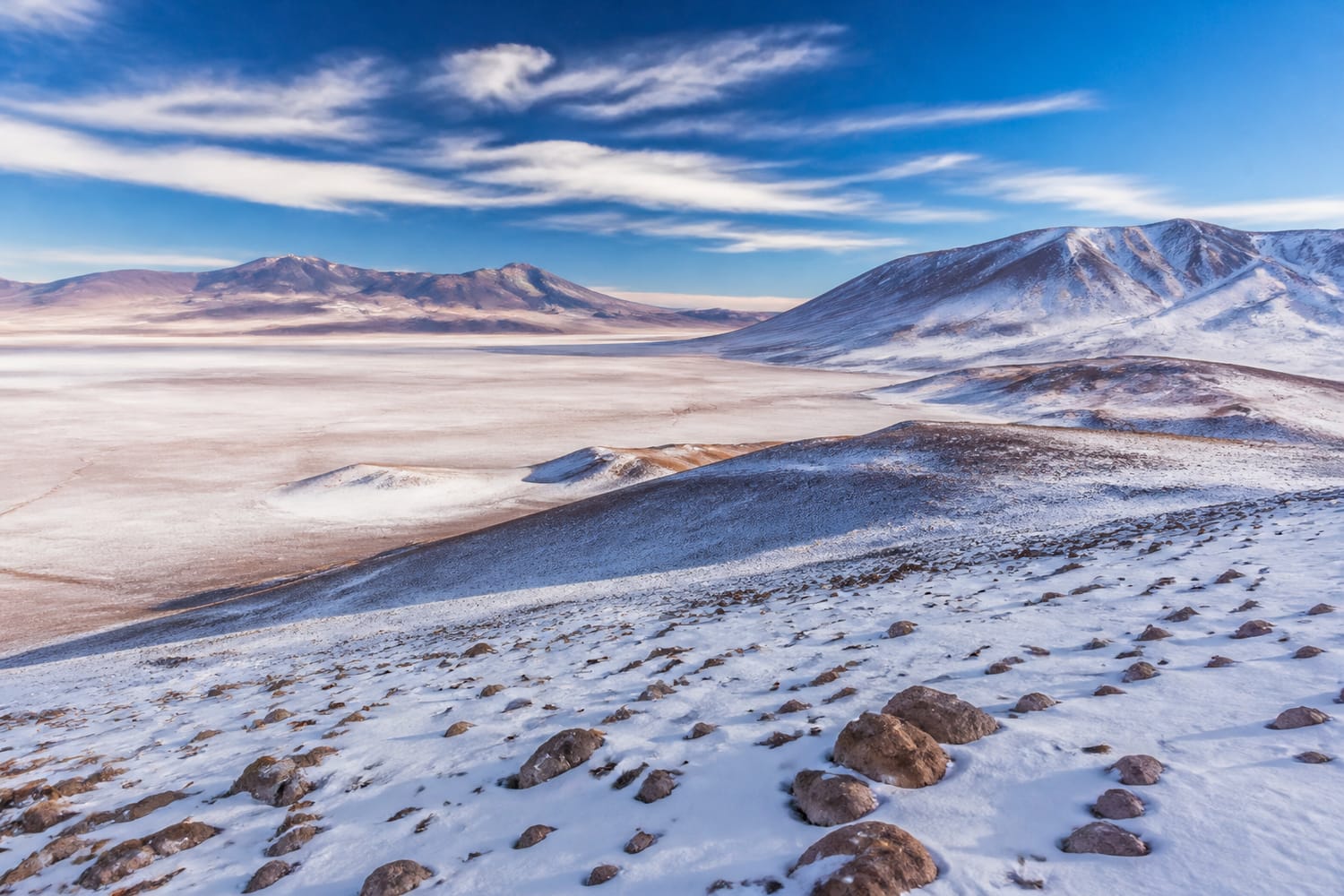
Chile’s Atacama Desert is famous for extreme dryness, yet storms can sometimes break its usual pattern. In August 2026, successive winter storms brought rare, widespread snow to parts of northern Chile. Satellite observations showed snow stretching from the Andes across the desert’s arid interior and, in places, close to the Pacific coast. Some coastal locations received rain instead—a reminder that one storm can produce different kinds of precipitation across a varied landscape.
The event illustrates an important difference between rare and impossible. A desert may go long stretches without a significant storm, but its atmosphere is not sealed off from the rest of the world. When unusual weather delivers moisture, the outcome depends on the temperatures and terrain it encounters.
Antarctica’s Icy Desert
Antarctica offers the ultimate twist: an enormous expanse of ice that is also a desert. Its precipitation is low, particularly in the interior. Snow can remain for years because the cold limits melting, and successive layers slowly compact into ice. A deep ice sheet is therefore not proof that heavy snow falls there every winter. The British Antarctic Survey explains this dry, icy combination in its Antarctic factsheet.
Some places are colder and drier still. In Antarctica’s Dry Valleys, snow hardly ever falls because there is so little atmospheric moisture available. It is a useful reality check: low temperature creates the possibility of snow, but it cannot supply the missing water vapor.
What Happens After the Flakes Fall?
Desert snow can disappear quickly when sunshine and warmer air return. Some melts, while some may pass directly from ice into water vapor—a process called sublimation. Wind can move snow around too, gathering it in sheltered spots and leaving exposed ground bare. A patchy white landscape does not necessarily show exactly where the most snow fell.
The next time you see snow on dunes or a desert plateau, look beyond the contrast of colors. Ask where the storm’s moisture came from, how high the land sits, and whether the snow is a seasonal visitor or a rare interruption. Desert snow makes perfect sense once you remember the simplest rule: deserts are dry, not necessarily hot.