
Ancient Engineering That Never Retired
Most ancient landmarks survive as monuments rather than working structures. These ten are different. They still move water, control floods, guide ships, drain cities, carry pedestrians, host performances, or power fountains much as their builders intended. Repairs and alterations have preserved them, but their essential jobs remain remarkably unchanged.
Dujiangyan Irrigation System, China
Constructed around 256 BCE in Sichuan, Dujiangyan was designed to control the Min River without completely blocking it. Its channels divide the current, remove sediment, reduce flooding, and direct water across the Chengdu Plain.
More than 2,000 years later, this extraordinary irrigation system continues performing its original functions. Its success comes from working with the river’s natural behavior rather than attempting to overpower it with a conventional dam.
Dujiangyan is a spectacular example of how many famous landmarks began as solutions to everyday problems.
Kallanai Dam, India
Stretching across the Kaveri River in Tamil Nadu, Kallanai—also called the Grand Anicut—was constructed during the Chola period, probably in the second century CE. Its purpose was to divert river water into irrigation channels serving the fertile delta.
Kallanai still regulates water for agriculture today. Although later rulers and engineers strengthened and expanded the surrounding system, the ancient stone structure remains central to the job it was built to do. India’s official tourism portal describes it as one of the world’s oldest functioning water-regulation structures.
The Persian Qanats, Iran
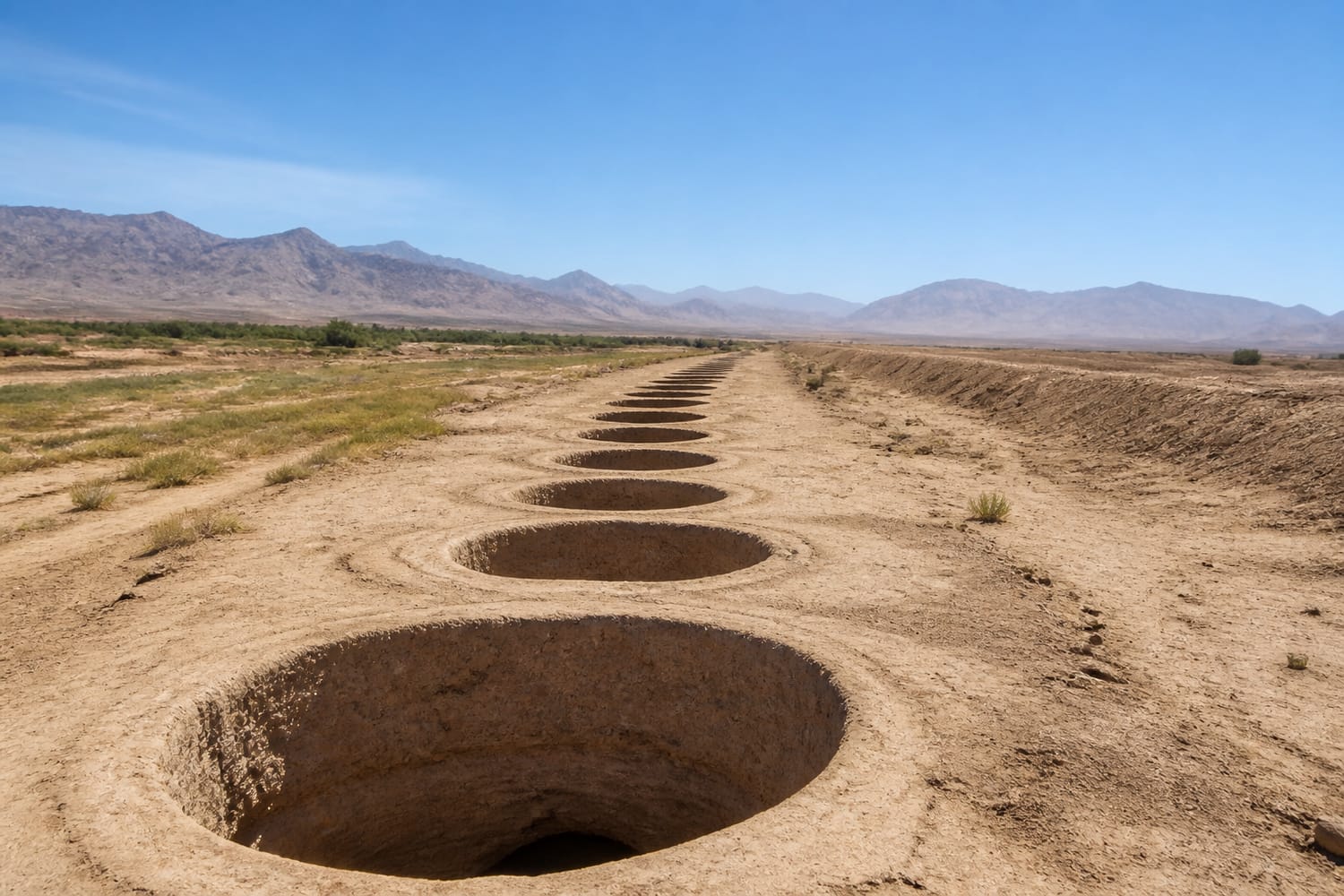
A qanat carries groundwater through a gently sloping underground tunnel, allowing gravity to deliver it to settlements and fields. The design limits evaporation, making it especially useful in hot, dry environments.
Some Iranian qanats have transported water for centuries or even millennia. The eleven systems included in UNESCO’s Persian Qanat World Heritage site remain active water carriers, supporting communities, gardens, and agriculture. Vertical shafts visible across the landscape provide ventilation and access for maintenance, just as they did for earlier generations.
Shushtar Historical Hydraulic System, Iran
At Shushtar, engineers created an interconnected landscape of canals, tunnels, bridges, dams, basins, and mills. Much of the system’s surviving form dates from the Sasanian period, although parts may have older foundations.
Its complete range of ancient functions has been reduced, but the Gargar Canal still carries water through tunnels toward the city and surrounding agricultural land. The working portions continue supporting irrigation and water supply, demonstrating how ancient builders transformed a semi-desert environment through carefully controlled river flow.
Aqua Virgo, Italy
Completed in 19 BCE, the Aqua Virgo carried spring water into Rome, where it supplied baths, fountains, and public facilities. Unlike the city’s more visible arched aqueducts, most of its route ran underground, protecting it from warfare and stone scavenging.
Known today as the Acqua Vergine, the restored system still transports water into central Rome. It feeds monumental fountains, most famously the Trevi Fountain, using the same fundamental principle that powered the ancient network: gravity.
Cloaca Maxima, Italy
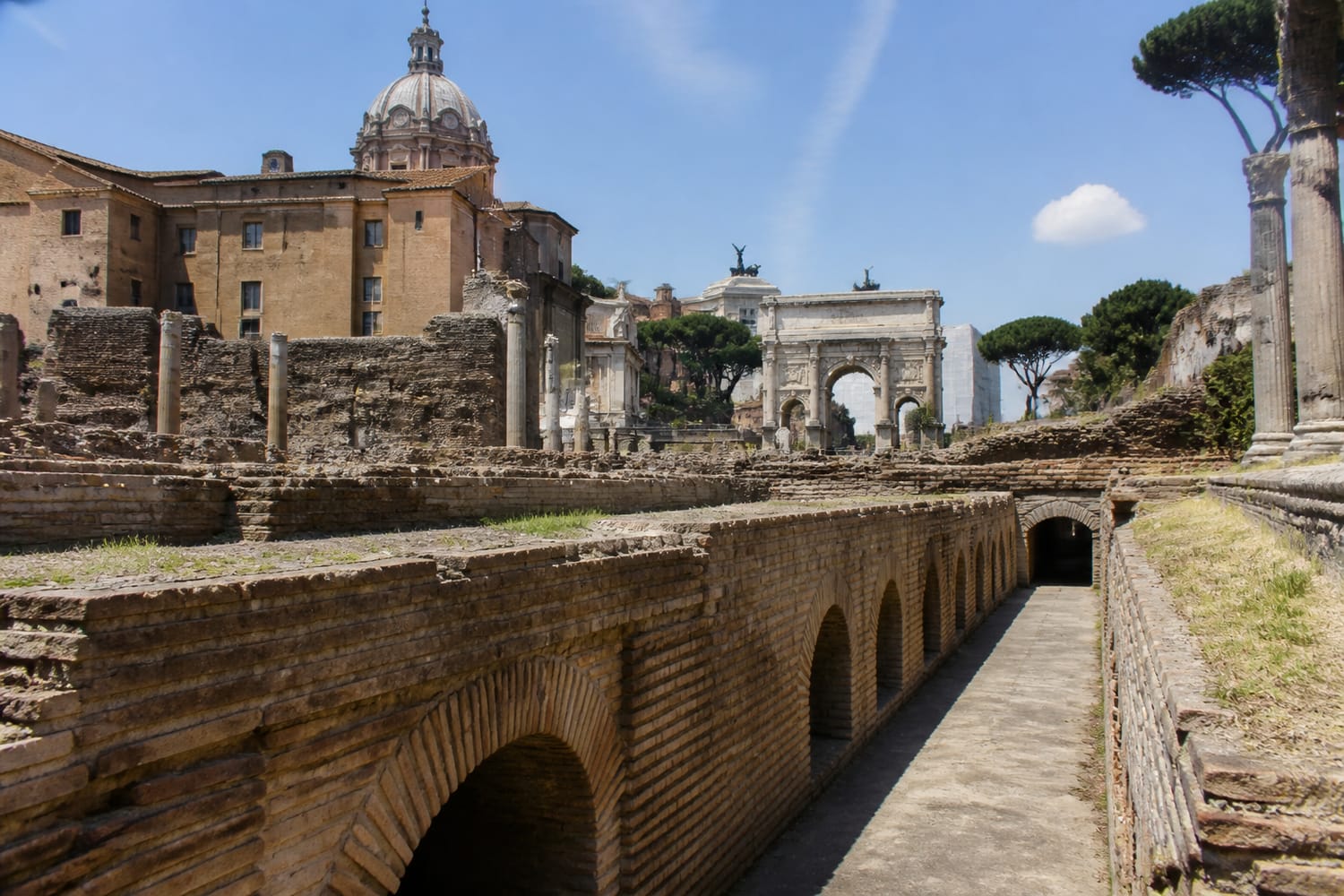
Rome’s Cloaca Maxima began as a drainage project that helped reclaim marshy ground around the future Roman Forum. Over time, it developed into a covered drain and sewer carrying urban water toward the Tiber.
Parts of this ancient network remain integrated into Rome’s drainage system. Water still travels through stone and concrete passages constructed and repeatedly modified by Roman engineers. Visitors cannot ordinarily enter it, but beneath the modern streets, one of history’s oldest major drainage works continues doing an unglamorous yet essential job.
Tower of Hercules, Spain
Standing above the harbor of A Coruña, the Tower of Hercules was built by the Romans in the late first century CE. Its purpose was to help sailors navigate the dangerous Atlantic coastline and locate the harbor entrance.
The tower was substantially restored during the 18th century, when its Roman core received a new exterior and updated lighting equipment. Nevertheless, it remains the only fully preserved Roman lighthouse still used for maritime signaling. Travelers can explore more structures that resisted time and disaster in Tour Trivia’s look at ancient landmarks that survived major earthquakes.
Pons Fabricius, Italy
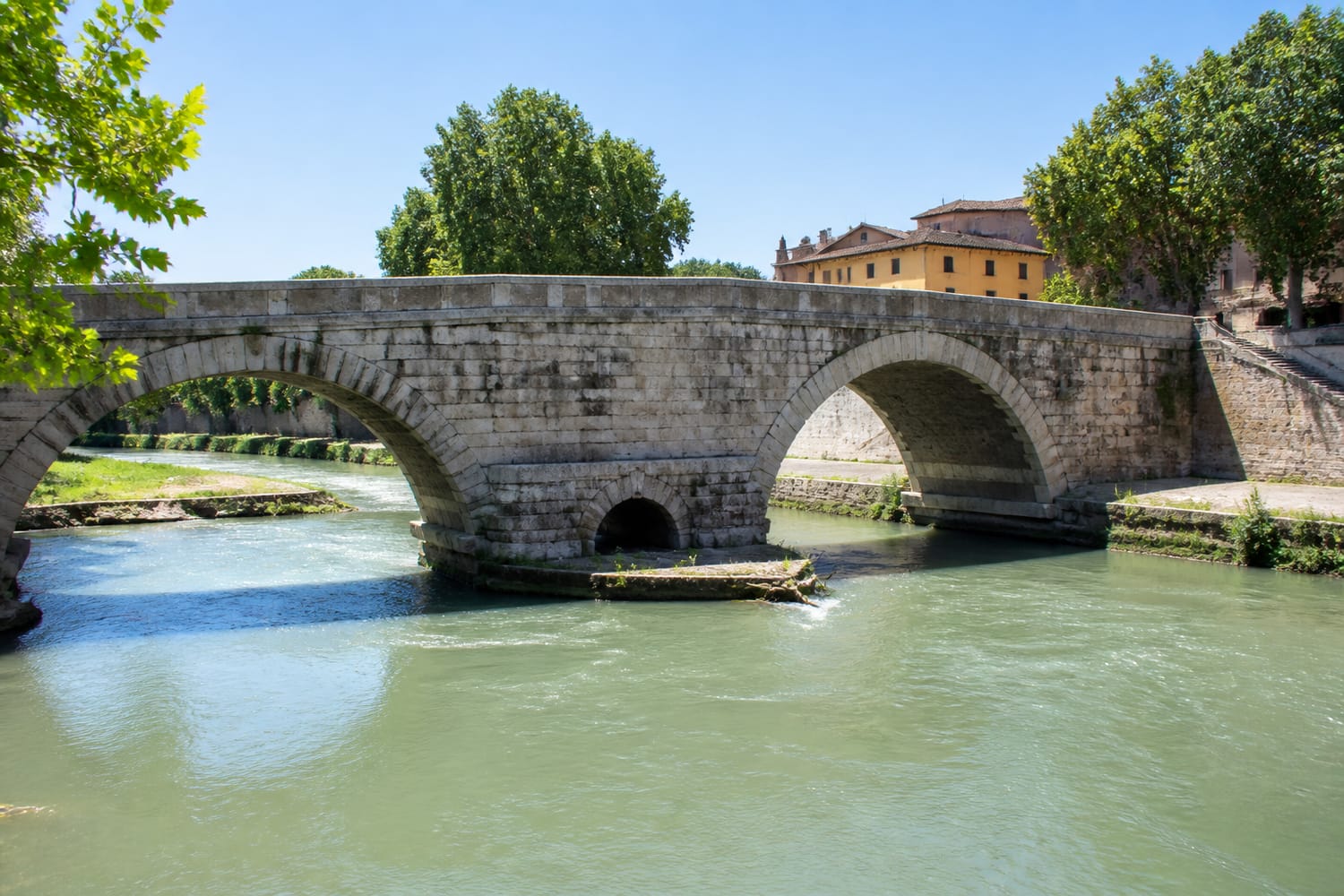
Built in 62 BCE, the Pons Fabricius connects Rome’s Tiber Island with the river’s eastern bank. Floods and centuries of foot traffic have made repairs necessary, but its ancient arches and central pier continue supporting the crossing.
Modern pedestrians still use the bridge to reach the island, preserving its most basic purpose: carrying people safely over water. Its smaller central arch also allows floodwater to pass through the pier, reducing pressure on the structure during high river levels.
Ancient Theatre of Epidaurus, Greece
The Ancient Theatre of Epidaurus was created in the fourth century BCE for music, drama, and religious celebrations. Its bowl-shaped seating arrangement uses the surrounding landscape to provide excellent sightlines and remarkably clear sound.
Audiences still gather there to watch live performances, including productions presented by the Athens Epidaurus Festival. Actors once again deliver tragedies and comedies from the stage while spectators sit on ancient stone tiers. Tour Trivia’s guide to ancient theaters around the world explores more venues where performance shaped public life.
Sigiriya’s Fountains, Sri Lanka
The gardens beneath Sigiriya’s towering rock fortress were built in the fifth century CE as an elaborate royal landscape. Underground channels supplied pools and fountains, combining hydraulic engineering with theatrical design.
During the rainy season, several ancient fountains can still operate as water pressure builds within the system. Their streams rise without electrical pumps, following the hydraulic principles established by Sigiriya’s builders approximately 1,500 years ago. The result is not simply a preserved garden, but an ancient water display that can still come alive.
Why These Landmarks Keep Working
None of these structures survived through design alone. Communities cleaned channels, replaced damaged materials, reinforced walls, and adapted equipment while preserving each landmark’s central function.
Their longevity also reflects elegant engineering. Gravity requires no fuel, arches distribute weight, underground channels reduce evaporation, and carefully positioned openings manage water pressure. These landmarks endure because their builders understood local conditions—and because later generations recognized that the old solutions were still worth using.