
A World Tour in Your Wallet
Banknotes can be miniature travel guides. Turn one over and you might find a memorial, a palace, or an ancient monument rendered in impossibly fine detail. The ten landmarks below appear on specific banknotes; together, they tell stories of independence, faith, engineering, and the people a country chooses to remember.
Lincoln Memorial, United States — $5
Abraham Lincoln’s portrait occupies the front of the U.S. $5 bill, while his memorial fills the back. Dedicated in Washington, D.C., in 1922, the building resembles a Greek temple. Its 36 exterior columns represent the states in the Union when Lincoln died. Decades later, its steps became a stage for the 1963 March on Washington, where Martin Luther King Jr. delivered his “I Have a Dream” speech. The engraving captures a monument to Lincoln; its history reaches well beyond him.
Independence Hall, United States — $100
On the back of the U.S. $100 bill stands Philadelphia’s Independence Hall. The Declaration of Independence was adopted there in 1776, and the U.S. Constitution was framed there in 1787. Those events give the building an unusually weighty place on an everyday object. If you visit, remember that the banknote shows the building, not the debate inside: the decisions that made it famous happened behind its brick walls. The Bureau of Engraving and Printing’s guide to U.S. currency identifies the landmark on the note.
Elizabeth Tower, United Kingdom — £5
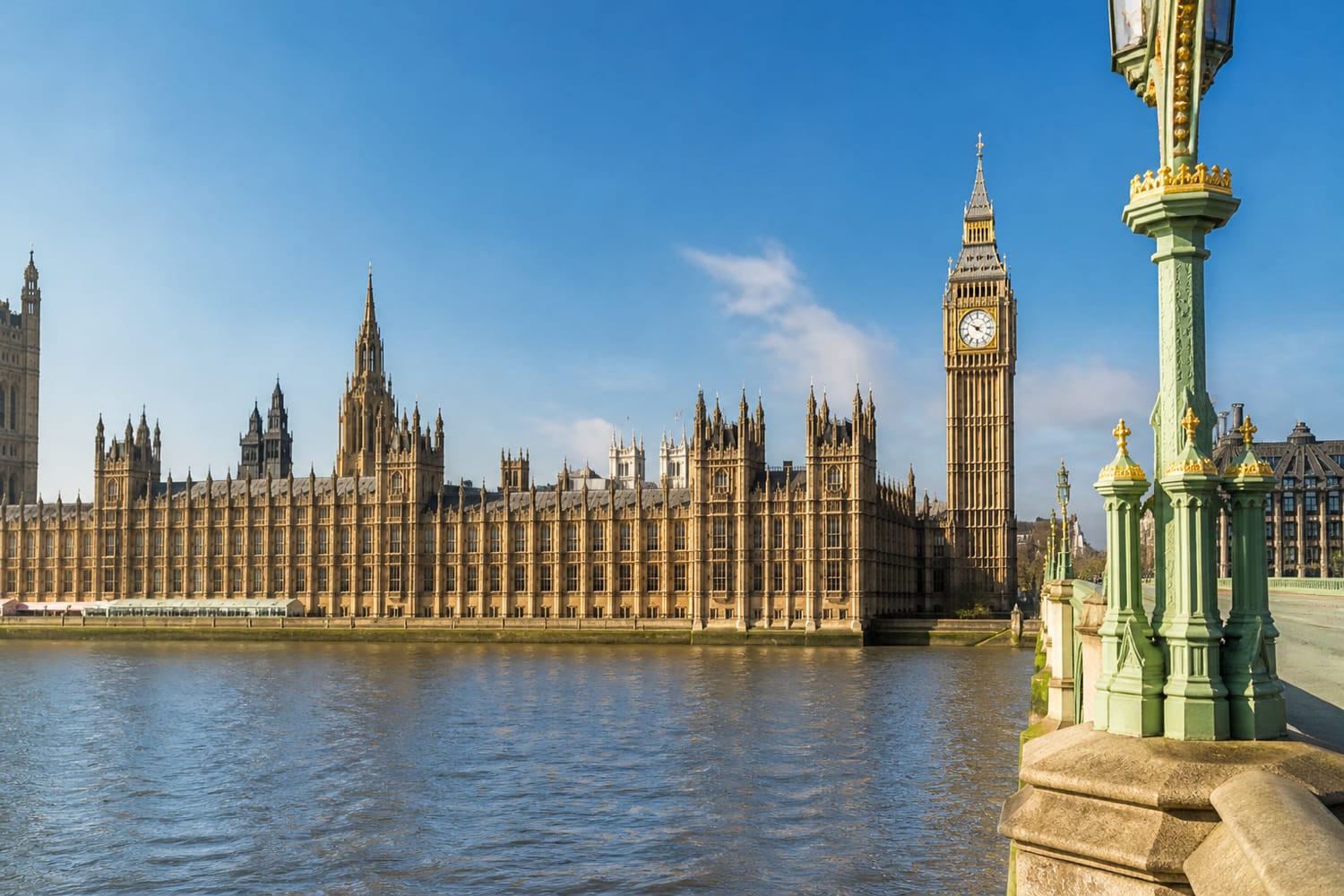
Look behind Winston Churchill on a Bank of England £5 note and you’ll see Westminster and its famous clock tower. Its proper name is Elizabeth Tower; Big Ben technically names the great bell inside. The choice of backdrop links Churchill’s image to Parliament, where he served for decades and gave some of his best-known speeches. Banknotes bearing either Elizabeth II or Charles III on the front retain this reverse design. For more on the tower’s practical beginnings, see Tour Trivia’s look at landmarks built to solve everyday problems.
Tokyo Station, Japan — ¥10,000
Japan’s ¥10,000 note, introduced in 2024, pairs entrepreneur Eiichi Shibusawa with Tokyo Station’s Marunouchi building. The station’s red-brick façade makes a striking contrast with a banknote designed for modern use. It is a fitting companion to Shibusawa: one side honors a figure associated with Japan’s developing business world, while the other celebrates a historic gateway through which travelers still encounter the capital. Unlike an imagined skyline, the engraving depicts a building you can seek out.
Rani-ki-Vav, India — ₹100
A ₹100 note offers a glimpse below ground. Its reverse shows Rani-ki-Vav, an 11th-century stepwell in Patan, Gujarat, originally built as a memorial to a king. Stepwells provided access to water, but this one also became an extraordinary work of architecture: descending levels are lined with sculpted figures. UNESCO describes its design as an inverted temple that expresses the sanctity of water. Explore UNESCO’s account of Rani-ki-Vav before looking again at the note’s tiny depiction.
Sanchi Stupa, India — ₹200
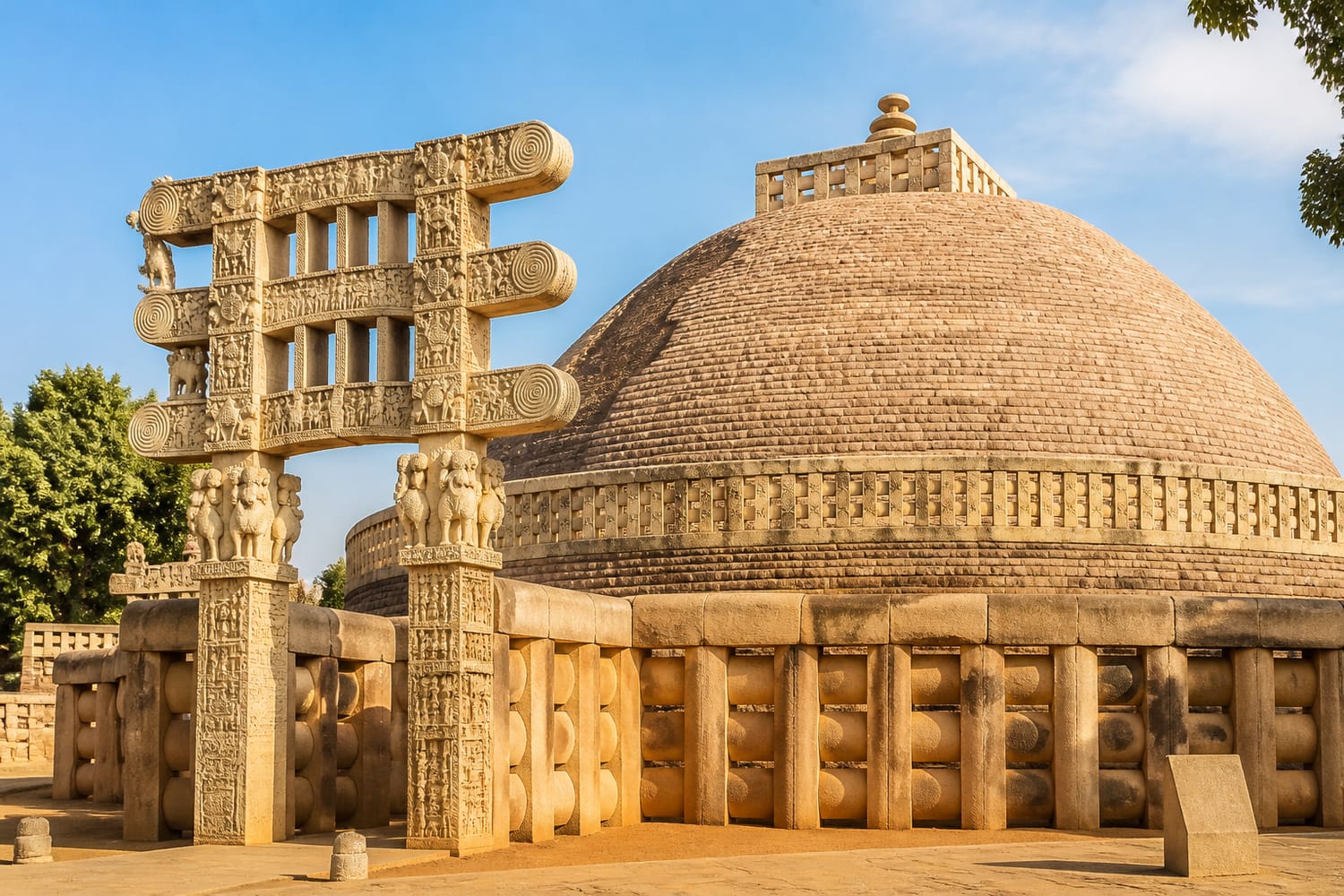
The monument on India’s ₹200 note belongs to a Buddhist site with roots in the third century BCE. Sanchi’s Great Stupa grew over generations, acquiring stone facing and richly carved gateways. Those gateways depict stories and symbols, rewarding a closer look than the banknote can provide. The dome is also a reminder that a landmark need not be a palace or fortress to embody centuries of history: Sanchi became an enduring place of reverence.
Potala Palace, China — 50 Yuan
Rising above Lhasa, the Potala Palace appears on the reverse of China’s 50-yuan note. Its White and Red Palaces sit on Red Mountain, and the complex is closely tied to Tibetan Buddhism and Tibet’s historic administration. The image’s dramatic silhouette makes it easy to recognize, but a small engraving cannot convey the palace’s scale or its layered religious and political history. Tour Trivia explores more of that setting in its guide to historic royal residences.
Canadian Museum for Human Rights, Canada — $10
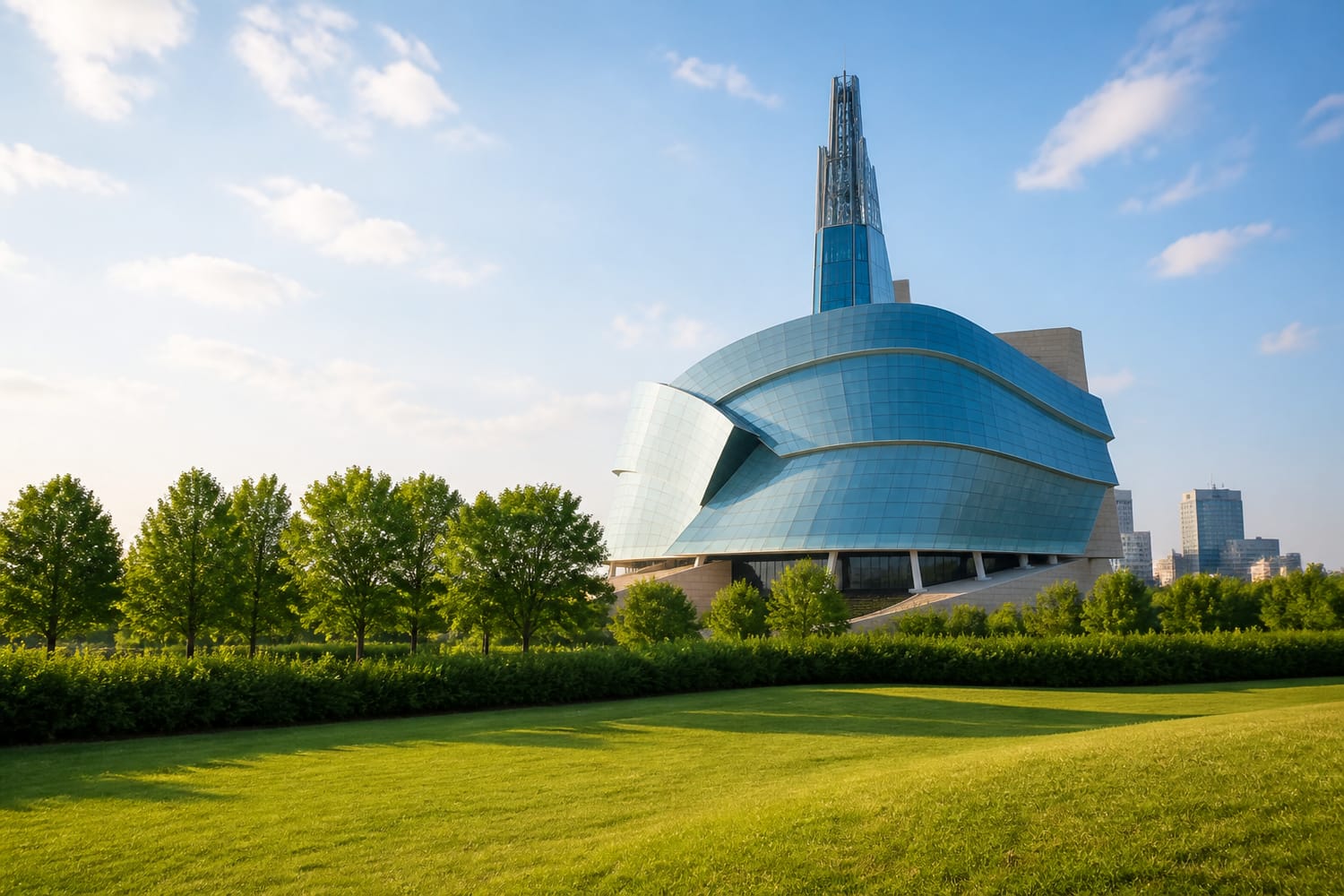
Canada’s vertical $10 note features Viola Desmond, who challenged racial segregation in a Nova Scotia movie theatre in 1946. On the back stands Winnipeg’s Canadian Museum for Human Rights; Desmond’s story forms part of its collection. The building is not merely an attractive backdrop. It carries the note’s theme of rights and social justice into the present, inviting reflection on both progress and unfinished work. The Bank of Canada’s guide to the $10 design explains how the surrounding symbols reinforce that theme.
Roman Theatre, Jordan — 10 Dinars
Jordan’s 10-dinar banknote depicts Amman’s Roman Theatre on its reverse. Built in the second century CE, it offers a reminder that Jordan’s capital has a history far older than its modern streets. Its tiers of seating make an arresting image on the note; in person, they turn the scale of an ancient public gathering place into something tangible. A wallet-sized view can introduce the landmark, but standing before it makes its original purpose much easier to imagine.
Great Sphinx of Giza, Egypt — 100 Pounds
The reverse of an Egyptian 100-pound note features the Great Sphinx, while the other side shows Cairo’s Sultan Hassan Mosque. Carved from the bedrock at Giza, the Sphinx is generally associated with the reign of Khafre in the third millennium BCE. Its lion’s body and royal head communicate power even at banknote scale. The statue’s missing nose has inspired persistent tales; Tour Trivia examines the evidence in its article on the strange scars of famous landmarks.
The Next Landmark Is in Your Hands
These notes do more than identify places. They connect a building or monument to a story a country wants to carry forward. Next time you receive unfamiliar change, turn the banknote over before putting it away. Your next travel question—and perhaps your next destination—may already be in your hand.