
When History Builds It Again
Many landmarks that appear centuries old are actually modern reconstructions. War, fire, political demolition, structural collapse, and even religious tradition erased their predecessors. Yet communities chose to rebuild them—sometimes stone by stone, sometimes with modern interiors, and sometimes as part of a cycle that treats renewal as preservation.
These stories reveal that a landmark’s identity can survive even when its original materials do not. Much like famous landmarks moved piece by piece to save them, reconstructed monuments challenge the idea that historic places must remain physically unchanged.
St. Mark’s Campanile, Venice
The bell tower dominating Piazza San Marco looks comfortably at home beside Venice’s medieval basilica. However, the tower visitors enter today dates from the early 20th century.
After cracks appeared in the structure, the old campanile suddenly collapsed on July 14, 1902. Remarkably, the falling masonry caused no human deaths. Venice immediately decided to rebuild the tower “as it was and where it was,” completing the replacement in 1912. Although its profile reproduces the earlier landmark, the new campanile contains stronger foundations and an elevator.
Dresden Frauenkirche, Germany
Dresden’s domed Frauenkirche was one of Europe’s great Baroque churches until Allied air raids devastated the city in February 1945. The damaged building collapsed, leaving little more than a mountain of blackened stone.
Its ruins remained a wartime memorial during the East German era. Reconstruction finally began after German reunification, with thousands of salvaged stones cataloged and returned to their approximate original positions. Completed in 2005, the church’s patchwork of dark historic blocks and pale new sandstone makes its destruction visible rather than disguising it.
Warsaw Old Town, Poland
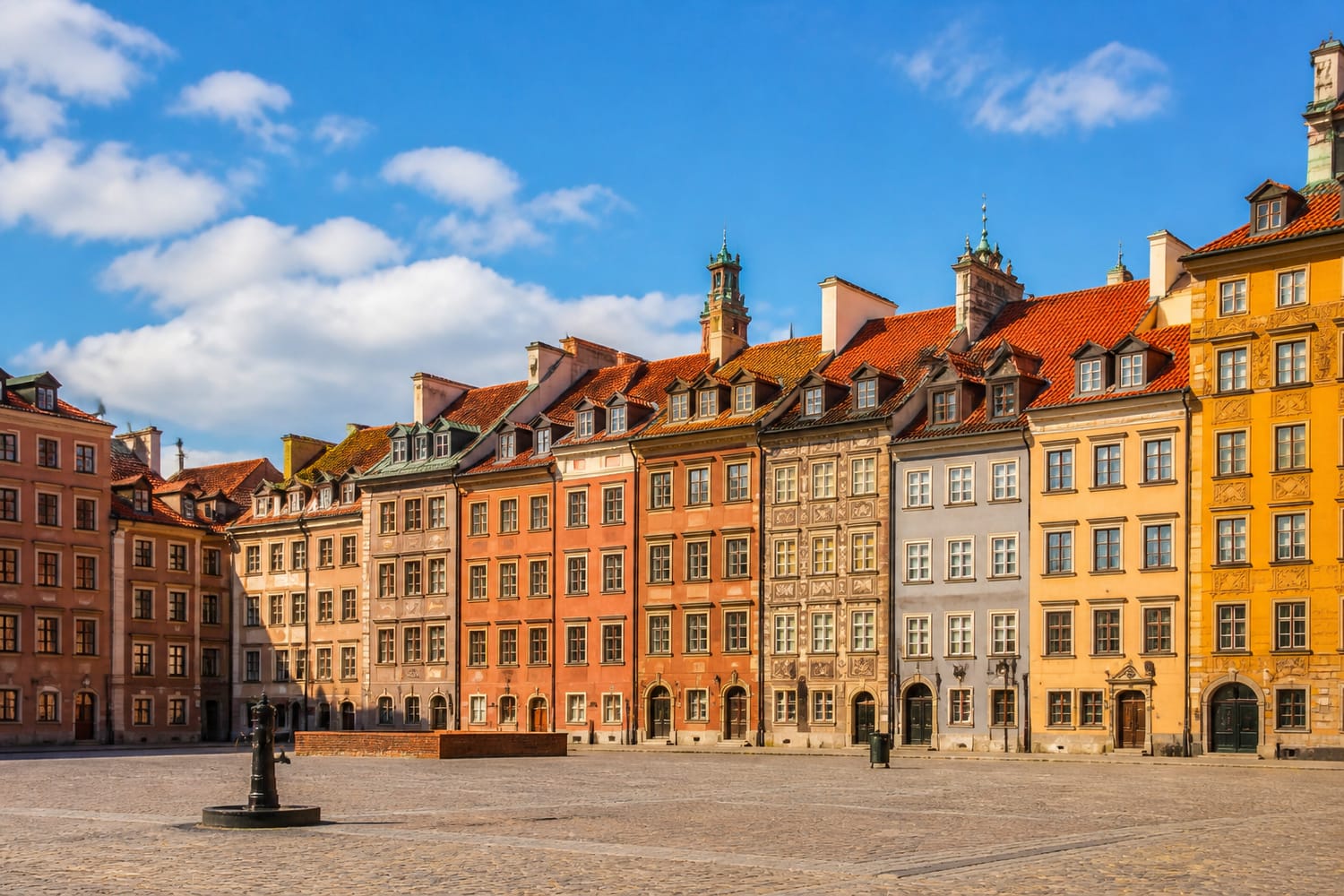
Warsaw’s colorful Old Town façades could easily be mistaken for an untouched medieval neighborhood. In reality, much of the district is a meticulously planned postwar reconstruction.
Nazi German forces deliberately destroyed Warsaw following the 1944 uprising, reducing approximately 85% of the historic center to ruins. Polish architects, conservators, artists, and residents rebuilt its streets using photographs, surveys, surviving fragments, and paintings. UNESCO recognizes Warsaw as an exceptional example of reconstructing a city that had been intentionally annihilated.
Stari Most, Mostar
The elegant stone arch of Stari Most had crossed Bosnia and Herzegovina’s Neretva River since 1566. Besides connecting two riverbanks, it symbolized the multicultural identity of Mostar.
Shelling destroyed the bridge on November 9, 1993, during the Bosnian War. Its reconstruction used stone from the original quarry and drew upon historic building methods. Officially reopened in 2004, the new bridge became a symbol of reconciliation. The UNESCO account of the Mostar Bridge reconstruction explains how international experts and local authorities revived the landmark.
Shakespeare’s Globe, London
Today’s Globe Theatre is not where William Shakespeare watched his plays—or even an exact continuation of the same building.
The original Globe burned down in 1613 after a theatrical cannon ignited its thatched roof during a performance of Henry VIII. Its replacement opened the following year but was later closed by Parliament and demolished in the 1640s.
American actor Sam Wanamaker led the decades-long effort to create the current reconstructed Shakespeare’s Globe. Opened in 1997, it stands near the original site and incorporates period materials such as green oak and thatch.
Kinkaku-ji, Kyoto
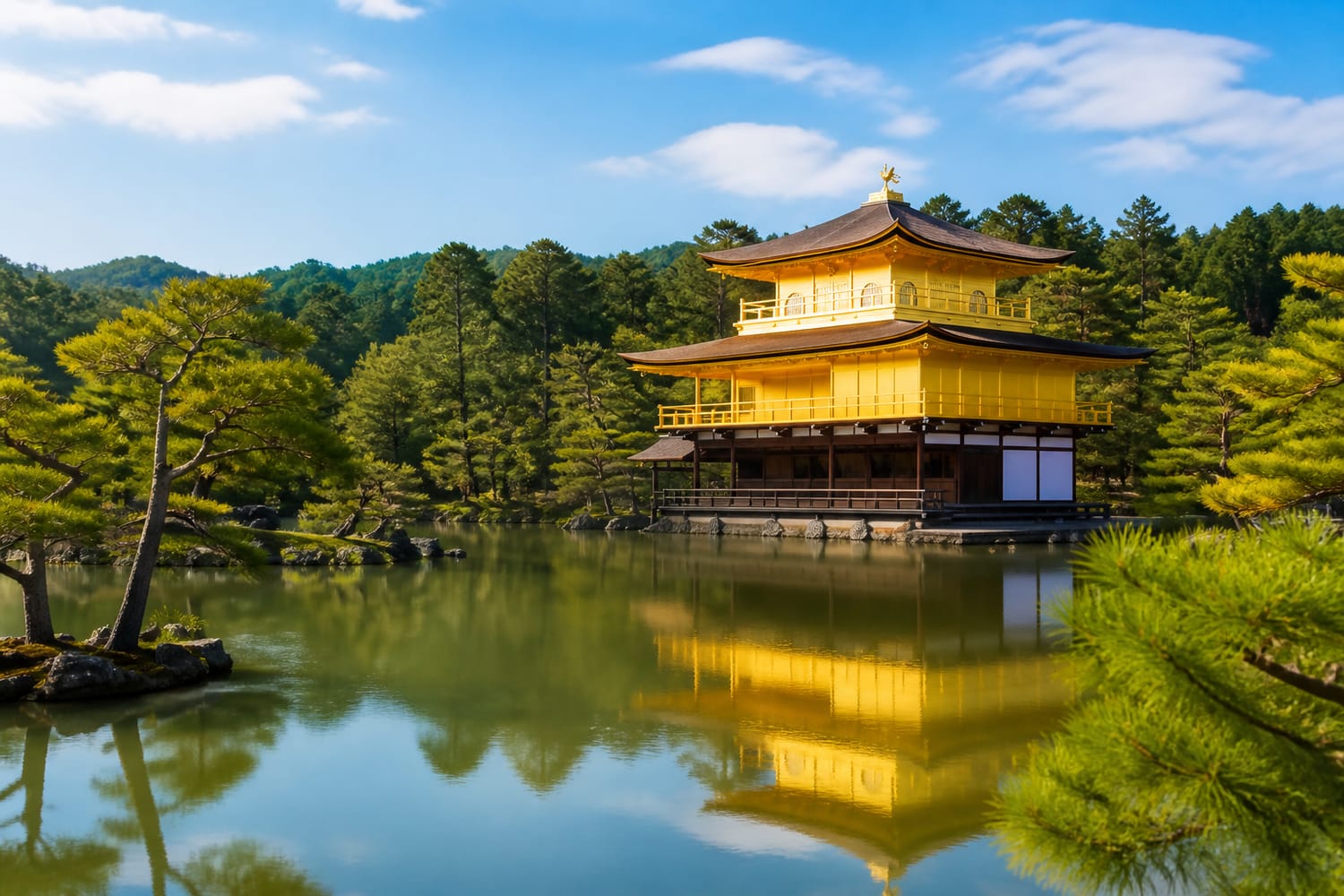
Kyoto’s Golden Pavilion appears ancient, especially when its gold-covered walls are reflected in the surrounding pond. The building itself, however, dates from 1955.
In 1950, a young novice monk set fire to the centuries-old pavilion, destroying the wooden structure and several treasures inside. Builders reconstructed it according to the earlier design, later applying an even more extensive layer of gold leaf. The peaceful landmark tourists see today therefore represents both medieval artistic ideals and Japan’s postwar dedication to cultural restoration.
Monte Cassino Abbey, Italy
Founded by Saint Benedict in the sixth century, Monte Cassino Abbey had already survived invasions, earthquakes, and repeated rebuilding before World War II brought its most famous destruction.
Believing German forces might use the hilltop complex as an observation point, Allied aircraft bombed the abbey on February 15, 1944. The attack reduced it to rubble, although many manuscripts and artworks had previously been removed. Postwar reconstruction followed the principle of rebuilding the monastery “where it was and as it was,” restoring its commanding silhouette above Cassino.
Cathedral of Christ the Saviour, Moscow
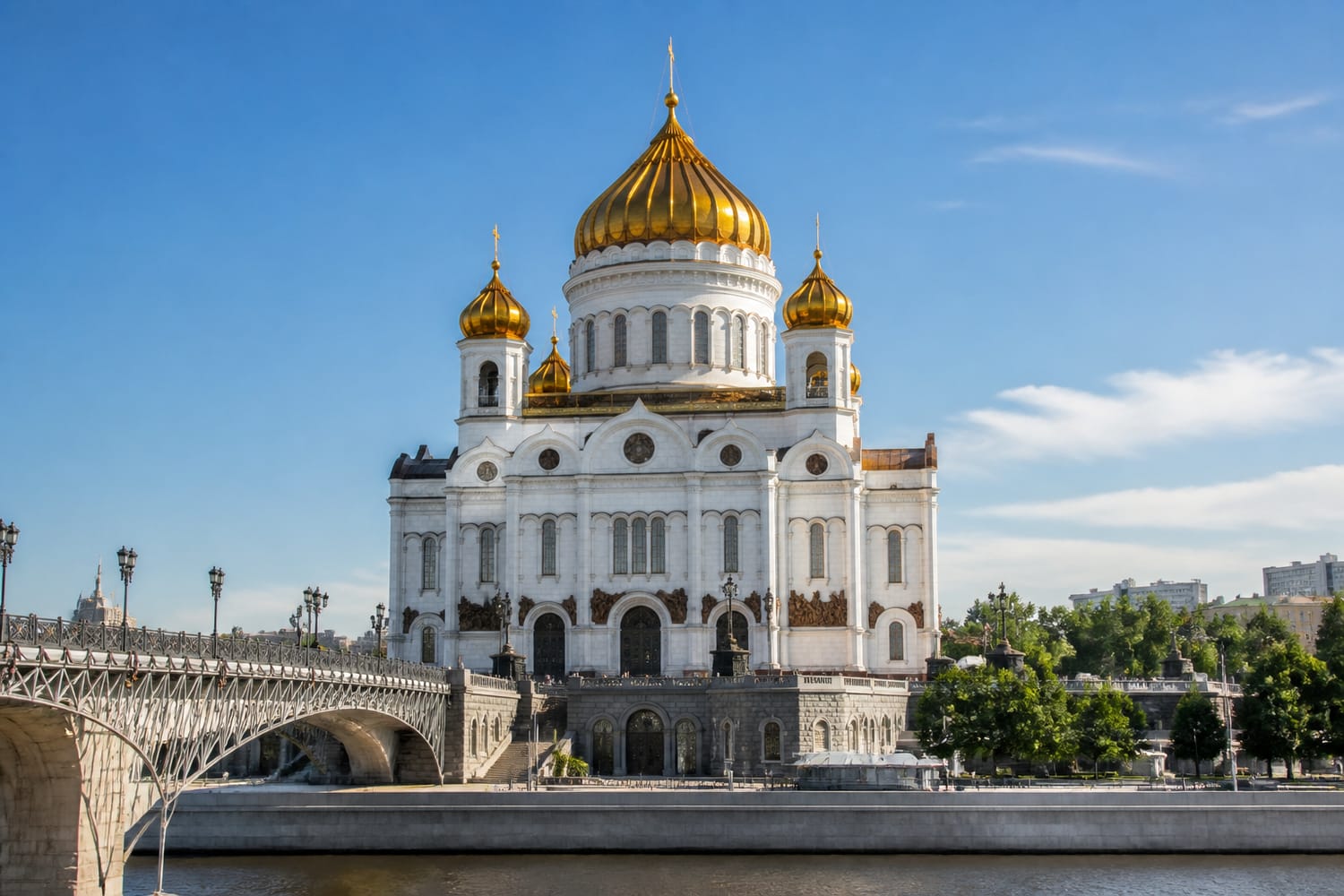
Moscow’s enormous Cathedral of Christ the Saviour looks like a monument from imperial Russia, but its present structure was completed at the end of the 20th century.
Soviet authorities dynamited the original cathedral in 1931 to clear space for the proposed Palace of the Soviets. That project was never realized, and the site eventually became a vast outdoor swimming pool. After the Soviet Union’s collapse, the cathedral was reconstructed using modern materials and consecrated in 2000.
Berlin Palace, Germany
The Baroque façades of Berlin Palace conceal a thoroughly modern cultural complex. The original royal residence suffered severe damage during World War II, but it remained partly standing afterward.
East German authorities demolished the palace in 1950. Decades later, Germany approved a partial reconstruction to house the Humboldt Forum. Three historic exterior façades, the courtyard, and the dome were recreated using surviving fragments, photographs, and traditional carving techniques. The riverside façade and interiors remain modern, intentionally showing that this is a new building wearing parts of an old architectural identity.
Ise Jingu, Japan
Ise Jingu offers a completely different definition of reconstruction. Its principal Shinto shrine buildings are not rebuilt after disasters; they are deliberately replaced every 20 years.
During the Shikinen Sengu tradition, craftspeople construct new sanctuaries on adjacent plots before sacred objects are ceremonially transferred. The previous wooden buildings are then dismantled. This cycle has preserved ancient designs and specialized carpentry skills for roughly 1,300 years.
At Ise, authenticity lies in ritual, knowledge, and continuity rather than in keeping the same timber forever. Even the shrine’s Uji Bridge is renewed as part of the cycle.
Can a Reconstruction Still Be Authentic?
Reconstructed landmarks raise difficult questions. Is a building still historic if most of its materials are new? Does authenticity belong to stone and wood, or can it also reside in design, craftsmanship, memory, and cultural meaning?
There is no universal answer. Berlin Palace openly combines reproduction and modern architecture, while Warsaw’s Old Town recreates an entire lost cityscape. Dresden incorporates visible remnants, and Ise treats replacement as a sacred obligation.
Alongside landmarks bearing historic holes and scars, these reconstructions show two different approaches to loss. Some places preserve their wounds; others recover by rebuilding. Either way, their destruction remains an essential part of what makes them worth visiting.