
When Ordinary Materials Become Extraordinary
Stone, steel, and concrete may dominate architecture, but some of the world’s most memorable landmarks were made with cardboard, newspapers, bottles, bones, and even frozen river water. These structures transform overlooked materials into places of beauty, worship, shelter, and curiosity, proving that remarkable architecture can begin with almost anything.
Cardboard Cathedral, New Zealand
After earthquakes severely damaged ChristChurch Cathedral in 2011, architect Shigeru Ban designed a temporary replacement unlike any conventional house of worship. Christchurch’s Cardboard Cathedral uses enormous paper tubes alongside timber, steel, and shipping containers to create its soaring triangular interior.
The cardboard components were treated to resist fire and moisture, demonstrating that paper-based materials can be far stronger than they appear. Opened in 2013, the building became both a functioning cathedral and a symbol of the city’s resilience. What began as a transitional solution is now one of Christchurch’s most distinctive architectural landmarks.
The Paper House, United States
From a distance, the Paper House in Rockport, Massachusetts, resembles an ordinary wooden cottage. Step closer, however, and its unusual construction becomes clear. Mechanical engineer Elis Stenman began building the summer home in 1922 using layers of newspaper bonded together and varnished.
The frame and floor are conventional, but much of the wall material is rolled, pressed newspaper. Stenman eventually created chairs, tables, curtains, shelves, and even a piano covering from paper. Visitors can still identify old headlines on exposed surfaces, turning the house into a strangely readable time capsule.
Beer Can House, United States
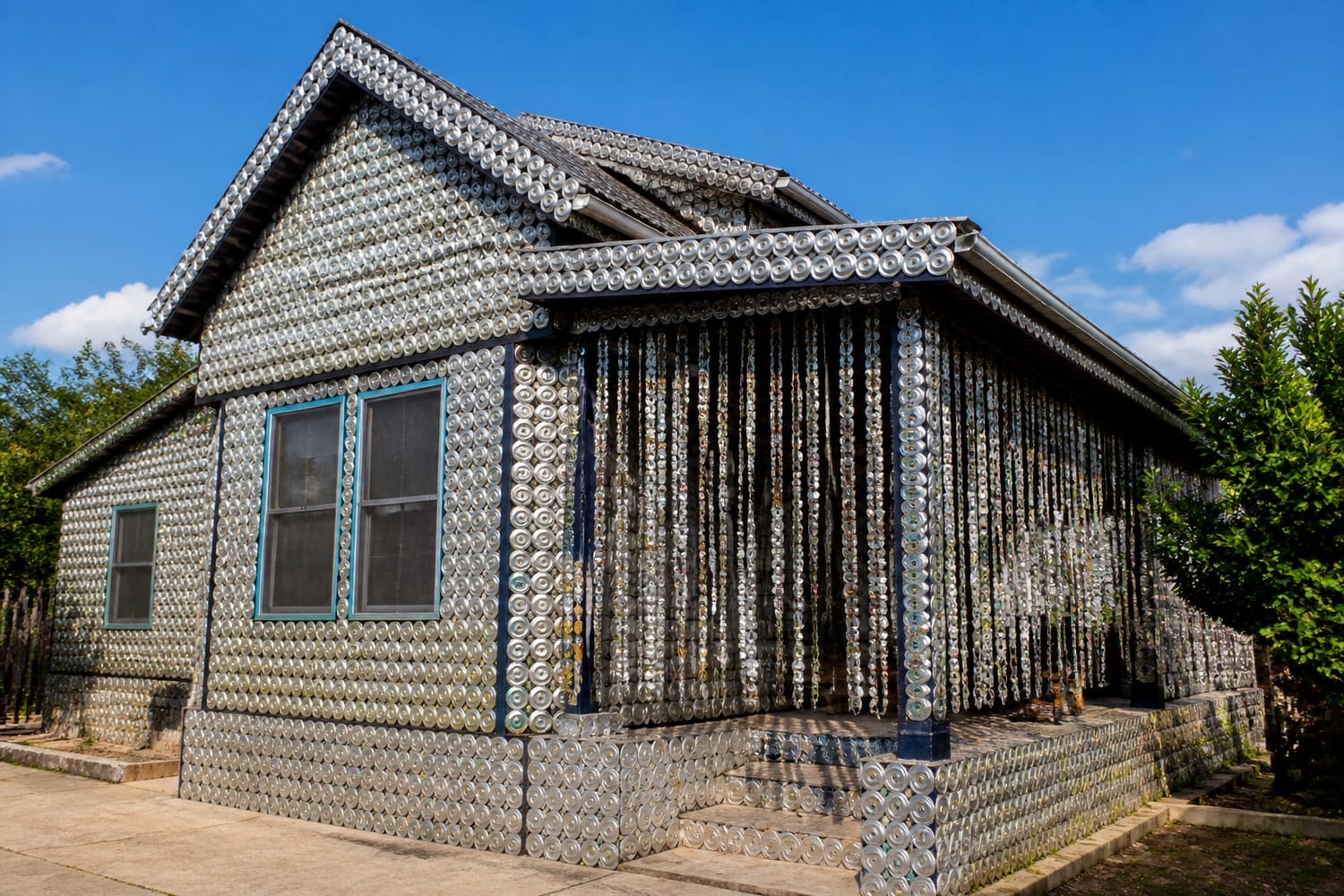
Houston’s Beer Can House began when retired upholsterer John Milkovisch decided he was tired of maintaining his lawn. He covered the yard with concrete, stones, marbles, and metal before turning his attention to the house itself.
Over approximately 18 years, Milkovisch covered the exterior with flattened aluminum beer cans. He also cut cans into long garlands that hang from the roof, shimmer in sunlight, and chime in the wind. An estimated 50,000 cans decorate the property, transforming one person’s home-improvement project into a celebrated example of American folk art.
It fits comfortably among the world’s most bizarre landmarks, where creativity matters more than conventional grandeur.
Bottle Houses, Canada
On Prince Edward Island, Édouard Arsenault spent years collecting discarded glass bottles after seeing a similar structure in a postcard. Between 1980 and 1983, he used thousands of bottles to construct three enchanting buildings: a house, a tavern, and a chapel.
The bottles were arranged in cement to create translucent walls filled with green, brown, blue, and clear glass. Sunlight passing through them produces an effect resembling stained glass. What began as an ambitious recycling project became one of the island’s quirkiest attractions and a reminder that waste can acquire an entirely new identity through thoughtful design.
Greater World Earthship Community, United States
Outside Taos, New Mexico, futuristic-looking homes rise from the desert with walls incorporating tires, cans, bottles, earth, and other reclaimed materials. These buildings are known as Earthships, a concept developed by architect Michael Reynolds.
Used tires packed tightly with earth create thick walls that store thermal energy. Cans can fill smaller spaces, while glass bottles are frequently turned into colorful “bricks” that allow light to enter. Many Earthships are designed to collect rainwater, generate electricity, manage sewage, and support indoor food production.
The community shows that unconventional construction is not always decorative. Sometimes yesterday’s garbage can become part of a practical, self-sufficient home.
Sedlec Ossuary, Czechia
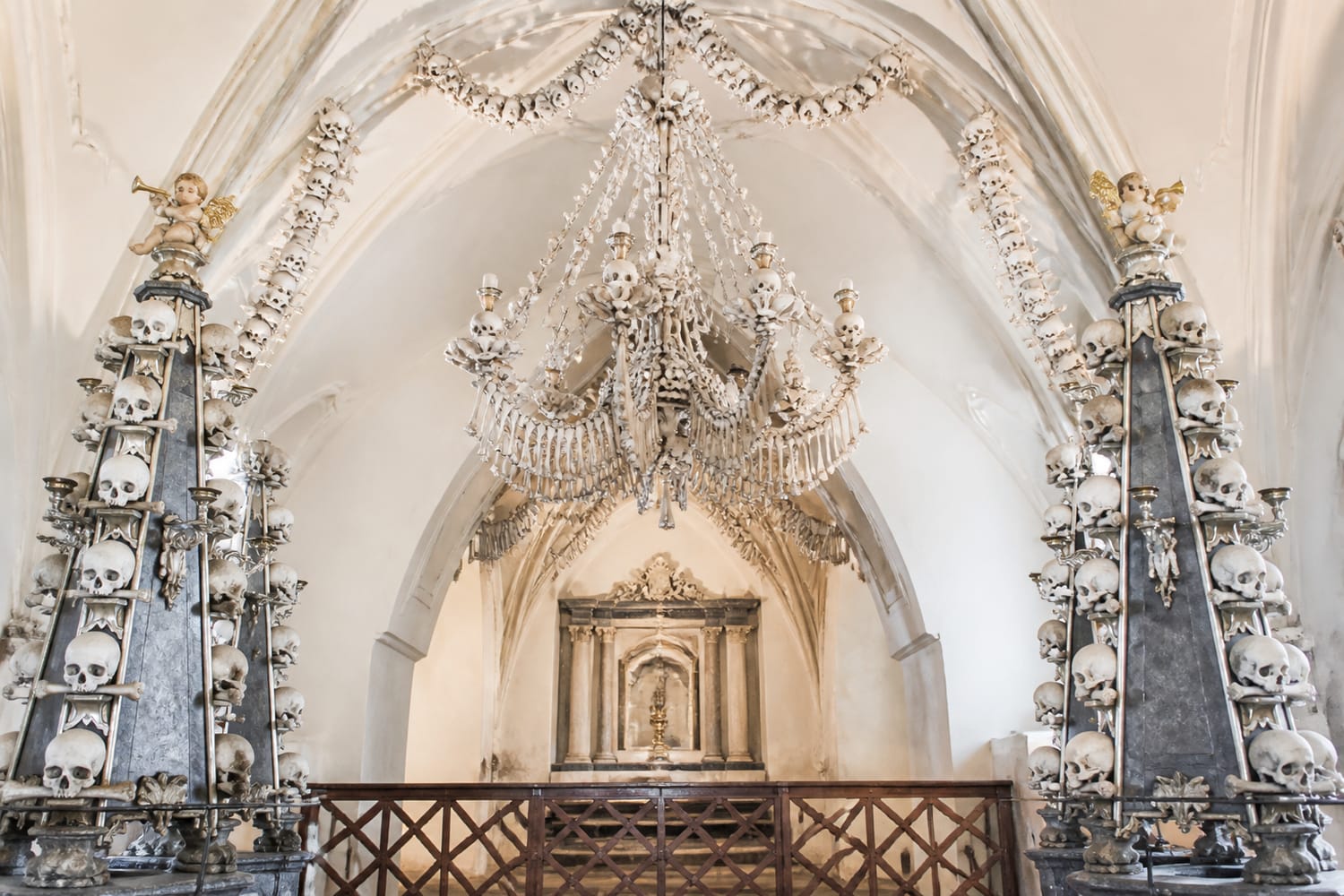
Beneath the Cemetery Church of All Saints in Sedlec, human bones have been arranged into one of Europe’s most haunting interiors. The chapel originally served as a place to store remains removed from an overcrowded cemetery.
During the 19th century, woodcarver František Rint organized the bones into elaborate decorations. The resulting displays include garlands, pyramids, a coat of arms, and a chandelier said to contain examples of every bone in the human body.
The bones do not form the chapel’s main structure, but they define the landmark’s interior architecture. Sedlec Ossuary is simultaneously a memorial, sacred space, and unusually direct meditation on mortality.
ICEHOTEL, Sweden
Most hotels are built to endure, but Sweden’s ICEHOTEL is recreated every winter using ice harvested from the Torne River. Artists and builders shape enormous frozen blocks into guest rooms, columns, furniture, sculptures, and a bar.
Snow and ice are combined into a building material known as “snice,” which helps form the floors, walls, and ceilings. When warmer weather arrives, the seasonal structure melts and its water eventually returns to the river.
A permanent, solar-cooled section now welcomes visitors throughout the year, but the winter hotel’s temporary nature remains central to its appeal. Every edition is an artwork that exists for only one season.
Salt Cathedral of Zipaquirá, Colombia
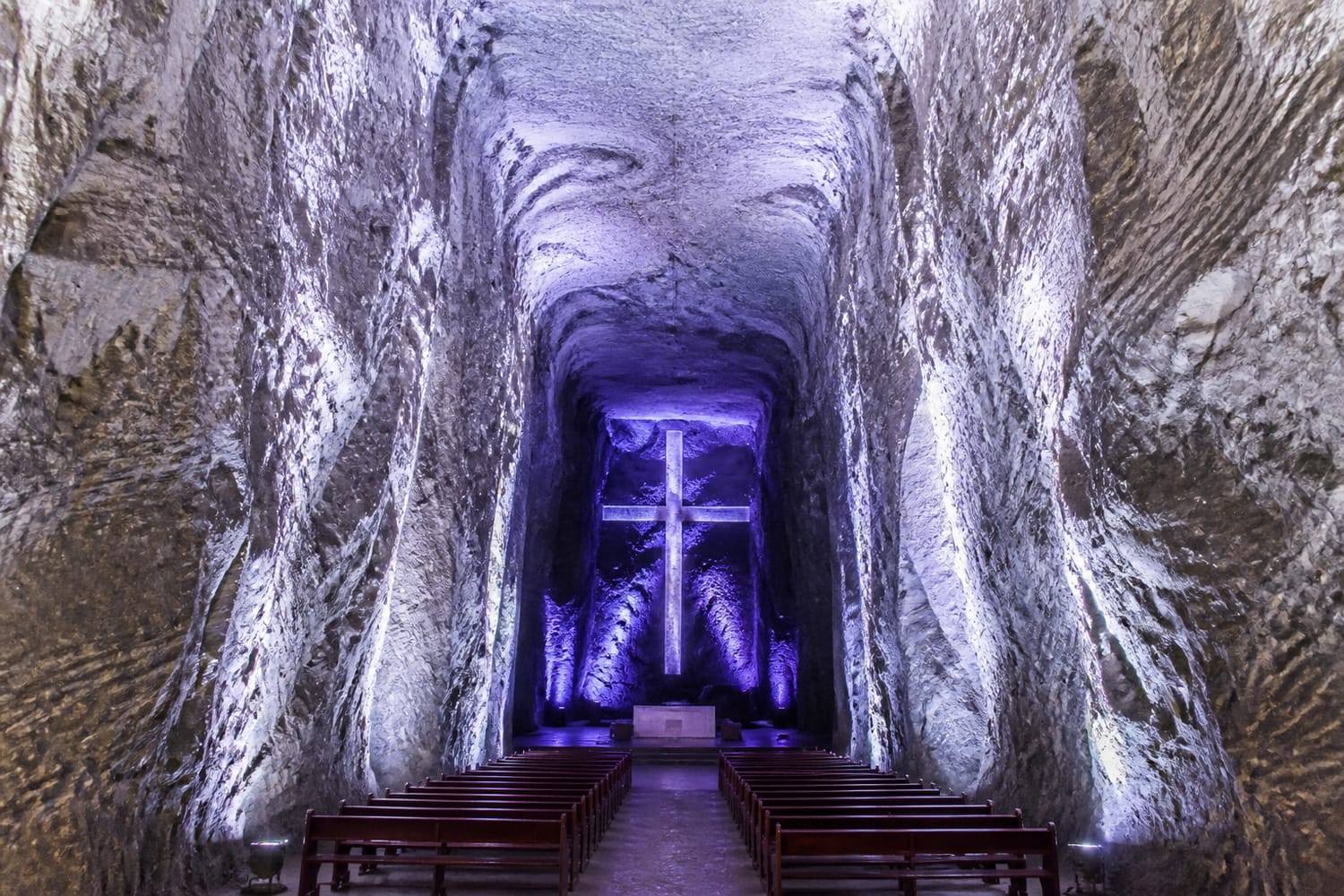
Located about 180 meters underground, the Salt Cathedral of Zipaquirá occupies tunnels carved into a former salt mine. Its chambers, crosses, altars, and sculptures emerge from rock salt rather than conventional masonry.
Colored lighting reveals the mineral textures of the walls and creates the illusion of enormous open spaces. Fourteen Stations of the Cross lead visitors through the tunnels before they reach three vast naves representing stages in the life, death, and resurrection of Christ.
Although called a cathedral, the site does not have the formal status of an episcopal cathedral. Nevertheless, it remains an important pilgrimage destination and one of Colombia’s most recognizable attractions.
Shell Grotto, England
Hidden beneath Margate in Kent is a winding underground passage covered with intricate mosaics made from millions of seashells. Cockle, mussel, oyster, and whelk shells form geometric patterns, flowers, suns, trees, and mysterious symbols across the walls and ceiling.
The grotto became known to the public during the 19th century, but its creator, age, and original purpose remain uncertain. The patterns have inspired theories involving secret societies, ancient religions, wealthy landowners, and simple decorative entertainment.
Whatever its origin, the grotto demonstrates how tiny natural objects can create an immersive architectural environment—and how mystery can make an unusual material even more compelling.
Temple of a Million Bottles, Thailand
Wat Pa Maha Chedi Kaew in Thailand’s Sisaket Province is better known as the Temple of a Million Bottles. Beginning in the 1980s, monks collected discarded glass containers and incorporated them into a growing Buddhist temple complex.
Green, brown, and clear bottles were set into concrete across walls, towers, walkways, and decorative surfaces. Even bottle caps were reused to create mosaics. The glass provides color and catches the tropical light while delivering a visible message about litter and recycling.
Like landmarks built with pieces of older structures, the temple proves that reused materials can carry stories from one purpose into another.
Rethinking What a Landmark Can Be
These places challenge the assumption that important architecture requires expensive or permanent materials. Newspaper can become furniture, tires can stabilize walls, bottles can imitate stained glass, and ice can form a hotel that disappears every spring.
They also reward careful observation. As with landmarks designed to trick the eye, their real magic often appears in the details. Together, they reveal that imagination—not material value—is what transforms a structure into an unforgettable destination.