
What Exactly Is an Arcade?
In architectural terms, an arcade is a series of arches supported by columns or substantial upright supports called piers. The word can also describe the covered passage beside those arches—the sheltered strip between a building and the street.
“Portico” is another word you will encounter, particularly in Italy. Bologna’s portici include structures made from timber, brick, stone, and concrete, so not every covered walkway has the same arched appearance. The shared feature is a sheltered space that connects a building with the public world outside.
That distinction matters: similar-looking walkways can have different histories. A passage beneath homes, a market-square arcade, and a covered pilgrimage route need not have been built for the same reason.
Shelter Was Good for Business
Weather protection helps explain why covered walkways became valuable places for commerce. Shelter made it easier for people to move between businesses and linger outside them. UNESCO specifically identifies Bologna’s porticoes as both protected pedestrian routes and desirable locations for merchant activity.
Think of the arrangement from a shopkeeper’s perspective. A doorway opening onto a sheltered passage offers customers somewhere to stop without standing directly in the rain. The walkway links neighboring businesses while keeping them open to the street.
But shelter was not always the original reason for construction. In Bologna, early porticoes could obstruct traffic and narrow streets. Their usefulness as shopping spaces and weather protection helped turn a disputed building practice into a celebrated urban feature.
Bologna: More Room Upstairs, Public Space Below
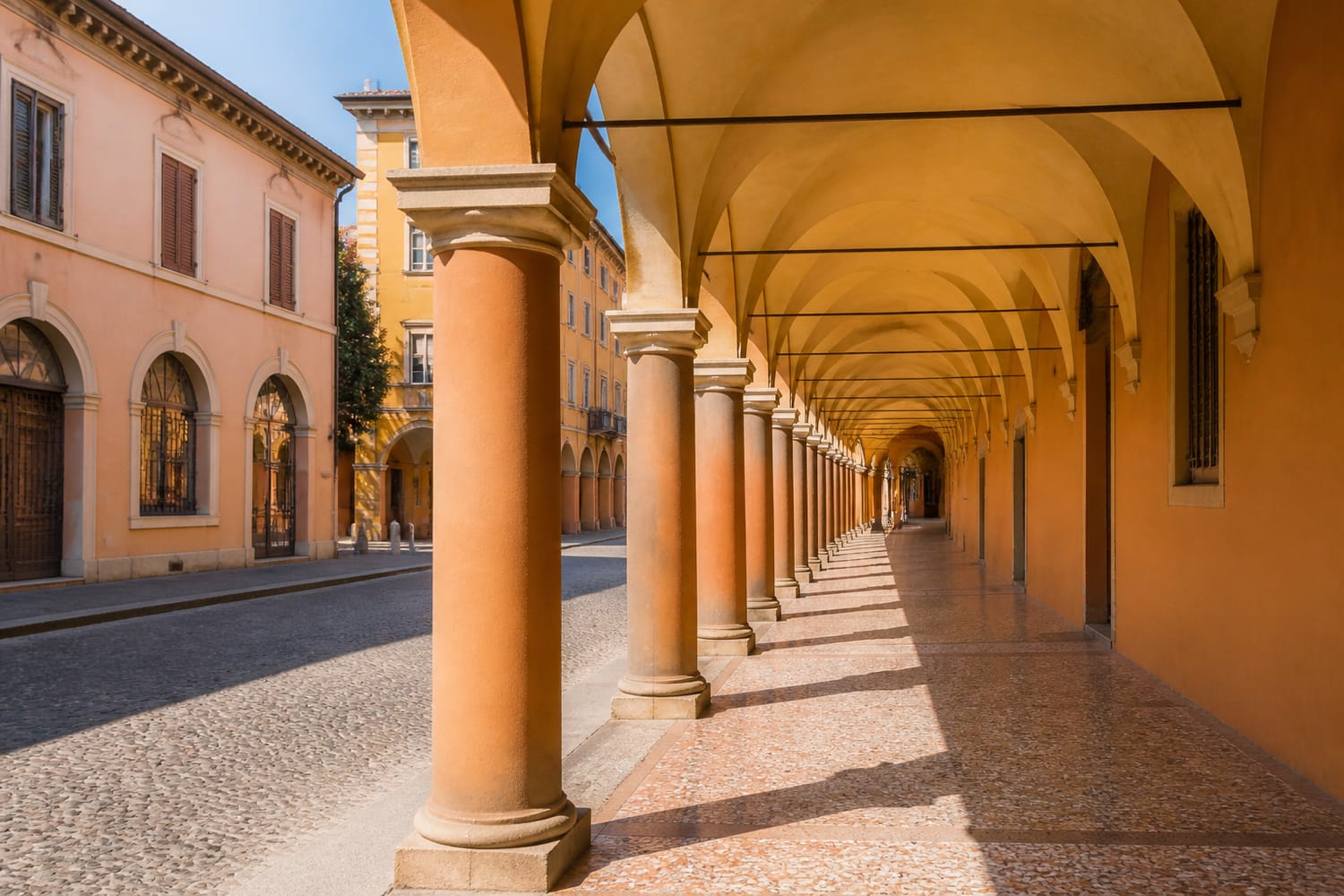
Bologna provides one of Europe’s clearest explanations for covered streets: people needed more building space.
As the medieval city grew, including through the arrival of university students, professors, and migrants from the countryside, demand for accommodation and workplaces increased. Owners extended upper floors outward, using supports beneath the projections. The resulting sheltered spaces became part of the street.
It is related to the space-saving story behind medieval houses with overhanging upper floors, although a supported portico and a projecting timber jetty are not identical structures.
The decisive development came in 1288, when Bologna’s municipal statutes made porticoes obligatory within the specified urban area and placed maintenance responsibilities on owners. Rather than simply removing structures that occupied street space, the city established a lasting arrangement: privately owned porticoes serving public passage.
That makes the walkway more than a convenient roof. It embodies a bargain between individual property owners and the community.
Today, Bologna’s system extends approximately 62 kilometers across the municipality. The UNESCO-listed Porticoes of Bologna comprise 12 selected components—not every covered stretch in the city. Their variety shows how the tradition continued through different architectural periods rather than stopping in the Middle Ages.
Bern: A Covered Streetscape Shaped by Rebuilding
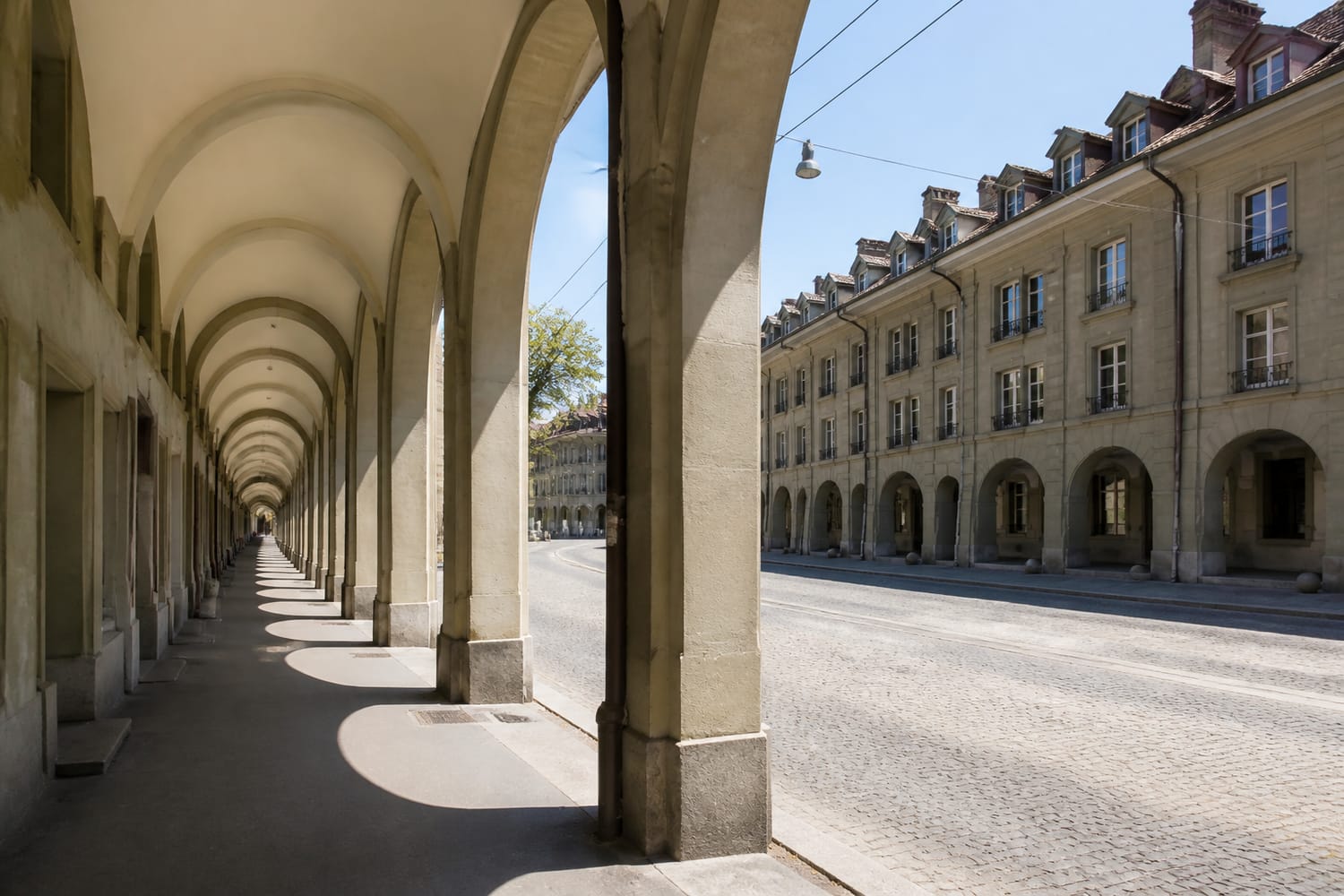
In Bern, Switzerland, the story includes a devastating fire and the rebuilding that followed.
The great fire of 1405 destroyed much of the wooden town. Subsequent construction emphasized stone, helping create the sandstone appearance associated with the old city today. Its arcades developed in the aftermath of that disaster.
Bern’s old city has around six kilometers of arcades, commonly called Lauben. They shelter pedestrians from sun and rain and connect a streetscape of shops, workshops, and entrances to vaulted cellars.
The comparison with Bologna is revealing. Both cities offer long sheltered walks, but their histories should not be compressed into one universal explanation. Housing pressure, rebuilding, construction materials, and local decisions all helped shape what survives.
France’s Bastides Put Arcades Around the Market
In southwestern France, covered walkways often frame the central square rather than extending along an entire street network.
Many bastides—planned medieval towns—organized streets around a main square. Regional examples combine market halls, commercial activity, and surrounding arcades, placing covered space at the heart of town life.
At Villefranche-de-Rouergue, for example, an ordered network of streets leads to Place Notre-Dame, surrounded by arcades and Gothic houses. Here, the covered edges help define the square itself.
The practical logic resembles that of historic bridges lined with houses and shops: valuable routes could accommodate commerce as well as movement. Yet a market-square arcade creates a different experience, encouraging people to circulate around a shared gathering place.
Not Every Covered Walkway Was Built for Shopping
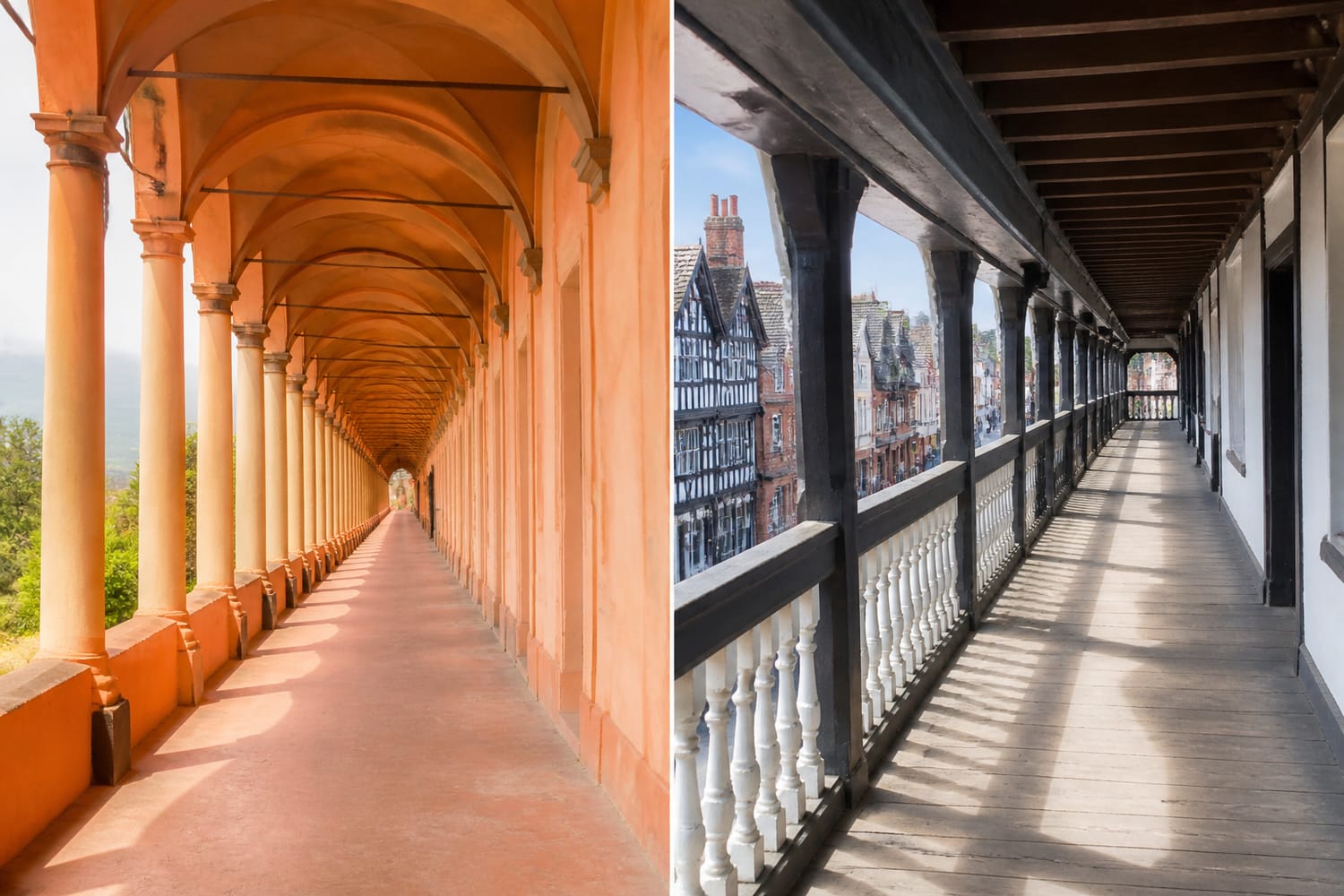
Bologna’s San Luca portico offers an important counterexample to a purely commercial explanation.
This covered route connects the city with the hilltop Sanctuary of the Madonna di San Luca. It was created to facilitate devotional processions associated with bringing the sacred image of the Madonna into Bologna. Its purpose was religious rather than an extension of shopfronts or housing.
Then there are Chester’s Rows in England: covered galleries at first-floor level, one story above the pavement. Their origins remain debated, with explanations involving urban space, trading opportunities, and the city’s earlier remains. The official guide to Chester’s Rows acknowledges that uncertainty rather than presenting one theory as settled fact.
How to Read an Arcade on Your Next Walk
Start by asking three questions: What is above it? What does it connect? What happens beneath it?
Look for rooms overhead, a square beyond the columns, or a route continuing toward a church. Compare neighboring supports and ceiling heights instead of assuming everything was built together.
Most importantly, resist the single-answer explanation. “To keep people dry” is often true, but rarely tells the whole story. Europe’s covered walkways are compelling because ordinary needs—space, shelter, trade, and shared access—became architecture worth preserving.