
Ocean Salt Begins on Land
Rainwater isn’t chemically pure. As it absorbs carbon dioxide from the air, it becomes slightly acidic. When rain falls on rocks and moves through soil, it helps break down minerals, releasing dissolved particles called ions. Streams and rivers carry those ions toward the ocean.
Think of a river as a delivery service with an almost invisible cargo. Alongside the sediment that clouds its water, it transports dissolved substances you cannot see. That chemical journey complements the physical landscape-shaping processes explored in Tour Trivia’s guide to why rivers wind.
The seafloor contributes, too. Water circulating through cracks in oceanic crust reacts with hot rock, exchanging dissolved chemicals before returning through hydrothermal vents. Underwater volcanic activity also releases minerals. Land supplies much of the ocean’s salt, but Earth’s interior participates in the chemistry.
Why Rivers Usually Don’t Taste Salty
If rivers deliver salt, why do we call their water fresh?
Freshwater does contain dissolved salts—just much less than seawater. Rivers generally keep moving, carrying their mineral load downstream rather than storing it indefinitely. Rainfall and runoff continually replenish the water, keeping most rivers relatively dilute.
Many freshwater lakes work similarly. Water arrives through streams, rain, or groundwater, then exits through an outlet, taking dissolved minerals with it. This ongoing flushing helps prevent large salt concentrations from developing. The important distinction isn’t simply “river versus lake versus ocean.” It is how water and dissolved minerals enter and leave each system.
Evaporation Leaves the Salt Behind
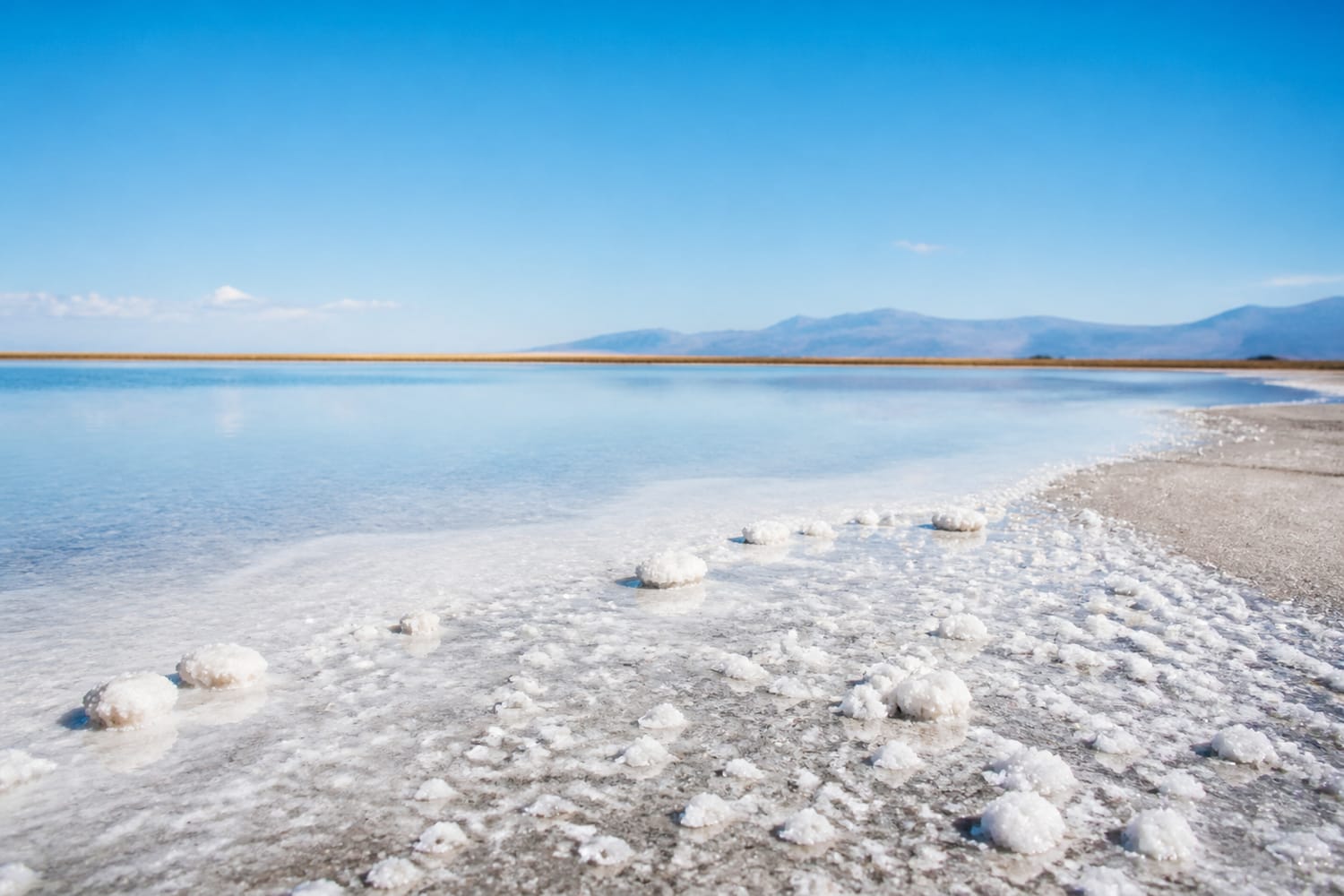
When sunlight supplies energy for evaporation, water molecules escape into the atmosphere as vapor. The dissolved salts remain behind. This separation is central to understanding why seawater is salty: water can leave without carrying its dissolved mineral cargo along.
Imagine a bowl of salty water sitting in the sun. As its water level falls, the remaining liquid becomes saltier. Evaporation hasn’t created any new salt; it has increased the amount of salt relative to water. Given enough evaporation, minerals can crystallize, a process also used in salt-production ponds.
The ocean operates within a much larger water cycle, with rainfall and rivers returning freshwater. Its saltiness therefore reflects both its mineral inventory and the balance between freshwater gains and losses—not evaporation alone.
How Salty Is the Ocean?
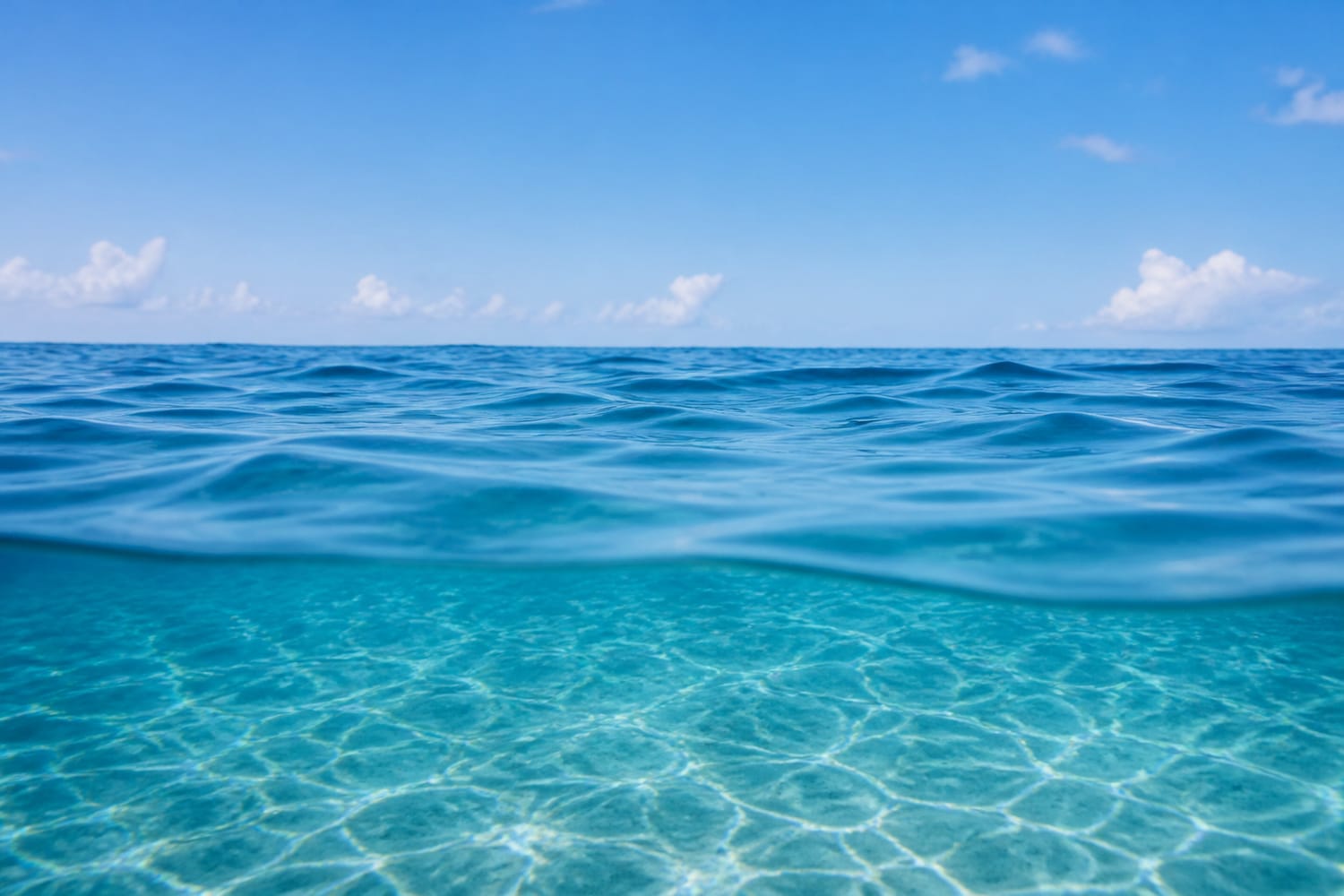
Average seawater contains about 35 grams of dissolved salts per kilogram of seawater, or roughly 3.5% salt by weight. Sodium and chloride—the ions that make up ordinary table salt—dominate, although seawater also contains magnesium, sulfate, calcium, potassium, and other dissolved substances. NOAA’s explanation of ocean salt outlines these ingredients and their sources.
But ocean salinity isn’t identical everywhere. Heavy rainfall, river discharge, and melting ice dilute surface waters. Strong evaporation concentrates salts. That helps explain why some subtropical waters are saltier than rainy equatorial regions, even though both receive plenty of sunshine. Water supply matters as much as heat.
Why Some Lakes Become Even Saltier
The crucial feature of many extremely salty lakes is a closed drainage basin, also called an endorheic basin. Water flows into a low-lying area but has no river route onward to the ocean. Dissolved minerals arrive with that inflow and remain as evaporation removes water.
Three ingredients make an effective natural salt concentrator:
- A mineral supply: Inflowing rivers, springs, or groundwater bring dissolved salts.
- Little opportunity for flushing: No substantial outlet carries those salts away.
- Evaporation over time: Water escapes while minerals become increasingly concentrated.
Dry climates often favor this combination. However, a closed basin doesn’t instantly become hypersaline, meaning saltier than seawater. Its eventual salinity depends on mineral inputs, water volume, evaporation, and the basin’s history. A lake’s saltiness is an evolving balance, not a permanent label.
The Dead Sea and Great Salt Lake
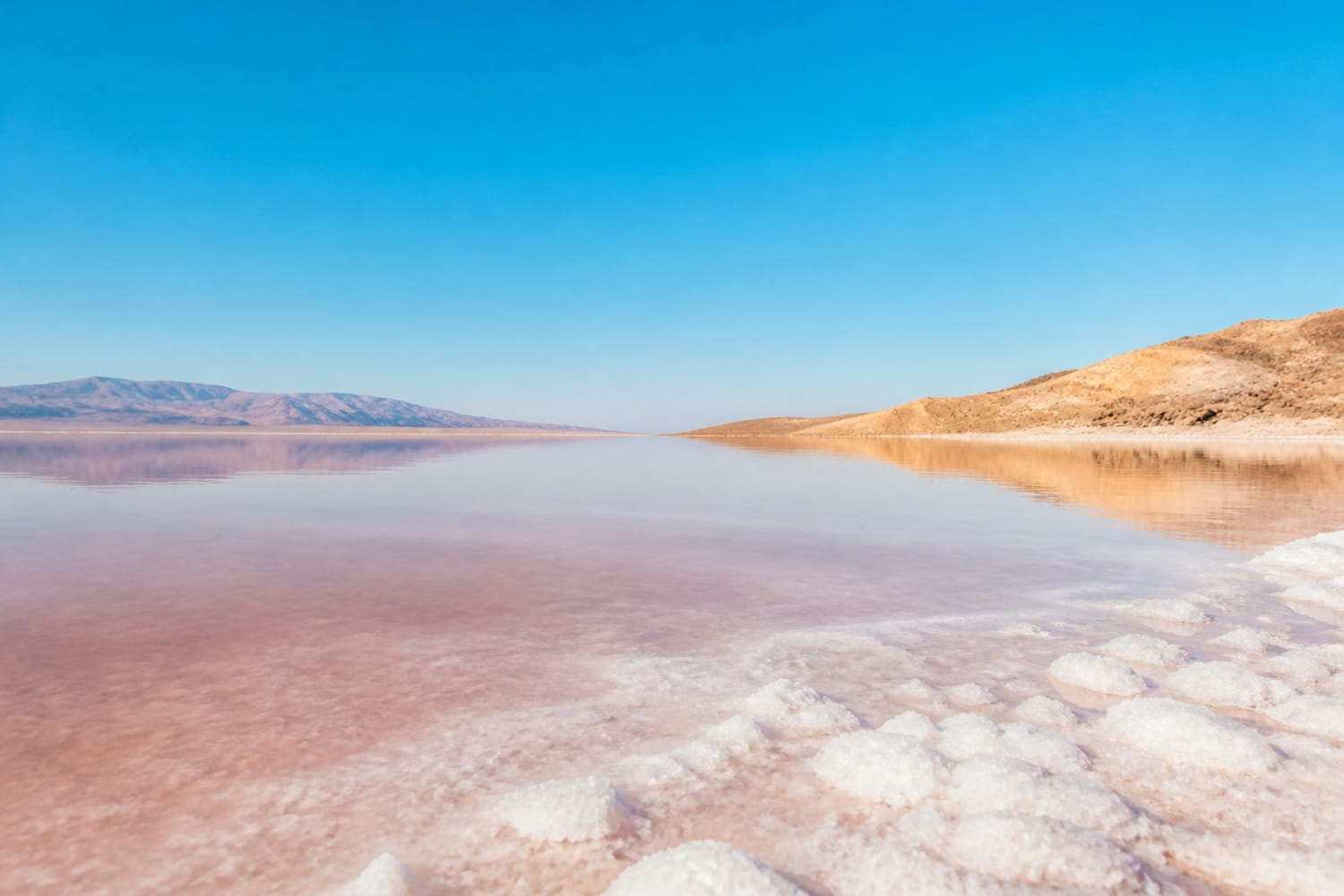
Despite its name, the Dead Sea is a lake. Its salt concentration exceeds 30%, making it roughly nine to ten times as salty as typical ocean water. That concentrated brine is unusually dense, which explains why people float so readily. NASA’s overview of the Dead Sea describes its extraordinary salt accumulation.
Utah’s Great Salt Lake demonstrates why one salinity figure rarely tells the whole story. Its concentration changes with water level and differs between its northern and southern arms. A railroad causeway restricts circulation between them, while most river inflow enters the southern portion, producing contrasting conditions within one lake.
These lakes also show why “salty” doesn’t necessarily mean lifeless. Great Salt Lake supports salt-tolerant organisms, including brine shrimp. Its surrounding wetlands attract millions of birds, making the lake an important ecosystem rather than simply an enormous bowl of brine.
Will the Ocean Keep Getting Saltier?
Not necessarily. Although rivers continually deliver dissolved material, other processes remove it from seawater. Minerals become incorporated into sediments, organisms use certain dissolved substances, and reactions with the seafloor alter the ocean’s chemical inventory. Over long timescales, these gains and losses can approximately balance.
Lakes can change more visibly as rainfall, snowmelt, evaporation, and inflow alter their volume. Their appearance can be misleading, too: clear water isn’t necessarily fresh water. As with why some lakes are crystal clear while others look murky, understanding what is dissolved or suspended reveals more than a glance from shore.
The memorable takeaway is simple: salt arrives with water, but it doesn’t leave with water vapor. Give a lake mineral-rich inflow, limited drainage, and enough evaporation, and even the ocean can seem comparatively mild.