
The Short Answer
The Leaning Tower of Pisa has not fallen because leaning is not the same as toppling. Its weight still bears on its foundation, and a vertical line drawn down from its center of mass falls within its base. That balance was once becoming dangerously precarious, but engineers reduced the tilt and stabilized the ground beneath it.
The surprising part is that the ground responsible for the lean may also have helped the tower survive earthquakes. Pisa’s most famous mistake has endured through a combination of physics, historical pauses in construction, and a remarkably careful modern rescue.
Why Did the Tower Start Leaning?
The tower was intended to be straight. Construction began in 1173 on a freestanding bell tower for Pisa’s cathedral, but its foundation was shallow and the soil underneath was unstable. As the builders added weight, the ground settled unevenly. The tower began to tilt while it was still under construction.
That distinction matters: the tower itself did not bend because someone designed it at an angle. The trouble began below ground. Imagine setting a heavy stack of books on a cushion that compresses more on one side. The books remain stacked, but the whole pile starts to lean.
For more landmarks whose best-known features were never planned, Tour Trivia explores famous architectural accidents that became icons. Pisa’s tilt is perhaps the most recognizable example.
The Physics That Keeps It Standing
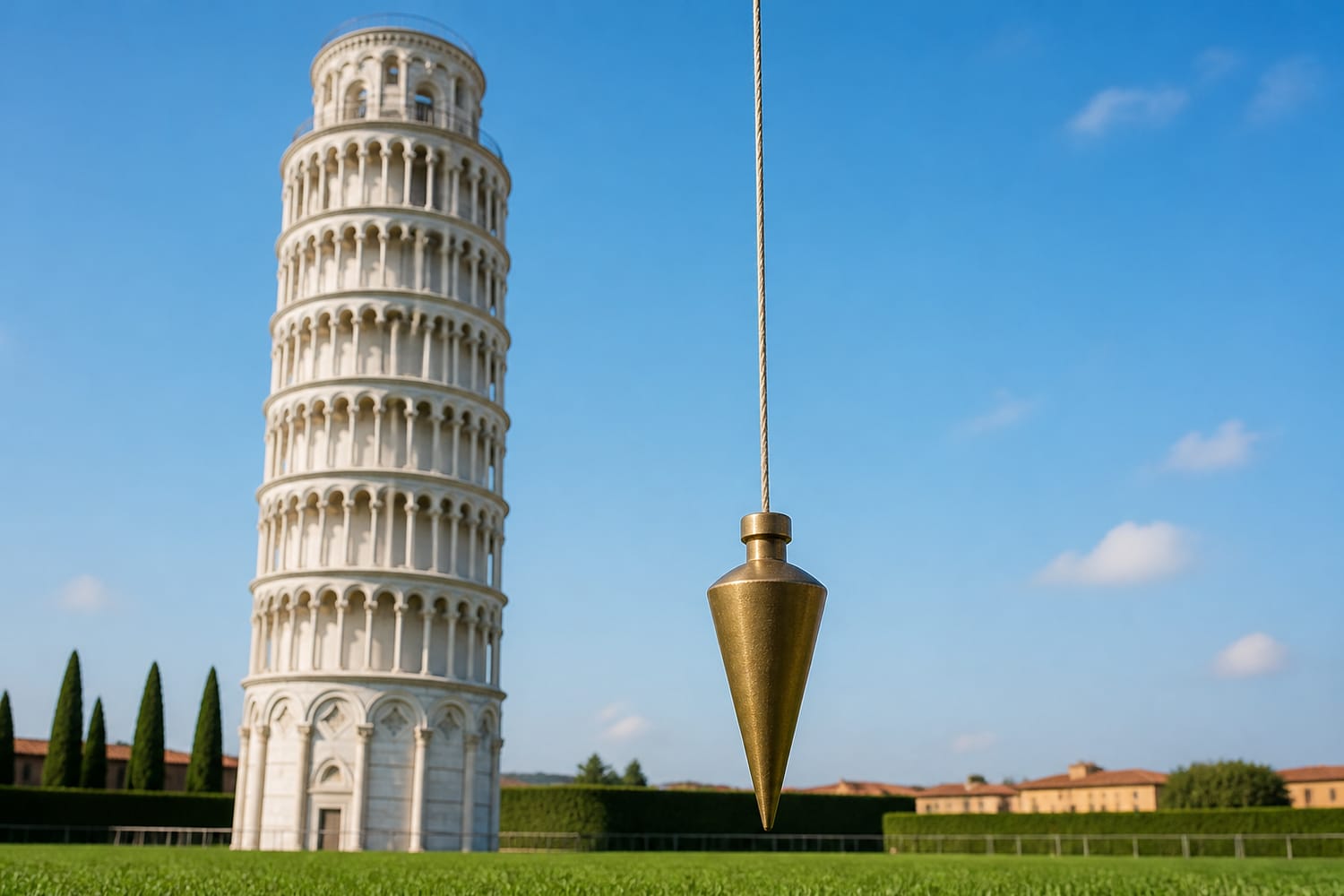
A leaning object does not automatically fall. What matters is where its center of mass—the balancing point of all its weight—sits relative to its base. Picture a plumb line hanging from that point. If the line reaches the ground inside the supporting base, the object can remain standing. If it moves beyond the edge, gravity tends to pull the object over.
That simple picture explains why photographs can be misleading. From the lawn, the top of the tower looks dramatically displaced. Yet the position of the top alone does not determine whether the entire structure will topple. The distribution of weight throughout the tower and the support provided by its foundation matter too.
It does not mean the tower can lean indefinitely. As its inclination increases, its weight creates a greater overturning force, while uneven pressure on the soil can make the foundation less secure. Engineers had to address that continuing movement, not merely check whether the tower was standing on a particular day.
Did the Long Construction Break Help?
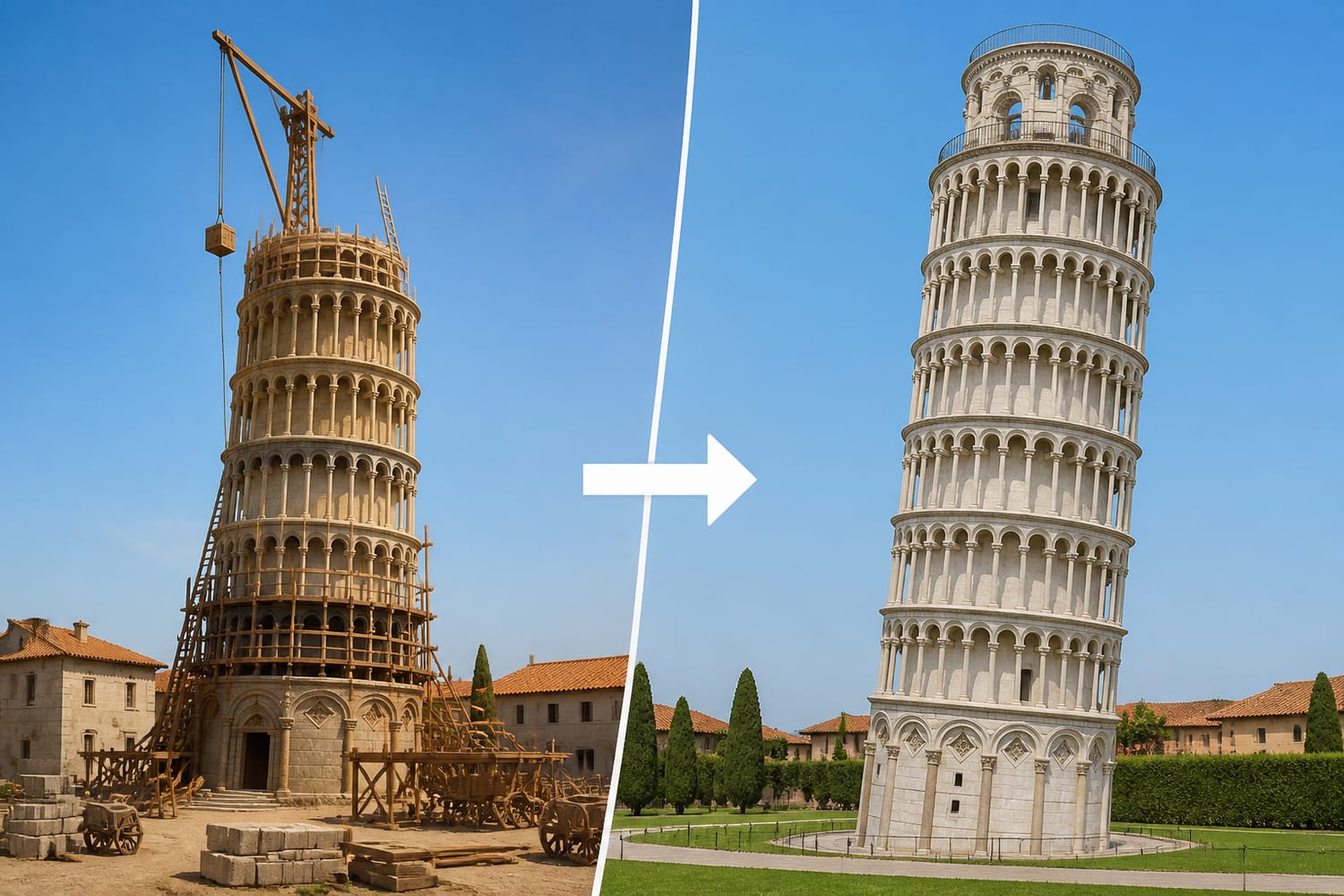
Work on the tower proceeded in stages, with long interruptions before its completion in the 14th century. Those pauses gave the ground time to settle before more weight was added. They did not repair the foundation, but they prevented the builders from placing the tower’s full weight on it all at once.
Later builders could see the lean. Rather than abandoning the project, they tried to compensate as they built higher, making the upper portions slightly uneven. Look closely and the tower is not a perfectly straight cylinder tipped sideways: it has a subtle curve. That correction helped shape its distinctive silhouette, although it could not solve the problem beneath it.
How Engineers Saved the Tower
By 1990, concern about a possible collapse had grown serious enough that the tower closed to visitors. Engineers faced an unusual challenge. They needed to make it safer without eliminating the lean that had become its defining feature. Straightening it completely would have changed the monument; doing nothing risked losing it.
The solution was underexcavation: removing small amounts of soil from beneath the north side of the foundation. The tower leaned south, so carefully allowing its north side to settle reduced the inclination. Engineers also addressed groundwater conditions that could affect its movement. The work was completed in 2001, when the tower reopened to the public.
The Institution of Civil Engineers’ account of the stabilization reports that the intervention brought the tower’s top about 38 centimeters closer to vertical. That sounds modest for a roughly 56-meter-tall building, but the objective was not to erase the lean. It was to reduce the danger while preserving the tower people had come to recognize.
Why Haven’t Earthquakes Knocked It Down?
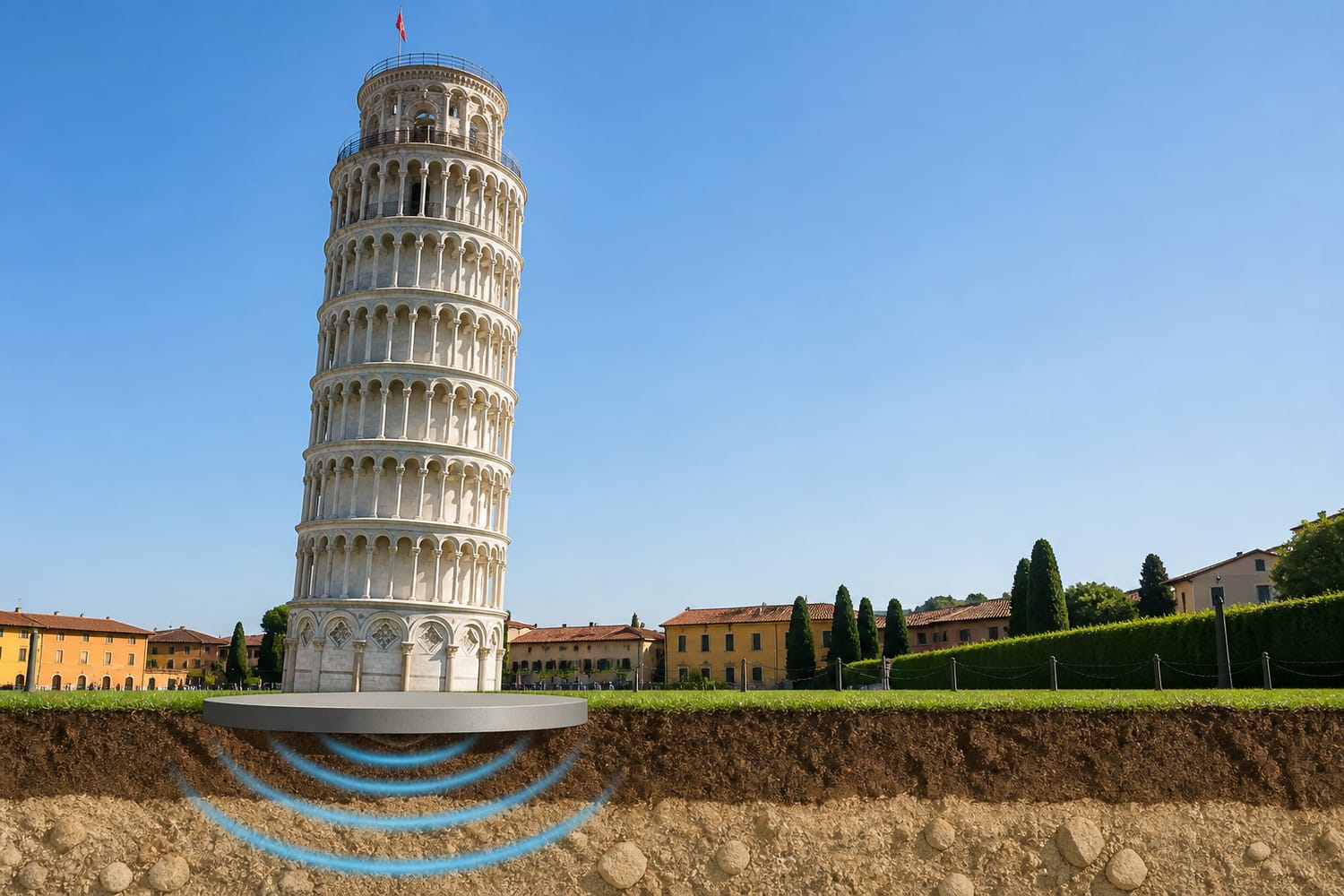
Here the story takes an unexpected turn. Soft soil caused the tower’s original instability, yet researchers have found that the interaction between that soil and the structure helps explain its survival through strong earthquakes. The combination changes how the tower responds to shaking, rather than making it move exactly as it would on rigid ground.
That does not make soft ground a universal earthquake defense. Soil conditions can also increase hazards, and Pisa’s survival depends on the particular behavior of this tower and this site. The useful lesson is that a building and the ground supporting it must be understood together. You can compare other examples in Tour Trivia’s look at ancient landmarks that survived major earthquakes.
For a closer look at the research, the University of Bristol explains the soil–tower interaction behind this counterintuitive finding. It is a reminder that the answer to “why hasn’t it fallen?” lies as much underground as in the marble tower visible above it.
What to Notice When You Visit
Stand back far enough to see the entire tower, not just its famously off-center top. The curve in its upper levels reveals the builders’ attempt to correct a problem that had appeared before construction was finished. Then consider the invisible part of the story: the shallow foundation and the soil whose movement shaped the monument for centuries.
The tower is also a bell tower, not a lookout built to lean. It belongs to Pisa’s cathedral complex, alongside other remarkable buildings. Once you have admired the tilt, the nearby Baptistery rewards attention for a different architectural trick: Tour Trivia’s guide to landmarks with surprising acoustic secrets describes its extraordinary echoes.
So why has the Leaning Tower of Pisa not fallen over? Its weight has remained sufficiently supported, and modern engineering stopped a dangerous progression without making it straight. The lean may look like a frozen accident, but the tower’s survival is a story of people learning to work with the ground beneath it.